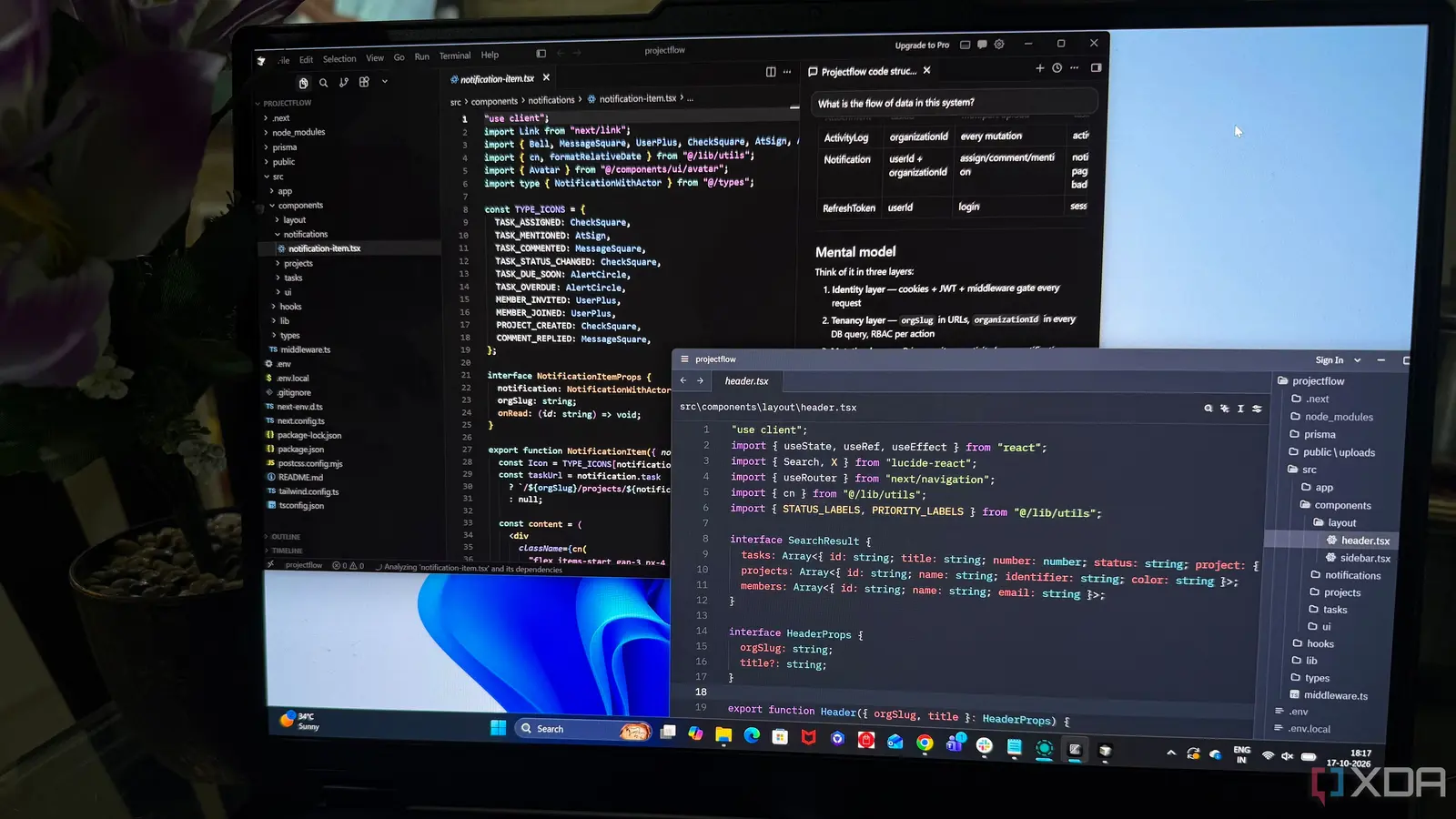
The hidden cost of code accumulation
Software developers are increasingly relying on AI coding agents to write code quickly from natural language prompts. These tools can generate functional implementations in seconds, allowing programmers to focus on higher-level design and problem-solving. However, the ease of creation masks a growing challenge: determining which code should be deleted or refactored as projects evolve.
Breaking news
 Town AI Secures $108 Million Series B, Valued at $1 Billion After $55 M Pre‑Series
 Apple Prepares for Major Product Launch Event on October 28
 Apple Releases Release Candidates for watchOS, tvOS and visionOS 27.2
 Apple Limits iPhone Duo and iPhone 18 Pro Max to Reservation-Only Sales in Japan and South Korea
While AI agents efficiently produce new code, they lack the contextual judgment to identify obsolete, redundant, or conflicting code that accumulates over time. Developers report spending significant effort manually reviewing AI-generated suggestions to decide what to keep, modify, or remove. This reverse engineering of intent—understanding not just what code does but whether it should exist—remains a distinctly human task that current AI systems cannot perform reliably.
Why deletion decisions are harder than creation
Writing code involves following clear specifications, but deleting code requires understanding system-wide impacts, anticipating future needs, and recognizing subtle technical debt. An AI might generate a working solution that duplicates existing functionality or creates tight coupling, yet it cannot assess whether removing older code would improve maintainability or introduce risks. This asymmetry creates a bottleneck where development speed gains from AI writing are partially offset by increased cognitive load during code review and refactoring.
Experts suggest that improving AI's ability to handle deletion would require training on full software lifecycles, not just code generation snapshots. Systems would need to understand project history, team conventions, and long-term architectural goals—factors that are often implicit and poorly documented. Until then, developers must treat AI coding agents as powerful assistants for creation but remain vigilant stewards of their codebases, actively managing what stays and what goes.
Can AI ever learn to judge code necessity?
Why do AI coding agents struggle with deleting code? AI agents are trained primarily on code generation tasks and lack exposure to the decision-making processes involved in identifying obsolete or harmful code. They optimize for producing correct output rather than evaluating existing code quality or necessity.
Frequently Asked Questions
What happens when developers ignore code deletion? Allowing redundant or conflicting code to accumulate increases technical debt, makes systems harder to maintain, and raises the likelihood of bugs. Over time, this can slow down development more than the initial time saved by AI-generated code.
How can teams mitigate this issue today? Teams should implement rigorous code review practices focused on identifying redundancies, enforce regular refactoring cycles, and use static analysis tools to flag potential dead code. Treating AI-generated code with the same scrutiny as human-written code is essential for long-term project health.
