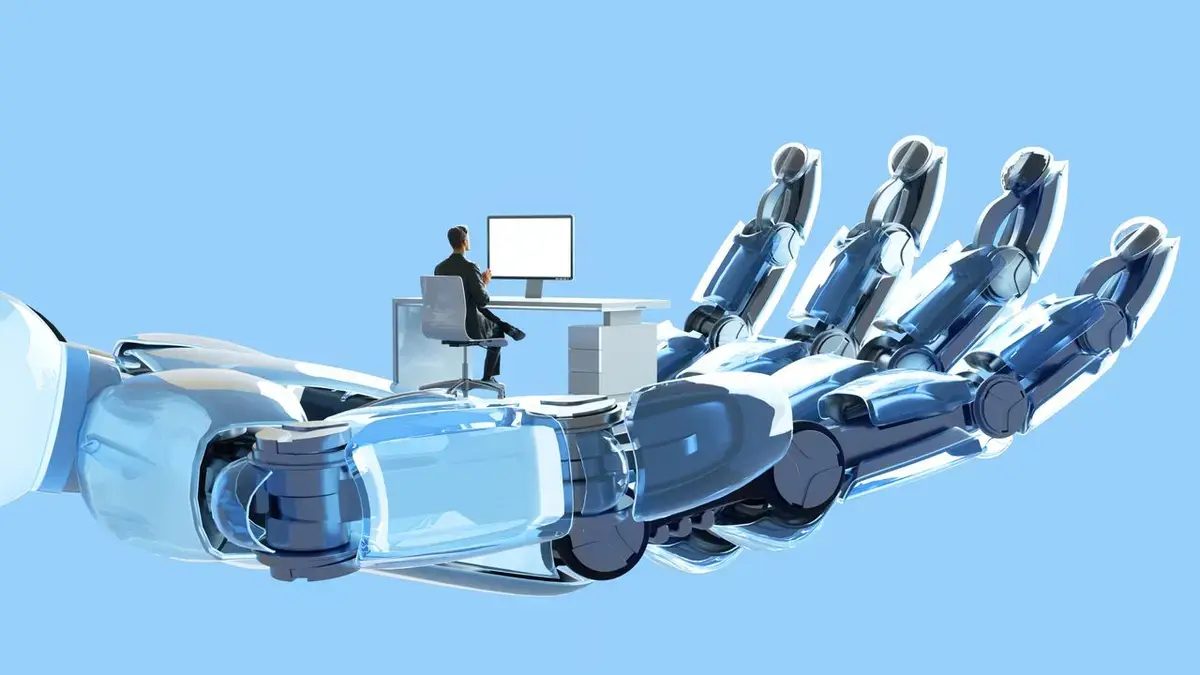
The Automation Narrative vs. Economic Reality
Company leaders are increasingly announcing job cuts linked to artificial intelligence. These decisions happen even though clear evidence of AI boosting productivity remains elusive. The trend is raising questions about the true drivers behind these workforce reductions.
Breaking news
 Canonical’s Web Presence Hit by Second DDoS Assault This Year
 Loops AI Secures $3.5 Million to Power a New AI Operating System for E‑Commerce
 Winverse AI Secures Tens of Millions in Seed Funding from DeepSeek and Long‑Z
 Google Adds Pixel 9 Series to Certified Refurbished Store
Executives across various sectors anticipate further layoffs as AI technologies develop. They frame these cuts as necessary for adapting to a future dominated by automation. However, current economic data doesn't fully support the idea of widespread job displacement caused by AI. It’s a complex situation with limited concrete proof.
Many companies publicly cite AI as the reason for reducing staff. This allows them to portray the cuts as forward-thinking, rather than simply cost-cutting measures. Some analysts believe this „AI justification” provides a convenient cover for restructuring efforts. It masks decisions driven by broader economic pressures.
Is AI a Scapegoat for Existing Problems?
The claim is that AI will eventually lead to significant productivity increases. This would theoretically offset the job losses. Yet, these gains haven’t materialized on a large scale. Data is inconclusive, neither confirming nor denying an „AI unemployment apocalypse.” Businesses are acting as if the future is here, despite the present reality.
The timing of these layoffs is also noteworthy. Many companies are facing pressure to improve profitability. Investors often reward cost-cutting initiatives, regardless of the underlying cause. AI provides a narrative that appeals to investors eager for innovation. It can distract from other, potentially less palatable, explanations.
„Companies may be using AI as a convenient excuse,” one analyst explained. „It allows them to streamline operations and reduce expenses without appearing insensitive.” This strategy can boost stock prices in the short term, but it may not be sustainable long-term. A focus on genuine productivity improvements is crucial.
The long-term consequences of these preemptive cuts remain to be seen. If AI doesn’t deliver the promised productivity gains, companies may find themselves understaffed and unable to compete. A rush to automate without a clear understanding of the technology's limitations could hinder innovation. The current situation highlights the need for careful planning and realistic expectations.
Frequently Asked Questions
Is AI really causing job losses right now? While some job displacement is occurring, it’s difficult to directly attribute it solely to AI. Many factors are at play, including broader economic conditions and company-specific restructuring. The link remains largely speculative at this point.
What kind of jobs are most at risk from AI? Routine, repetitive tasks are the most vulnerable to automation. This includes roles in data entry, customer service, and some aspects of manufacturing. However, jobs requiring creativity, critical thinking, and complex problem-solving are less likely to be replaced.
Will AI eventually create more jobs than it eliminates? That’s a possibility, but it’s not guaranteed. New jobs will likely emerge in areas related to AI development, implementation, and maintenance. However, it’s unclear whether these new roles will offset the jobs lost to automation.