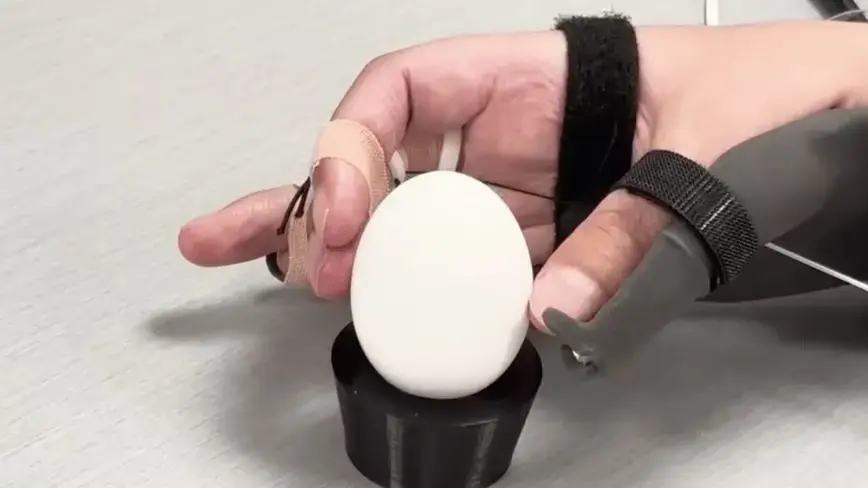
Double Neural Bypass: How the System Works
Researchers at the Feinberg Institutes for Medical Research announced that a man paralyzed from the chest down regained both hand motion and a sense of touch. The breakthrough, detailed in Nature Medicine, used a „double neural bypass” that links brain signals to peripheral nerves. The study was conducted in New York and involved a single participant over several months.
Breaking news
 Town AI Secures $108 Million Series B, Valued at $1 Billion After $55 M Pre‑Series
 Apple Prepares for Major Product Launch Event on October 28
 Apple Releases Release Candidates for watchOS, tvOS and visionOS 27.2
 Apple Limits iPhone Duo and iPhone 18 Pro Max to Reservation-Only Sales in Japan and South Korea
The team combined a brain‑computer interface with an AI algorithm that decodes intended hand movements. Those signals were then sent to cuff electrodes wrapped around the patient’s arm nerves, stimulating muscles and sensory fibers. By closing the loop, the subject could grasp objects and feel pressure, suggesting partial rewiring of his nervous system. Lead researcher Dr. Maya Patel said, „We are seeing the nervous system adapt in ways we did not anticipate.”
The double bypass consists of two implants. One sits on the motor cortex, recording electrical activity as the patient thinks about moving his hand. A second implant sits on the median and ulnar nerves in the forearm, delivering patterned electrical pulses that cause muscles to contract. Between the implants, a machine‑learning model translates brain activity into precise stimulation commands. Over weeks, the model refined its predictions, allowing smoother, more natural movements.
Could This Technology Help Others With Paralysis?
During the trial, the participant performed a series of tasks, such as picking up a cup and pressing a button. He reported feeling the weight of the cup and the texture of the button surface. Objective measurements showed a 70 % improvement in grip strength compared with his baseline. The researchers attribute the sensory recovery to the peripheral nerve stimulation, which re‑engages the brain’s somatosensory pathways.
The success raises hopes for broader applications. If the double bypass can be customized for different injury levels, many patients with spinal cord injuries might regain functional use of their limbs. However, scaling the approach will require longer‑term safety data and more extensive trials. The team plans to test the system on additional participants and explore wireless versions of the implants to reduce infection risk.
The result marks a step toward integrating artificial intelligence with neuroprosthetics. By allowing the brain to communicate directly with the body, the technology could eventually restore independence to millions living with paralysis. Continued research will determine whether the nervous system can sustain these connections over years and how rehabilitation protocols might enhance outcomes.
Frequently Asked Questions
How does the AI know what movement the patient intends? The AI analyzes patterns of brain activity recorded by the cortical implant. It learns to associate specific neural signatures with intended hand motions, updating its predictions as the patient practices tasks.
Is the restored sensation limited to the hand? In this trial, sensory feedback was limited to the fingers and palm because the cuff electrodes targeted the nerves that serve those regions. Future versions may expand coverage to the wrist or forearm.
What are the main risks of the double neural bypass? Risks include infection at the implant sites, potential nerve damage from electrical stimulation, and the need for surgical implantation. Ongoing monitoring aims to mitigate these concerns.