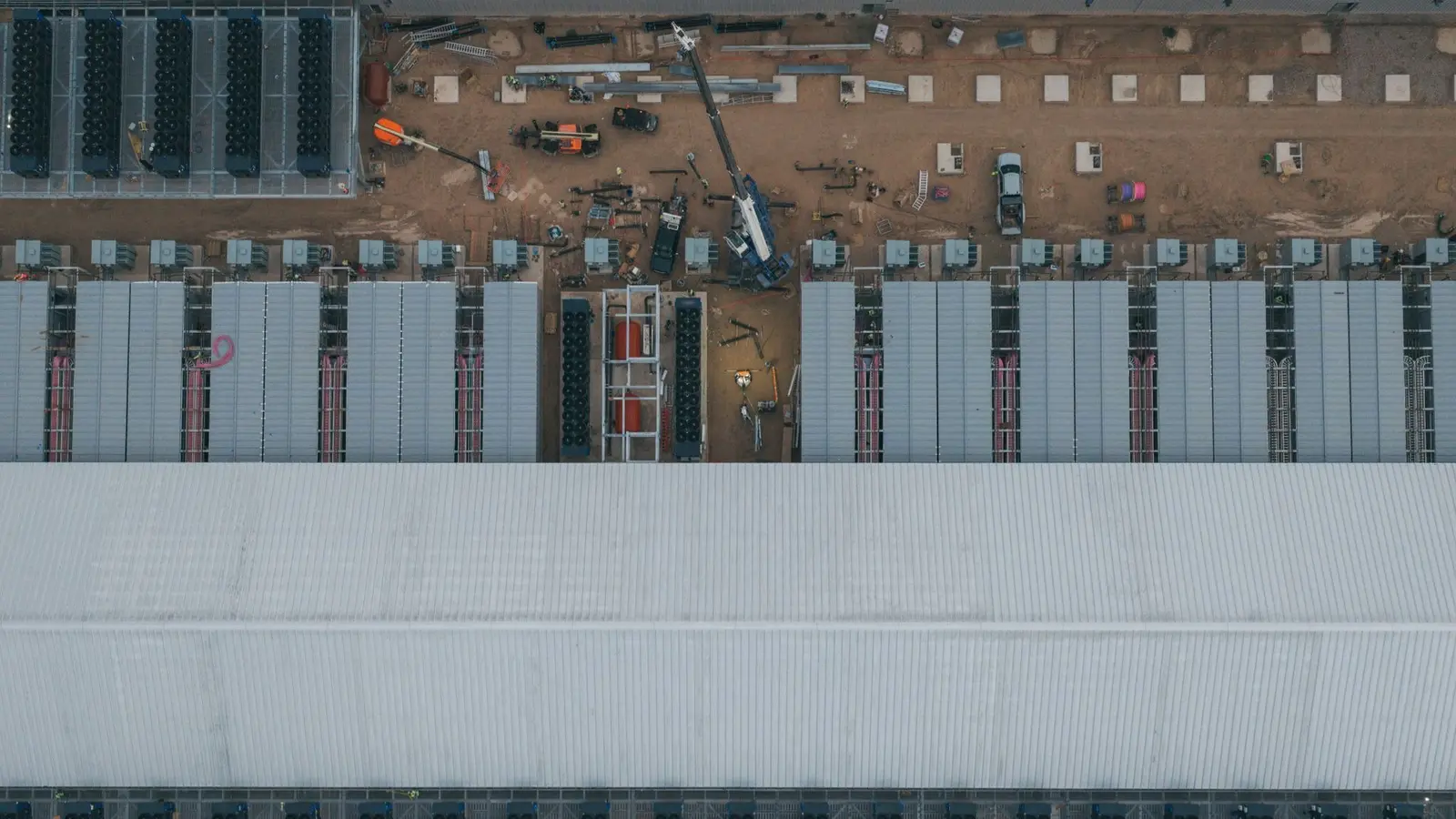
Other AI players are pursuing comparable strategies
The AI‑powered data‑center sector is undergoing a rapid transformation as leading firms scramble to overcome chronic supply delays that can stretch to six years. Anthropic’s new contract earmarks a massive $3.4 billion to secure 1.7 GW of gas‑turbine capacity, essential for powering its AI workloads. Rather than starting from scratch, the company is assuming existing equipment orders that Caterpillar had allocated to OnePWR Solutions, a Texas supplier.
Breaking news
 Big Tech Deals: Z Fold 8 Discount, Free Buds, and OLED Savings
 Nominal Raises $240M at $3B Valuation to Streamline Hardware Production
 This Could Be Your Last Chance to Pre-Order the HomeView at a Discount
 Nvidia RTX PRO 6000 user s cables almost melted, even when limited to 500W
According to Reuters, the agreement was finalized at the end of September and includes full engineering, procurement and construction services needed to install the generators. Anthropic is not buying OnePWR itself; it is taking over the supplier’s outstanding delivery obligations, contracts that were initiated roughly two years ago but required additional financing to be completed. By stepping into these pre‑existing orders, Anthropic avoids waiting for Caterpillar to re‑schedule a new, similarly sized order into its production line—a critical time‑saving move given the exploding demand for large gas turbines.
Globally, orders for gas turbines now exceed 100 GW, while actual manufacturing capacity sits between 60 GW and 70 GW. Consequently, lead times in the United States have stretched to six years, with some future requests not expected to be fulfilled until 2030 or 2031. Anthropic’s purchase places it squarely within this strained market environment.
Other AI players are pursuing comparable strategies. Elon Musk’s xAI recently installed eight converted General Electric jet turbines at a Mississippi data centre, each capable of up to 50 MW, delivering roughly 400 MW in total. The installation attracted scrutiny from the Southern Environmental Law Center, which challenged the site’s emission permits.
OpenAI has followed a similar path
Environmental criticism of gas‑fired generators is not new. Shakeel Hashim, founder of ReadTransformer, called Anthropic’s move „pretty bleak” on Twitter, warning that such generators are highly damaging to the climate. His comment underscores the dilemma AI firms face: rapid power access often comes at a steep ecological cost.
Musk’s companies are also expanding into equipment production. In August, Musk announced that his firms would internalise turbine‑blade manufacturing, citing blade lead times of 60‑90 weeks as a bottleneck. In July, SpaceX acquired APR Energy, a firm that operates mobile gas and diesel generators capable of producing over 1 GW.
OpenAI has followed a similar path for its Stargate data centre in Abilene, Texas. Crusoe, the developer of the site, bought 29 Vernova LM2500XPRESS gas turbines, each rated at 34 MW, for a combined capacity of 986 MW.
Anthropic’s approach differs by tapping into OnePWR’s existing orders with Caterpillar, securing generators already in the production pipeline rather than commissioning brand‑new equipment. This gives the company a faster route to power, though the broader energy shortage is pushing AI firms to explore used or refurbished turbines, including converted jet engines. Such alternatives carry their own challenges—maintenance demands, reduced lifespan, and suitability for continuous operation.
By acquiring the OnePWR‑Caterpillar contracts and the associated installation services, Anthropic sidesteps many of these obstacles, ensuring a ready‑to‑use power source for its expanding AI infrastructure. This development highlights mounting pressure on global energy supply chains and forces rapid innovation in distributed power solutions, even as it raises significant ethical and environmental questions.