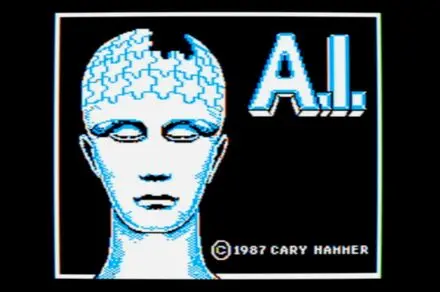
Preserving the Experimental Roots of Machine Logic
The Internet Archive has launched a new digital repository titled „Vintage Artificial Intelligence.” This initiative preserves decades of early software designed to simulate human conversation. Users can now access these historical tools directly through their web browsers. The collection highlights the evolution of machine intelligence before modern large language models dominated the landscape. It offers a rare glimpse into the experimental era of computational logic.
Breaking news
 Town AI Secures $108 Million Series B, Valued at $1 Billion After $55 M Pre‑Series
 Apple Prepares for Major Product Launch Event on October 28
 Apple Releases Release Candidates for watchOS, tvOS and visionOS 27.2
 Apple Limits iPhone Duo and iPhone 18 Pro Max to Reservation-Only Sales in Japan and South Korea
This archive serves as a critical resource for historians and technologists. It captures software that attempted to convince users of its humanity long before neural networks became standard. The platform allows visitors to interact with programs developed over many years. These tools represent the foundational experiments in natural language processing. By making them accessible, the organization ensures these digital artifacts do not vanish into obscurity.
Why Early Experiments Matter to Modern Developers
The collection features a diverse array of chatbots and Many of these programs were created during the mid-twentieth century. They relied on rule-based systems rather than deep learning algorithms. Developers at the time focused on pattern matching and keyword recognition. This approach stands in stark contrast to today’s probabilistic models. The archive includes documentation and executable files for numerous projects. Some entries remain fully functional, allowing modern users to test old code. Others require specific emulation environments to run correctly. The curation process involved identifying key milestones in the field. Researchers prioritized works that influenced subsequent generations of programmers. This focus helps trace the lineage of current AI technologies.
Understanding the past provides context for present challenges. Early systems often struggled with ambiguity and context. They could easily be confused by simple user inputs. Studying these limitations reveals how far the industry has come. It also highlights persistent issues that still affect modern systems. For instance, handling edge cases remains a difficult task. The archive demonstrates that many current problems have historical precedents. Developers can learn from previous failures and successes. This historical perspective fosters innovation by preventing reinvention of failed concepts. It encourages a deeper appreciation for the complexity of language. The accessibility of these tools lowers the barrier to entry for students. They can experiment with legacy code without needing specialized hardware.
How can users access the Vintage Artificial Intelligence collection? Visitors can browse the collection directly on the Internet Archive website. Most items are viewable or downloadable without special software. Some interactive elements may require a compatible browser environment.
Frequently Asked Questions
What types of software are included in this archive? The repository contains chatbots, expert systems, and early These programs span several decades of development. They include both commercial and academic projects.
Is the software still functional on modern devices? Many entries run smoothly in contemporary web browsers. However, some older programs may need emulation tools. The archive provides instructions for running complex legacy applications.