Mobile Intelligence Redefines Domestic Interaction
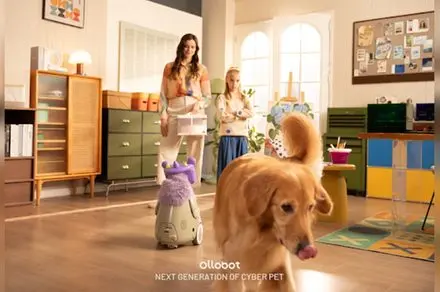
IFA Berlin 2026 showcases OlloBot, a wheeled robot that redefines domestic automation. The device abandons fixed speaker locations to follow users around the house. This shift marks a significant departure from traditional smart home interactions. Attendees at the trade show observed the prototype in action. The technology promises a more dynamic relationship between residents and their digital assistants.
Breaking news
 Town AI Secures $108 Million Series B, Valued at $1 Billion After $55 M Pre‑Series
 Apple Prepares for Major Product Launch Event on October 28
 Apple Releases Release Candidates for watchOS, tvOS and visionOS 27.2
 Apple Limits iPhone Duo and iPhone 18 Pro Max to Reservation-Only Sales in Japan and South Korea
Conventional smart speakers remain stationary on shelves or tables. They wait passively for voice commands to activate. OlloBot changes this paradigm by incorporating mobility into its core design. The robot uses wheels to navigate living spaces autonomously. It can track a user’s movement from room to room. This physical presence allows the AI to engage more naturally. The device does not just process audio; it observes context through motion. By moving with the person, the system gathers richer environmental data. This approach aims to make assistance feel less like a tool and more like a companion.
Does Physical Presence Enhance Emotional Connection?
The primary innovation lies in the hardware’s ability to traverse complex home environments. Standard robots often struggle with stairs or uneven flooring. OlloBot focuses on smooth, flat surfaces typical of modern apartments. Its sensors map obstacles in real time to prevent collisions. The unit integrates cameras and microphones for multimodal input. This setup enables the AI to understand both what is said and where it is said. Contextual awareness improves when the assistant knows the user’s location. For example, if a person moves to the kitchen, the robot follows. It then adjusts its responses based on the new setting. This continuous tracking eliminates the need for users to shout across rooms. The interaction becomes fluid rather than segmented by physical barriers.
Critics argue that software alone suffices for most tasks. However, proponents of embodied AI suggest otherwise. A visible device creates a sense of shared space. Users report feeling less isolated when an assistant shares their physical environment. The heartmentioned in recent reports refers to this emotional resonance. The robot’s movements are designed to be non-intrusive yet noticeable. It hovers near the user without blocking paths. This balance fosters trust and familiarity over time. Developers emphasize that the goal is not surveillance but companionship. The system learns preferences through observation of daily routines. It anticipates needs before explicit requests are made.
The industry is watching closely as these prototypes move toward production. Manufacturers face challenges in battery life and noise reduction. Quiet operation is essential for residential use. Price points will determine mass adoption rates. Early adopters may pay a premium for this level of integration. As competition intensifies, expect rival firms to announce similar mobile units. The era of the stationary smart speaker may soon end. Home AI is becoming an active participant in daily life. Future updates will likely include better obstacle avoidance. Social features may allow multiple robots to coordinate within one household. This evolution signals a broader shift in how humans coexist with machines.
Frequently Asked Questions
How does OlloBot differ from standard smart speakers? OlloBot includes wheels for autonomous movement, allowing it to follow users throughout a home. Standard speakers remain fixed in one location and rely solely on voice input without spatial tracking.
Is the robot capable of navigating all room types? The current prototype is optimized for flat, smooth floors common in apartments. It may struggle with stairs, thick rugs, or highly cluttered spaces during early testing phases.