This is particularly valuable in edge AI devices where power efficiency and
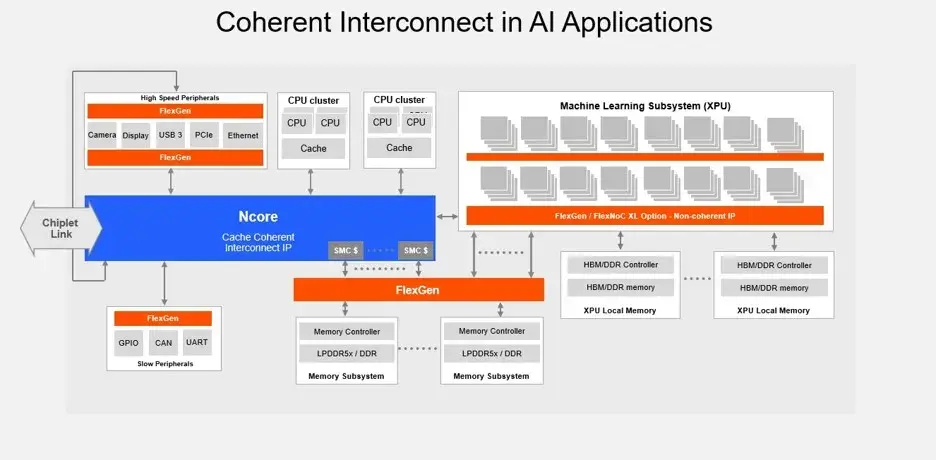
Engineers are leveraging hardware-level cache coherency to reduce the software burden in managing complex AI systems-on-chip. This approach streamlines coordination between processors, accelerators, and memory units in modern SoCs designed for machine learning workloads. By ensuring data consistency across cores without constant software intervention, developers can focus more on algorithm optimization than low-level synchronization. The technique addresses growing challenges in AI hardware where heterogeneous components like CPUs, GPUs, and NPUs must share data efficiently. Traditional methods require intricate software protocols to manage data sharing, increasing development time and potential bugs. Cache coherency automates much of this process at the hardware level, allowing seamless data exchange between processing units.
Breaking news
 Canonical’s Web Presence Hit by Second DDoS Assault This Year
 Loops AI Secures $3.5 Million to Power a New AI Operating System for E‑Commerce
 Winverse AI Secures Tens of Millions in Seed Funding from DeepSeek and Long‑Z
 Google Adds Pixel 9 Series to Certified Refurbished Store
This is particularly valuable in edge AI devices where power efficiency and real-time response are critical. How Hardware-Managed Coherency Reduces Software Complexity Cache coherency protocols like MOESI or MESI ensure that when one processor updates a memory location, all other caches see the change or are invalidated. In AI systems, this eliminates the need for explicit flushes or barriers in software when moving data between a CPU and an AI accelerator. For example, when a CPU preprocesses image data and passes it to a neural network unit, coherency guarantees the accelerator sees the latest version without software-managed cache maintenance. This reduces lines of code, minimizes latency, and decreases the chance of race conditions in multithreaded AI pipelines. Can Cache Coherency Handle the Bandwidth Demands of Modern AI Models? Yes, advances in on-chip interconnects and directory-based coherency schemes now support high-bandwidth data flows required by large language models and vision transformers.
These systems use scalable coherency directories that track ownership without
These systems use scalable coherency directories that track ownership without broadcasting to all cores, reducing traffic. While full coherency across hundreds of cores remains challenging, selective coherency—applied only to shared data regions—provides a practical balance. AI chip designers are applying this hybrid model to manage weights, activations, and intermediate results efficiently across specialized cores. Frequently Asked Questions What is cache coherency and why does it matter for AI? Cache coherency ensures that multiple processors in a system see a consistent view of shared memory data. In AI systems, it prevents stale data from being used by accelerators, which could corrupt inference or training results, while reducing the need for software-managed synchronization. Does implementing cache coherency increase chip power consumption? While coherency logic adds some overhead, modern implementations are optimized for low power, especially in edge AI contexts.
The power saved by avoiding complex software synchronization often outweighs the hardware cost, particularly in systems running continuous AI workloads. Is cache coherency only useful for homogeneous multi-core systems? No, it is especially beneficial in heterogeneous AI SoCs where different types of processors (like CPUs and DSPs) must share data. Coherency bridges the gap between dissimilar cores, enabling smoother data flow in mixed-precision AI applications.