Can Hybrid Bonding Keep Up with AI's Rapid Growth?
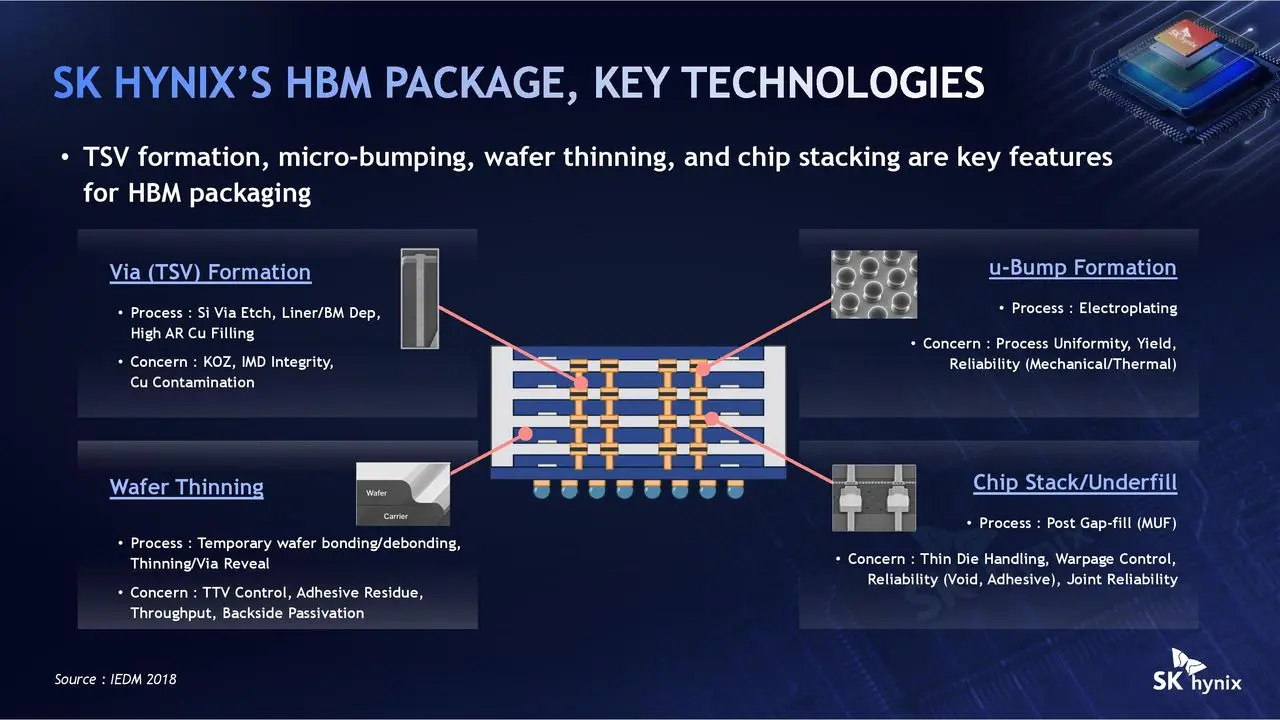
The world of artificial intelligence is facing a major bottleneck in memory technology. The problem lies in the physical limitations of Hybrid Bonding HBM5, a crucial component in high-performance computing systems. According to SK hynix, the standard thickness of HBM cubes is capped at 775 microns, a barrier that hinders further advancements in AI memory.
Breaking news
 Town AI Secures $108 Million Series B, Valued at $1 Billion After $55 M Pre‑Series
 Apple Prepares for Major Product Launch Event on October 28
 Apple Releases Release Candidates for watchOS, tvOS and visionOS 27.2
 Apple Limits iPhone Duo and iPhone 18 Pro Max to Reservation-Only Sales in Japan and South Korea
This issue was brought to light by Jaesik Lee, VP of package engineering at SK hynix America, during a presentation at the Hot Chips 2026 conference. Lee stated that hybrid bonding technology is not yet ready for HBM4E, a more advanced version of the memory technology. Instead, SK hynix is focusing on extending its MR-MUF (Multi-Relay Multi-Functional) technology through N, a move that aims to overcome the physical limitations of HBM5.
To address the 775-micron ceiling, SK hynix is exploring new ways to integrate its MR-MUF technology. By leveraging this technology, the company hopes to create more efficient and compact memory modules. Lee emphasized that hybrid bonding is a complex process that requires significant advancements in materials science and manufacturing techniques.
Frequently Asked Questions
Lee explained that SK hynix is currently working on developing new materials and processes that can help overcome the physical limitations of HBM5. The company's goal is to create a more scalable and cost-effective memory technology that can support the growing demands of AI applications.
As AI continues to advance at an unprecedented pace, the need for more efficient and scalable memory technologies becomes increasingly pressing. The question on everyone's mind is whether hybrid bonding can keep up with the rapid growth of AI. Lee acknowledged that the development of hybrid bonding technology is a long-term effort that requires significant investments in research and development.
Q: When can we expect to see significant advancements in hybrid bonding technology?