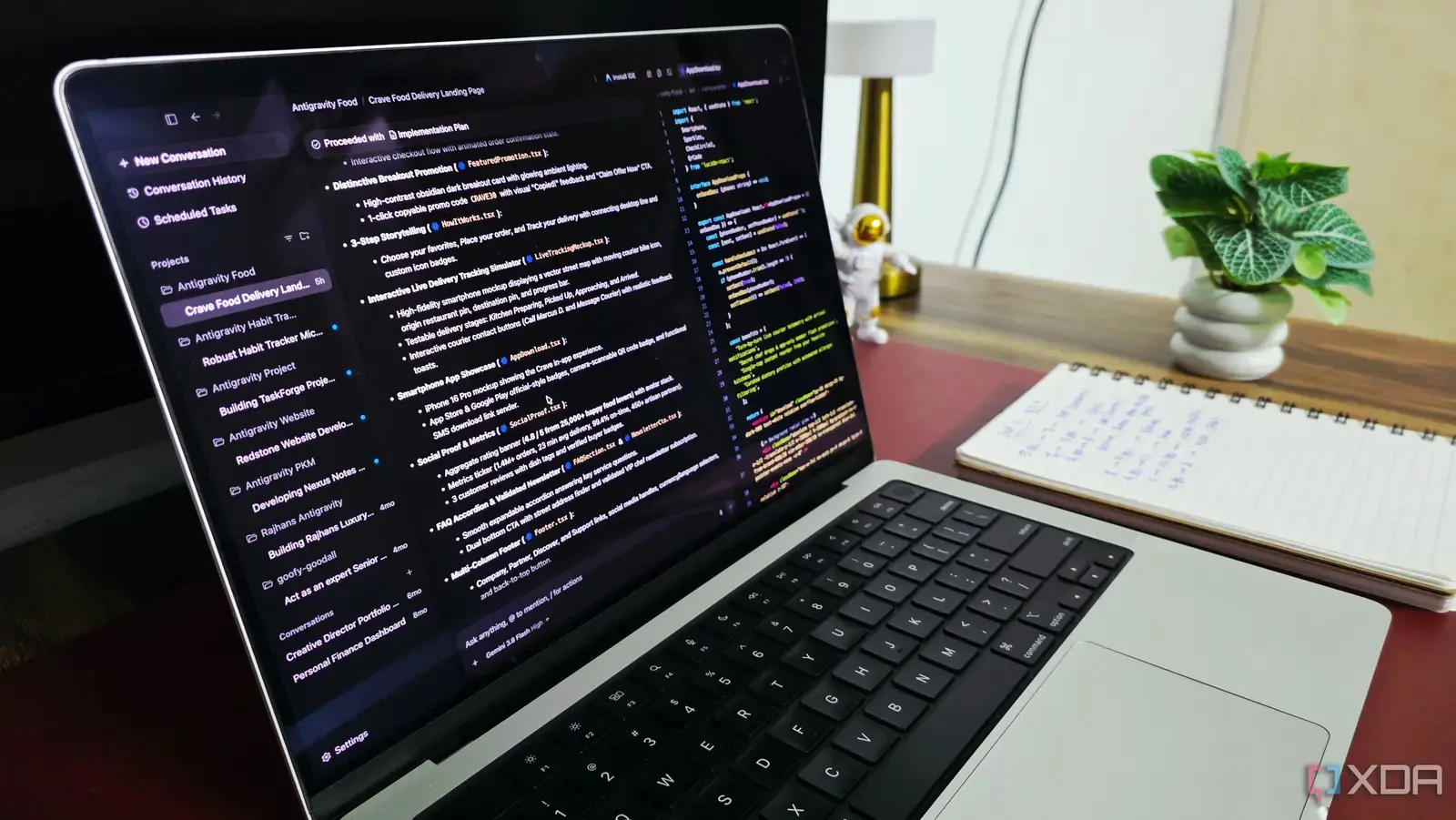
Why Google Antigravity Stood Out in the Test
In September 2026, tech writer Parth Shah conducted a comparative test of three AI coding assistants—Claude Code, Codex, and Google Antigravity—by giving each the identical prompt to rebuild a sample website. The goal was to evaluate how these tools interpret and execute front-end development tasks under the same conditions. The experiment took place over a single afternoon, with all models receiving the same instructions regarding layout, styling, and functionality.
Breaking news
 Town AI Secures $108 Million Series B, Valued at $1 Billion After $55 M Pre‑Series
 Apple Prepares for Major Product Launch Event on October 28
 Apple Releases Release Candidates for watchOS, tvOS and visionOS 27.2
 Apple Limits iPhone Duo and iPhone 18 Pro Max to Reservation-Only Sales in Japan and South Korea
The results revealed striking differences in output quality and coherence. While Codex and Claude Code produced functional but visually inconsistent pages with minor alignment issues and redundant code, Google Antigravity generated a clean, responsive design that closely matched modern web standards. Shah noted that Antigravity’s output required minimal manual adjustment, whereas the others needed significant tweaking to achieve parity. He emphasized that the disparity wasn’t just in aesthetics but in structural understanding, suggesting Antigravity had a stronger grasp of semantic HTML and CSS best practices.
Could This Signal a Shift in AI Coding Tool Rankings?
Google Antigravity’s performance stood out due to its ability to infer design intent from vague prompts, automatically applying consistent spacing, typography scaling, and mobile-first breakpoints. Shah observed that it avoided common pitfalls like hardcoded pixel values and instead used relative units and flexbox layouts naturally. In contrast, Claude Code occasionally repeated CSS rules, and Codex struggled with nested component logic, leading to rendering glitches in Chrome’s developer tools. The writer speculated that Antigravity’s training data might include more recent web framework patterns, giving it an edge in practical usability.
The test raises questions about how AI coding assistants are evaluated and whether current benchmarks adequately measure real-world usability. Shah suggested that while leaderboards often focus on code completion accuracy or speed, factors like design sensibility and maintainability matter more for end-user applications. He warned against over-relying on any single tool but acknowledged that Google Antigravity’s performance in this test hints at a potential shift in the landscape. Developers may soon prioritize AI partners that not only write code but also understand design principles implicitly.
What website was used in the test? Parth Shah used a simple multi-section landing page with a header, feature grid, and footer as the test subject, chosen for its balance of layout complexity and common design patterns.
Frequently Asked Questions
Did any tool fail to produce a working site? All three tools generated HTML and CSS that rendered without errors, but only Google Antigravity’s output required no manual fixes to achieve a polished, responsive appearance across devices.
Is Google Antigravity publicly available? As of September 2026, Google Antigravity remains an internal research tool with limited access, though Shah noted that its capabilities may influence future public releases from Google’s AI division.
