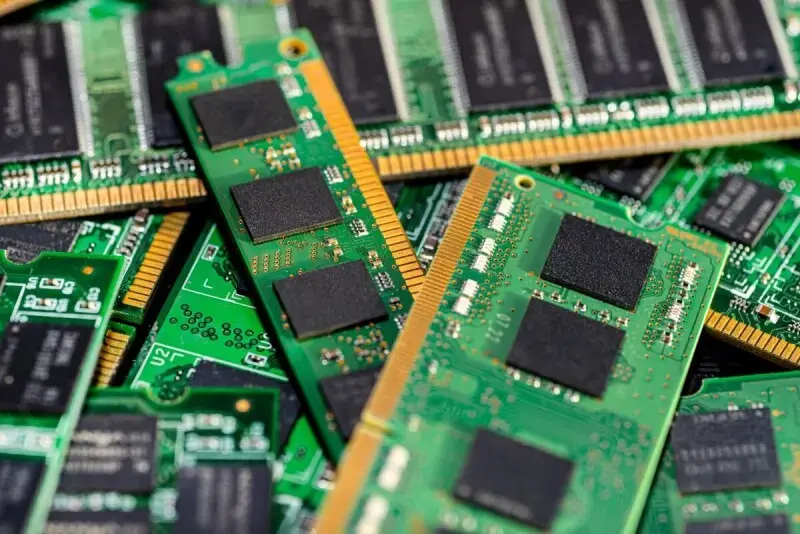
How Rising Memory Costs Are Reshaping Cloud Economics
Cloud infrastructure providers face mounting pressure to allocate nearly two-thirds of their capital expenditures toward memory chips as prices for DRAM and NAND flash surge. Industry analysts warn that escalating component costs, driven by supply constraints and heightened demand from AI workloads, are forcing operators to rethink hardware procurement strategies. The trend, observed across major data center operators, could significantly influence future spending patterns and service pricing models.
Breaking news
 Town AI Secures $108 Million Series B, Valued at $1 Billion After $55 M Pre‑Series
 Apple Prepares for Major Product Launch Event on October 28
 Apple Releases Release Candidates for watchOS, tvOS and visionOS 27.2
 Apple Limits iPhone Duo and iPhone 18 Pro Max to Reservation-Only Sales in Japan and South Korea
The memory market has experienced sharp price increases over the past year, with DRAM costs rising approximately 40% and NAND flash prices climbing nearly 30% due to limited fab capacity and increased consumption from generative AI applications. Cloud providers, expanding infrastructure to support AI training and inference workloads, are now directing a larger share of their budgets toward semiconductor purchases. This shift reflects a broader industry challenge where memory components now represent a growing fraction of total server costs, potentially squeezing margins if not passed on to customers.
Can Cloud Providers Absorb These Costs Without Raising Prices?
Analysts note that memory now accounts for a larger portion of server bill-of-materials than in previous years, with some estimates suggesting DRAM and NAND together could consume up to 68% of incremental capex for new equipment. This concentration of spending limits flexibility in other areas such as networking or accelerators. Operators are responding by extending hardware lifecycles, optimizing memory utilization through software, and negotiating long-term supply agreements. Some are also exploring alternative architectures that reduce reliance on expensive memory tiers, though such transitions require significant reengineering.
While some operators may absorb short-term increases through operational efficiencies, sustained pressure on memory prices is likely to influence service pricing. Cloud providers have historically adjusted infrastructure costs incrementally, but the scale of current memory inflation may necessitate more visible changes. Customers using memory-intensive services such as in-memory databases or large-scale analytics could see earlier impacts. Transparency around cost drivers will be key as enterprises evaluate their cloud spending amid broader economic uncertainty.
Why are memory prices rising so sharply? Memory prices are increasing due to a combination of constrained semiconductor manufacturing capacity and surging demand from AI-driven workloads, which require large amounts of high-speed DRAM and storage.
Frequently Asked Questions
Will this affect all cloud services equally? No, services that rely heavily on memory—such as caching layers, real-time analytics, and AI model training—are likely to feel the impact sooner than storage-heavy or compute-light applications.
Can cloud operators switch to cheaper alternatives? Operators are optimizing usage and extending hardware life, but fundamental shifts away from DRAM and NAND remain limited due to performance requirements; alternatives are still in early adoption phases.