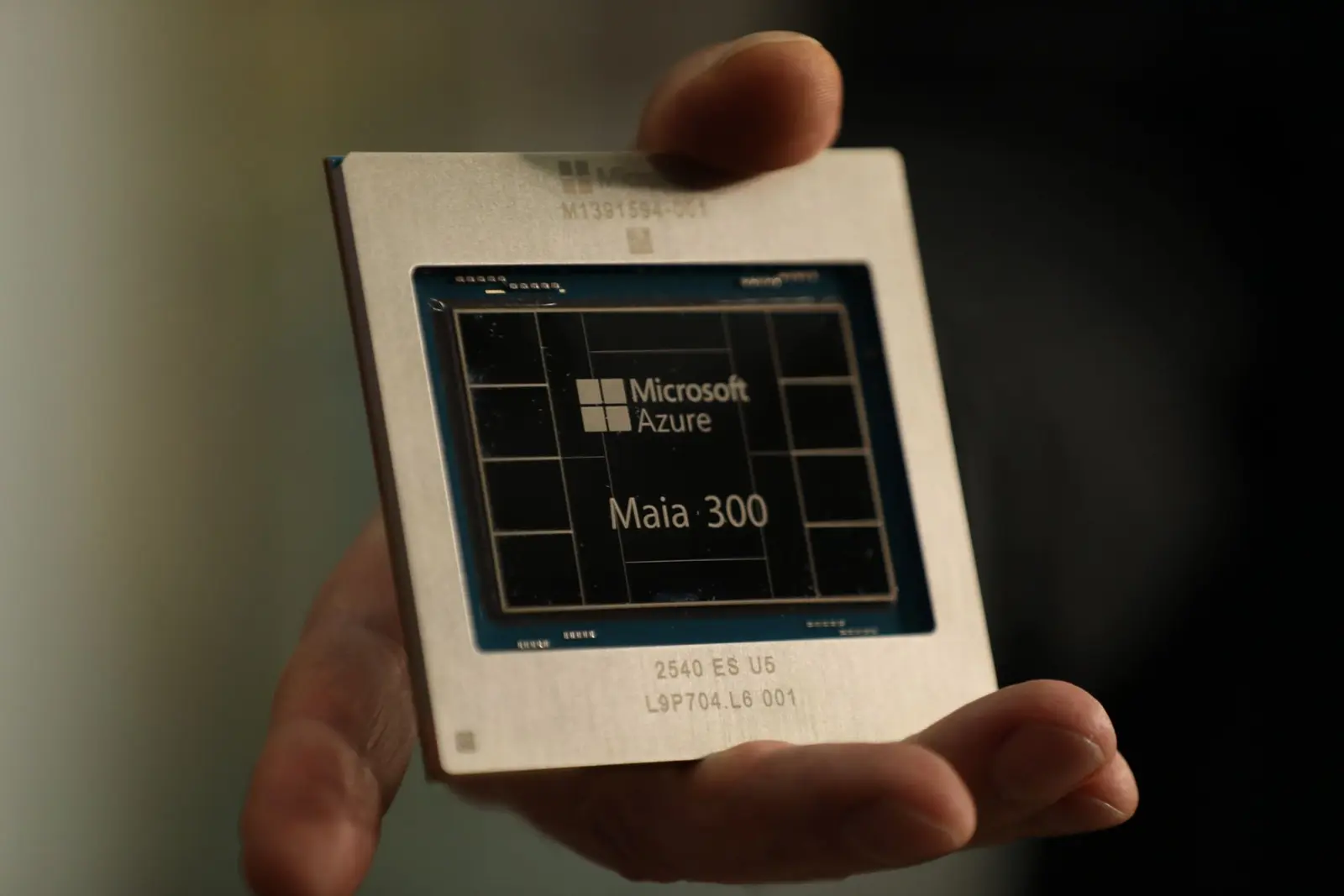
How the Maia 300 Will Transform Microsoft’s AI Services
Microsoft announced the Maia 300 on October 12, 2026, unveiling its newest artificial‑intelligence processor. The chip is positioned to boost performance across Microsoft’s suite of services, including Teams, Copilot, and Cowork, by delivering higher efficiency and power for next‑generation AI workloads.
Breaking news
 Canonical’s Web Presence Hit by Second DDoS Assault This Year
 Loops AI Secures $3.5 Million to Power a New AI Operating System for E‑Commerce
 Winverse AI Secures Tens of Millions in Seed Funding from DeepSeek and Long‑Z
 Google Adds Pixel 9 Series to Certified Refurbished Store
The Maia 300 is engineered for „inference‑first” workloads, meaning it is optimized to run AI models quickly and with lower latency. Microsoft claims the chip delivers a 2.5‑fold increase in throughput compared to its previous generation, while reducing power consumption by roughly 30 percent. The design incorporates advanced tensor cores and a new memory hierarchy that allows for faster data movement between compute units.
What Does This Mean for End Users?
Microsoft’s spokesperson highlighted that the new processor will enable real‑time language translation, advanced image analysis, and predictive text generation within its cloud services. Teams users could experience smoother video calls with AI‑driven background noise suppression, while Copilot integration in Office applications would offer faster code suggestions and document drafting. The chip’s efficiency gains also mean that data centers can host more AI workloads per rack, potentially lowering operational costs.
The chip’s architecture supports a broad range of AI frameworks, including TensorFlow and PyTorch, allowing developers to port existing models with minimal changes. Microsoft plans to integrate the Maia 300 into its Azure AI platform, offering customers a scalable option for deploying large language models and other inference‑heavy applications.
Will everyday users notice the difference? For those using Microsoft’s productivity tools, the answer is likely yes. Faster inference translates to quicker response times in chatbots, more accurate spell‑check suggestions, and near‑instantaneous translation during meetings. Users who rely on Copilot for coding may see reduced lag when generating code snippets or debugging assistance.
Frequently Asked Questions
The chip’s lower power draw also suggests a smaller carbon footprint for Microsoft’s data centers, aligning with the company’s sustainability goals. By improving efficiency, Microsoft can serve more customers without expanding its physical infrastructure, a win for both the environment and the bottom line.
Q: When will the Maia 300 be available to customers? A: Microsoft plans to roll out the chip to Azure customers in the first quarter of 2027, with broader availability across its cloud services later that year.

