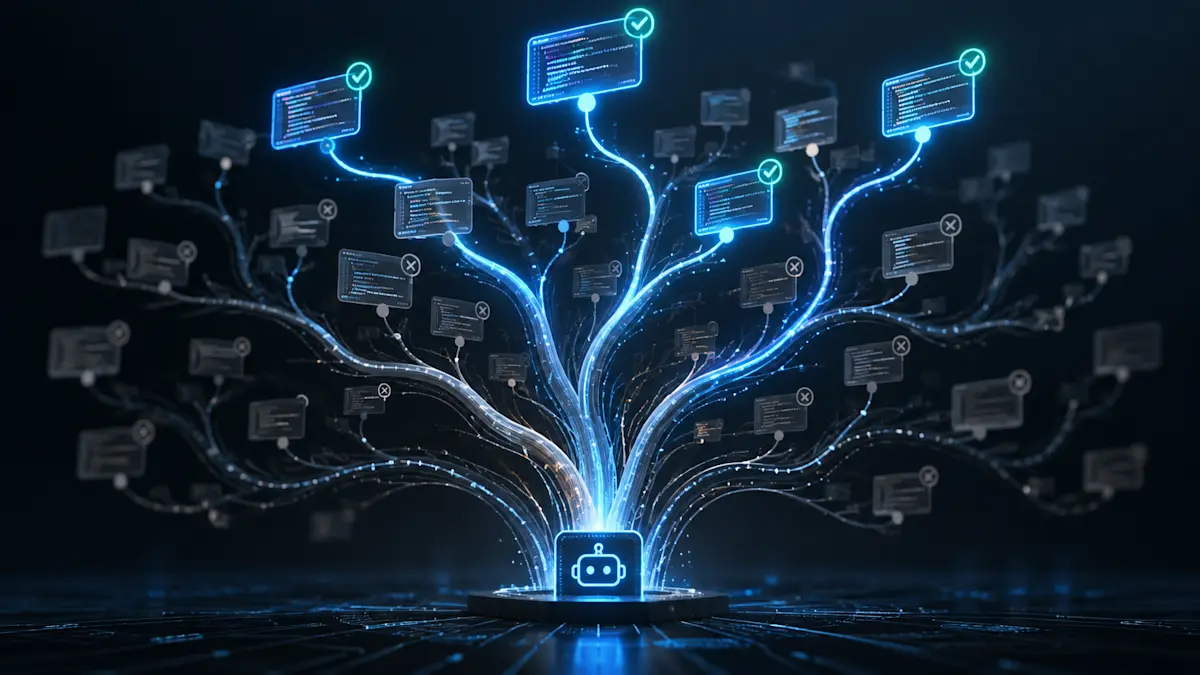
Precision Through Automated Evaluation
Researchers from MIT and Sakana AI unveiled a new framework this week designed to lower the costs of training self-improving coding agents. By utilizing a specialized Large Language Model (LLM) judge, the system automates the evaluation process. This breakthrough allows developers to identify effective code improvements without expensive, manual testing cycles.
Breaking news
 Canonical’s Web Presence Hit by Second DDoS Assault This Year
 Loops AI Secures $3.5 Million to Power a New AI Operating System for E‑Commerce
 Winverse AI Secures Tens of Millions in Seed Funding from DeepSeek and Long‑Z
 Google Adds Pixel 9 Series to Certified Refurbished Store
Coding agents often refine their own performance by modifying internal prompts, tool configurations, and underlying codebases. However, determining which specific adjustments yield genuine progress is labor-intensive and costly. This new methodology replaces human oversight with an automated judge, significantly accelerating the iterative development cycle for autonomous software tools.
The framework functions by simulating how an agent interacts with various coding tasks. The LLM judge reviews the outputs, scoring the modifications based on efficiency and accuracy. By filtering out ineffective changes early, the system saves significant computational resources. This allows developers to focus on high-impact optimizations that genuinely improve the agent's problem-solving capabilities.
Can Automated Judges Replace Human Oversight?
Historically, evaluating self-improving agents required massive amounts of human feedback or extensive, slow testing environments. The new approach shifts this burden to the LLM judge, which can process thousands of iterations in a fraction of the time. This efficiency is critical for scaling AI development in complex programming environments.
The integration of an LLM judge suggests a future where AI systems manage their own evolution with minimal human intervention. While the system is highly effective at identifying technical improvements, researchers are still refining how it handles nuanced architectural decisions. The goal remains to create agents that learn faster while maintaining high standards for code quality and security.
As these frameworks become more sophisticated, the barrier to entry for building advanced coding assistants will drop. Developers can expect faster software deployment cycles and more reliable AI-generated code. This advancement marks a significant step toward fully autonomous programming assistants that can adapt to new challenges in real-time.
Frequently Asked Questions
What is the primary benefit of this new framework? It drastically reduces the financial and time costs associated with evaluating self-improving coding agents. By automating the review process, developers can iterate much faster.
How does the LLM judge determine if a change is successful? The judge analyzes the agent's performance on specific coding tasks and scores the modifications. It discards ineffective changes and preserves those that improve the agent's accuracy.
Will this technology replace human software engineers? No, it is designed to assist engineers by automating repetitive optimization tasks. It allows humans to focus on high-level design while the agent handles iterative improvements.

