The current market hosts many ARM‑based CPUs
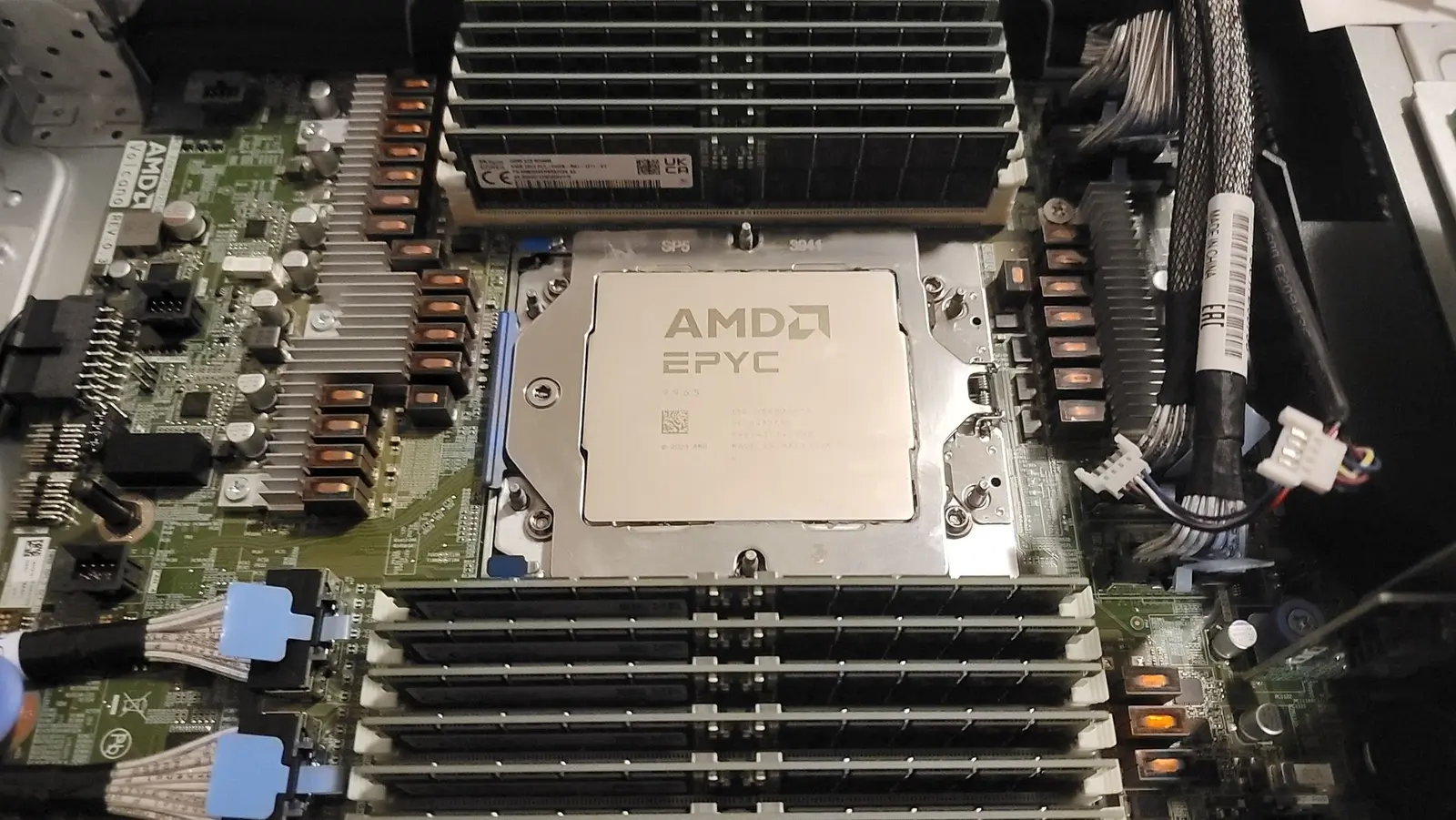
OpenAI’s internally developed Jalapeño ASICs are integrated into the company’s compute architecture alongside AMD EPYC „Turin” CPUs. Each node carries 1.5 TB of memory, a scale that SemiAnalysis examined immediately after the chip’s public reveal. We asked Richard Ho, VP and Head of Hardware at OpenAI, for his perspective on this major technical decision.
Breaking news
 Town AI Secures $108 Million Series B, Valued at $1 Billion After $55 M Pre‑Series
 Apple Prepares for Major Product Launch Event on October 28
 Apple Releases Release Candidates for watchOS, tvOS and visionOS 27.2
 Apple Limits iPhone Duo and iPhone 18 Pro Max to Reservation-Only Sales in Japan and South Korea
Ho explained that the choice of the Turin platform was driven by pragmatism. He described Nvidia’s new Vera chip as still a bit behind in maturity. „We focused on minimizing risk and speeding up development,” Ho said. He acknowledged that the Turing device, as a standalone solution, is powerful and meets technical requirements, but OpenAI’s partners already had solid experience with the chosen platform.
In an interview with Tom’s Hardware Premium, Ho highlighted that the Jalapeño program’s teams make very practical decisions. „Our goal is to be aggressive on performance and cost without taking unnecessary risks,” he added. This strategy, according to Ho, represents an optimal design choice for complex projects.
The current market hosts many ARM‑based CPUs, often built in‑house by cloud providers such as Google Cloud’s Axiom line or AWS’s Graviton family. Both Nvidia’s Vera and Arm’s AGI are described as „agency” CPUs, promising superior complex‑reasoning performance compared to x86 equivalents from AMD and Intel. When asked why Turin was chosen despite OpenAI’s close ties with Nvidia, Ho emphasized stability and maturity.
A striking aspect of OpenAI’s decision is
Arm has long promoted the advantages of the AArch64 instruction set over x86, even claiming that its AGI processor delivers more than twice the performance of modern x86 platforms. Those claims are based on internal estimates, not real‑world benchmarks. Nvidia markets Vera as a leader with up to a 1.8× advantage, but that figure comes from dividing the overall SPEC CPU 2026 score per core. In reality, the difference is only about 3% in Vera’s favor.
Nvidia aggressively compared Vera to x86, citing a 1.8× improvement over a competing AMD Turin chip. However, that number derives from a benchmark suite that shows Vera is only 3% ahead of the EPYC 9755. Many semi‑custom ARM designs, from Graviton to Azure’s Cobalt, focus on core density and cloud‑task efficiency. Vera and AGI aim for maximum performance, but their initial benchmarks have yet to be tested across a wide range of workloads, especially against future AMD Venice or Intel Diamond Rapids chips.
A striking aspect of OpenAI’s decision is that Turin is one of Arm’s partners for AGI implementation and is also listed among Nvidia’s customers exploring Vera. OpenAI, other frontier labs, and hyperscalers maintain a diversified hardware fleet. The specific pairing of Jalapeño with Turin was driven by risk reduction; Ho cited platform maturity as the decisive factor.
Overall, the x86_64 architecture is more mature than AArch64. Arm has existed since the mid‑1980s, but its 64‑bit extension appeared only 12 years after the x86 introduction. While Arm has penetrated data centers over the past two decades, the x86 foundation is deeper. Ho’s comments focused more on the dynamics between Turin and Vera than on the AArch64 versus x86 divide.
Although Vera’s initial benchmarks are impressive, it represented an unnecessary risk for a rack‑scale Jalapeño deployment. Ho noted practical differences: Vera is board‑mounted, whereas Turin chips sit in slots, making hardware swaps easier. With a diverse hardware fleet, OpenAI may eventually host Jalapeño on a different platform—perhaps Arm’s AGI or Nvidia’s Vera. For now, Turin remains the correct choice.
