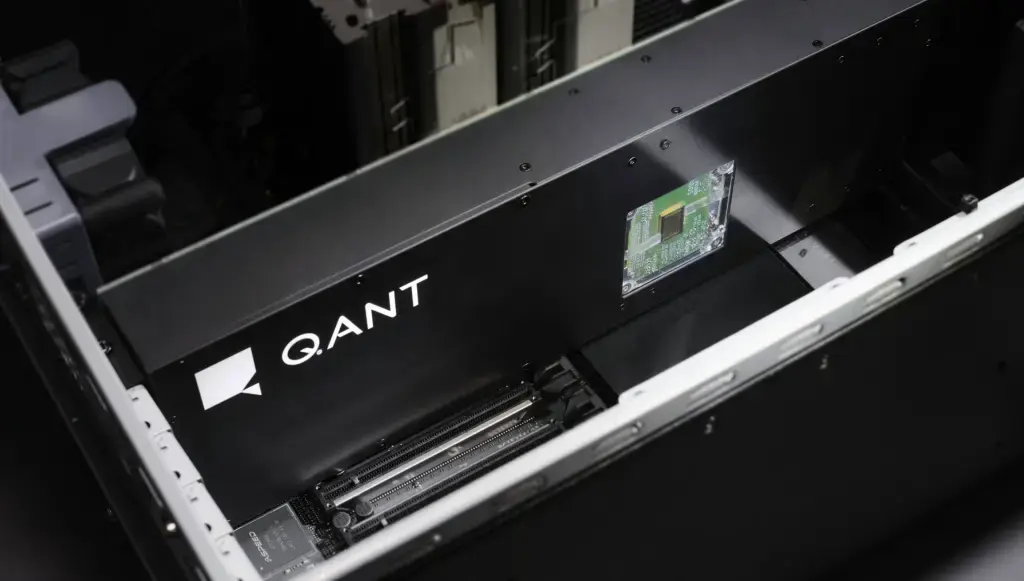
Democratizing Access to Photonic Computing
Stuttgart-based startup Q. ANT has launched a free, open-source software development kit for its photonic processors. These chips use light rather than electricity to perform calculations for artificial intelligence. The move allows developers to begin coding for the hardware immediately. They do not need to purchase physical units first. This strategy mirrors the early success of NVIDIA’s CUDA platform.
Breaking news
 Canonical’s Web Presence Hit by Second DDoS Assault This Year
 Loops AI Secures $3.5 Million to Power a New AI Operating System for E‑Commerce
 Winverse AI Secures Tens of Millions in Seed Funding from DeepSeek and Long‑Z
 Google Adds Pixel 9 Series to Certified Refurbished Store
The company aims to reduce the massive energy costs associated with running modern AI models. Traditional silicon chips consume significant power during inference tasks. Q. ANT believes light-based computing offers a more efficient alternative. By opening up the software layer, they hope to attract a broader community of programmers. This approach lowers the barrier to entry for new users.
Developers can now download the toolchain and start building applications. The kit supports the specific architecture of Q. ANT’s chips. It includes libraries and compilers designed for optical processing. Users can simulate their code before deploying it on actual hardware. This workflow accelerates the development cycle significantly. Companies can test algorithms without waiting for custom silicon shipments. The open-source nature encourages collaboration and rapid iteration.
Will Light-Based Chips Replace Silicon?
The decision to give away the software follows a familiar pattern in tech. NVIDIA popularized this model with CUDA years ago. That ecosystem helped secure a dominant position in GPU computing. Q. ANT is betting that a strong developer community will drive adoption. If programmers build useful tools, demand for the hardware will follow. This creates a virtuous cycle of innovation and market growth.
The core promise of photonic computing is speed and efficiency. Light travels faster than electrical signals through copper wires. This reduces latency in complex neural network operations. Additionally, optical components generate less heat. This could lead to smaller, cooler data centers. However, the technology remains in its early stages. Many engineers are still learning how to optimize algorithms for light. The new software kit provides the necessary tools for this transition.
Q. ANT positions itself at the forefront of this shift. The startup is part of a growing wave of companies exploring non-silicon alternatives. While silicon dominates today, physics suggests limits to its scaling. Photonic chips offer a path beyond those constraints. The free software release is a strategic step toward proving this potential.
Frequently Asked Questions
Is the software kit truly free? Yes, Q. ANT has released the development kit as open-source. Developers can access it without paying licensing fees. This removes financial hurdles for initial experimentation.
Do I need the physical chip to start coding? No, the software allows for simulation and code writing first. You can develop and test your logic before obtaining hardware. This separates the learning curve from the procurement process.
How does this compare to traditional GPU programming? It follows a similar model to NVIDIA’s CUDA ecosystem. Developers write code specific to the new architecture. The goal is to make photonic chips as accessible as graphics cards.

