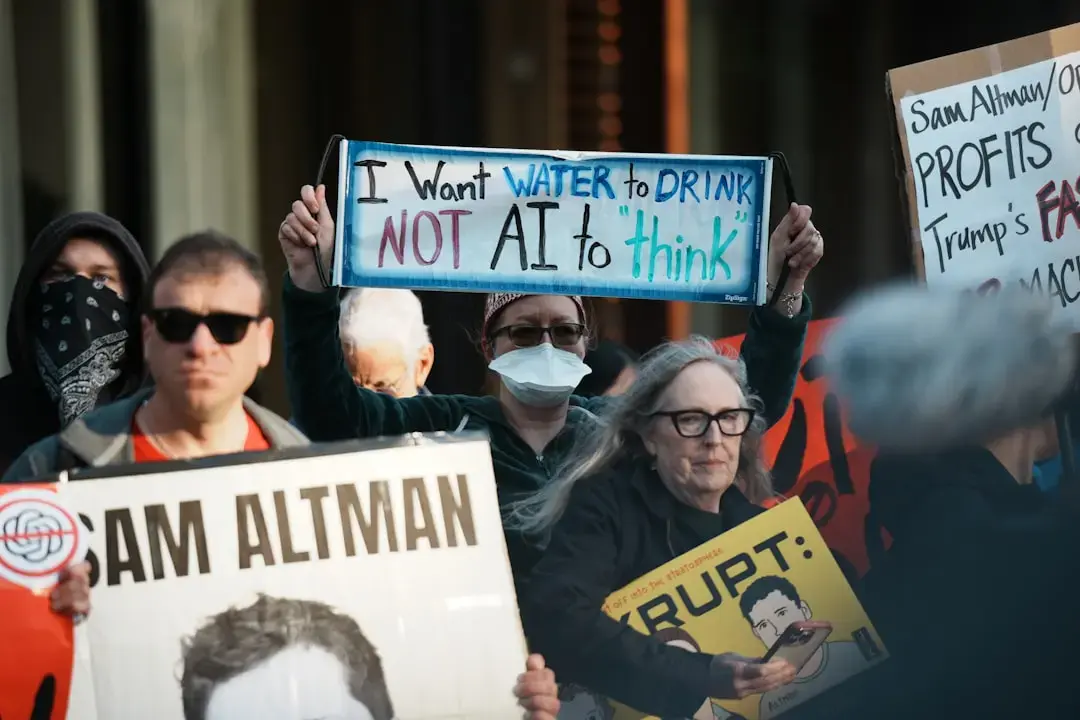
Why Public Fear Might Enable AI Centralization
Sam Altman, CEO of OpenAI, expressed concern that artificial intelligence may become dominated by a small number of powerful actors, driven in part by public fears that could lead people to sacrifice significant personal freedoms for perceived safety. Speaking in an interview published August 23, 2026, Altman highlighted how anxiety around AI risks might push societies toward accepting centralized control in exchange for security assurances.
Breaking news
 Town AI Secures $108 Million Series B, Valued at $1 Billion After $55 M Pre‑Series
 Apple Prepares for Major Product Launch Event on October 28
 Apple Releases Release Candidates for watchOS, tvOS and visionOS 27.2
 Apple Limits iPhone Duo and iPhone 18 Pro Max to Reservation-Only Sales in Japan and South Korea
He argued that the narrative framing AI as an existential threat could create conditions where democratic oversight erodes, and decision-making power concentrates in the hands of a few corporations or governments. This dynamic, Altman warned, mirrors historical patterns where fear has justified trade-offs between liberty and safety, potentially undermining open innovation and accountability in AI development.
Altman explained that when people perceive AI as dangerous, they are more likely to support restrictive measures that favor established players with resources to comply with complex regulations. Smaller innovators and open-source initiatives could be squeezed out, reducing competition and diversity in the field. He noted that this risk is not theoretical but already visible in policy debates where safety concerns are used to justify barriers to entry.
Can Democracy Survive the AI Era?
He emphasized that the solution lies not in halting progress but in building systems that distribute power broadly while addressing genuine risks. Transparent governance, international cooperation, and public education are key to preventing fear from being exploited to justify consolidation of control.
Altman questioned whether current institutions are equipped to manage AI’s societal impact without succumbing to pressure for quick fixes. He urged policymakers to resist knee-jerk reactions and instead design adaptive frameworks that balance innovation with accountability. The challenge, he said, is to ensure that safety measures do not become tools for entrenching dominance.
Without deliberate effort, Altman warned, the AI revolution could replicate past technological shifts where initial openness gave way to monopolistic control, ultimately limiting public benefit and eroding trust in technology.
Frequently Asked Questions
What does Sam Altman mean by trading liberty for safety in AI? He means that fear of AI risks could lead people to accept restrictive policies that concentrate power in few hands, sacrificing openness and innovation for the promise of security.
How might AI fears lead to centralization of control? Public anxiety may justify regulations that only large entities can afford to meet, pushing out smaller competitors and reducing diversity in AI development.
What solutions does Altman propose to prevent AI monopolies? He advocates for transparent governance, global cooperation, and public education to maintain broad access and prevent fear from being used to justify consolidation of power.