The project builds on Google’s earlier work in federated learning and edge AI
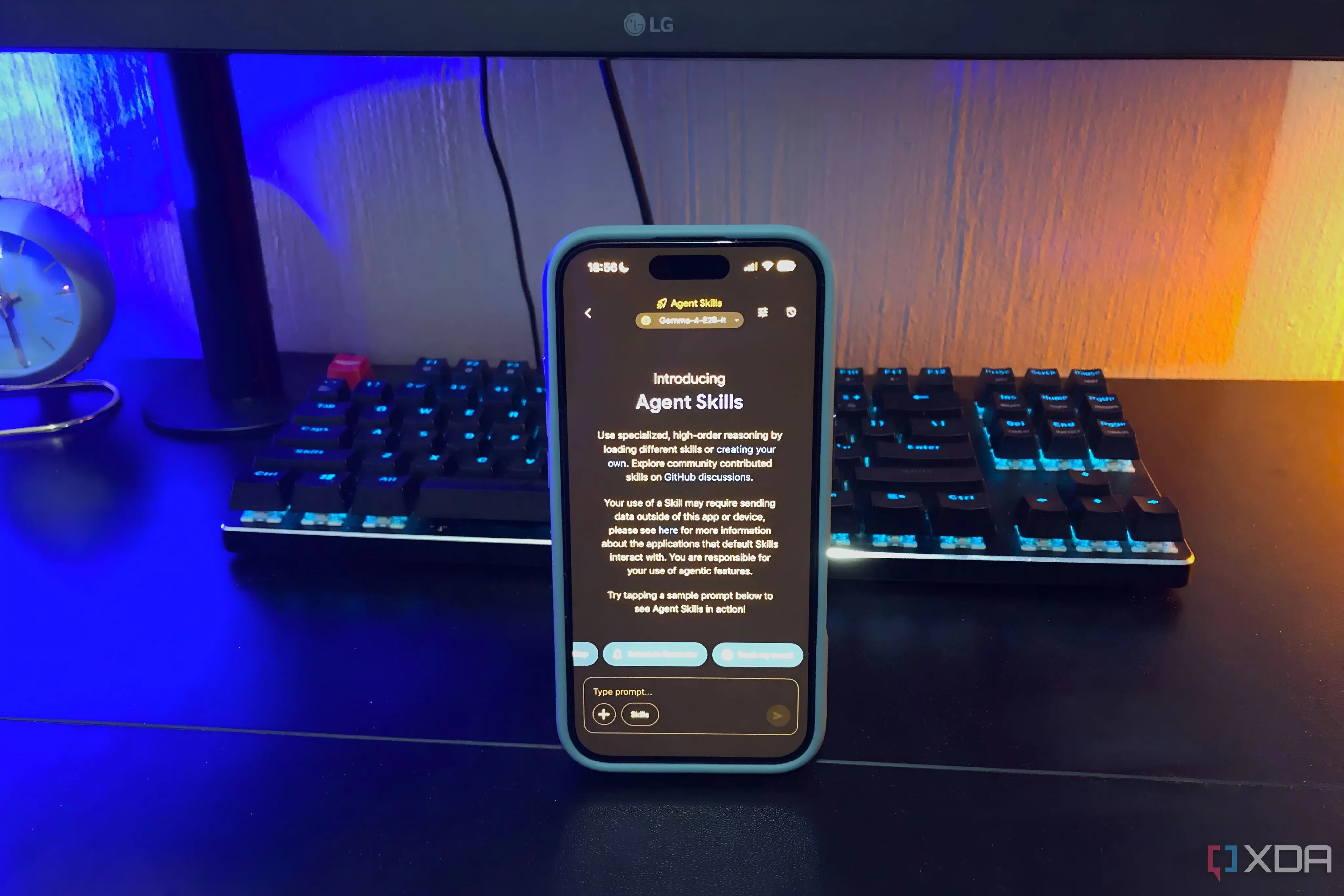
An open-source application developed by Google engineers allows users to run artificial intelligence models entirely on their smartphones without internet connectivity. Released in August 2026, the tool transforms everyday mobile devices into private AI laboratories capable of processing data locally. The app supports a range of models for tasks like image recognition, natural language processing, and predictive analysis, all executed directly on the device. The application leverages recent advances in mobile chip efficiency and model compression techniques to enable complex AI workloads on consumer hardware. By keeping all computations on-device, it eliminates reliance on cloud servers, enhancing privacy and reducing latency. Users can download pre-trained models or fine-tune their own using personal data, all while maintaining full control over their information.
Breaking news
 Town AI Secures $108 Million Series B, Valued at $1 Billion After $55 M Pre‑Series
 Apple Prepares for Major Product Launch Event on October 28
 Apple Releases Release Candidates for watchOS, tvOS and visionOS 27.2
 Apple Limits iPhone Duo and iPhone 18 Pro Max to Reservation-Only Sales in Japan and South Korea
The project builds on Google’s earlier work in federated learning and edge AI, aiming to democratize access to powerful machine learning tools. How Does Local AI Processing Improve User Privacy? Processing AI tasks locally means sensitive data never leaves the user’s phone, significantly lowering the risk of exposure or misuse. Unlike cloud-based AI services that require uploading personal information to remote servers, this approach keeps everything under the user’s direct control. This is particularly valuable for applications involving health data, financial records, or private communications. Early adopters have reported using the app for secure document analysis and offline language translation without compromising confidentiality. What Are the Limitations of Running AI on a Smartphone? While impressive, on-device AI still faces constraints related to battery life, thermal management, and model size compared to desktop or cloud alternatives. Larger models may run slower or require newer hardware to function effectively.
However, ongoing optimizations in software and hardware are steadily closing
However, ongoing optimizations in software and hardware are steadily closing this gap. Developers note that mid-range smartphones released in the past two years can handle most common AI tasks efficiently, with performance improving as neural processing units become more standard. The shift toward local AI represents a growing trend in personal technology, emphasizing user autonomy and data sovereignty. As concerns over data privacy and surveillance increase, tools like this offer a practical alternative to centralized AI services. Experts predict wider adoption in fields such as education, healthcare, and independent research, where secure, offline capabilities are essential. The open-source nature of the project invites global collaboration, potentially accelerating innovation in accessible, private AI solutions. Frequently Asked Questions Is the app available for both Android and iOS devices? Yes, the application is designed to work on both major mobile platforms, with versions optimized for each operating system’s architecture and hardware capabilities.
Do I need technical expertise to use this AI lab on my phone? No, the interface is designed for accessibility, allowing users to run models through simple menus, though advanced features support customization for those with programming experience. Can I share models I create with others using this tool? Yes, users can export trained models in standard formats and share them via local transfer methods, though sharing does not require uploading to external servers.