How does the Ranger platform improve scalability for cloud providers?
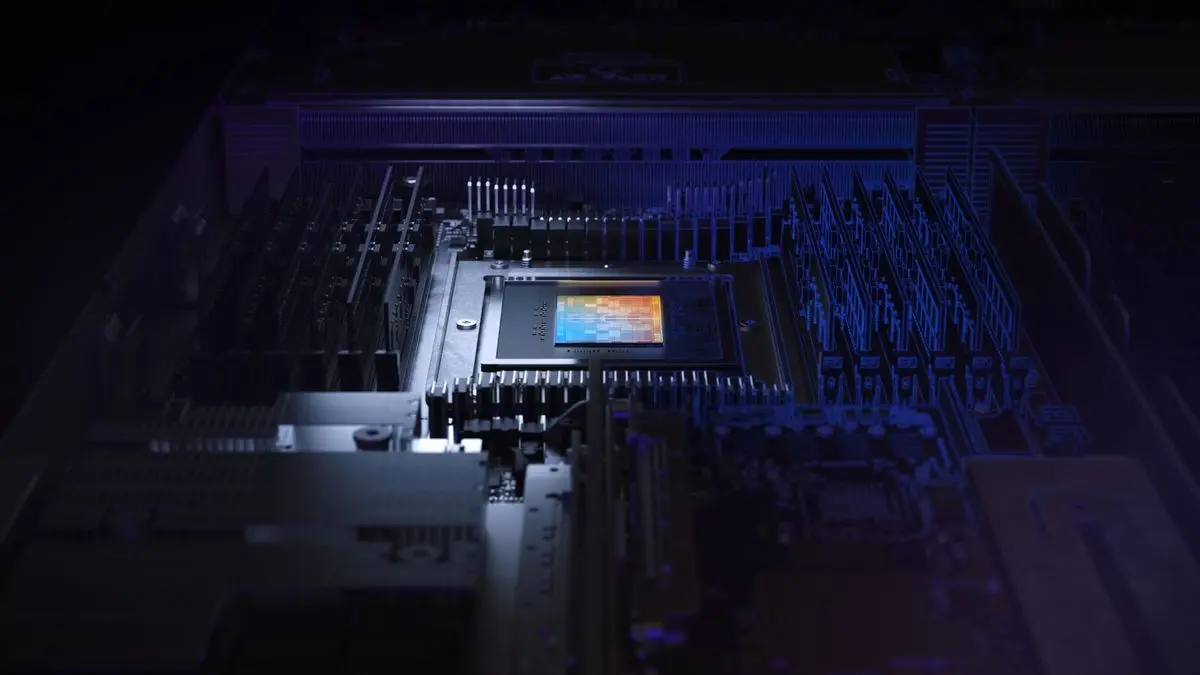
Arm has launched its next-generation Neoverse CSS N4 platform, codenamed ' Ranger', designed for high-density computing in cloud infrastructure and edge environments. Announced on September 8, 2026, the platform introduces a semi-custom compute subsystem capable of integrating up to 128 Arm Neoverse N4 cores per die, paired with as much as 256 MB of L3 cache. Built on TSMC's N3P process technology, the architecture targets data center operators seeking improved performance per watt for scalable workloads. The launch marks a significant step in Arm's strategy to expand its presence in server-class silicon through flexible, customizable subsystem designs.
Breaking news
 Microsoft Unveils New AI Hardware at October 7 Event
 TechCrunch Disrupt 2026: Blackstone’s Jas Khaira on Building the Next Generation of AI Giants
 Yann LeCun Calls Anthropic CEO Dario Amodei Deluded and Crazy
 Europe’s AI Boom Faces Critical Customer Gap
The Neoverse CSS N4 platform builds upon Arm's Neoverse N2 foundation, incorporating enhancements to the core microarchitecture, memory subsystem, and interconnect fabric. By leveraging TSMC's advanced N3P node, Arm achieves higher transistor density and improved power efficiency, enabling the tight integration of numerous cores and large cache pools within a single die. The semi-custom approach allows partners to tailor the compute subsystem to specific workloads, such as web serving, database operations, or AI inference, while maintaining compatibility with Arm's broader software ecosystem. Arm emphasizes that the platform supports coherent mesh interconnects and supports DDR5 and LPDDR5X memory standards, ensuring flexibility across diverse system designs.
What advantages does the N3P process bring to the Neoverse CSS N4 design?
The Ranger platform enables cloud providers to scale compute density without proportionally increasing physical footprint or power consumption. By packing up to 128 cores and 256 MB of L3 cache per die, the design reduces latency in data-intensive applications and improves throughput for parallel workloads. Arm notes that the platform's modular architecture allows for die-to-die integration in multi-chip packages, further expanding core counts beyond a single die. This approach supports the growing demand for hyperscale infrastructure that balances performance, efficiency, and cost. Early adopters are expected to evaluate the platform for use in next-generation cloud instances and edge nodes handling real-time analytics.
TSMC's N3P process, an enhanced version of its 3-nanometer technology, provides the transistor density and power efficiency necessary to realize the high core count and large cache configuration of the Neoverse CSS N4. The process enables lower operating voltages and reduced leakage, which are critical when scaling to 128 cores per die. Arm states that the N3P node contributes to improved performance per watt compared to previous-generation nodes, aligning with industry goals for sustainable data center operations. The process also supports finer interconnect routing, aiding in the implementation of the platform's coherent mesh network and high-bandwidth memory interfaces.
What is the maximum core count supported by the Neoverse CSS N4 platform? The platform supports up to 128 Arm Neoverse N4 cores per die in its compute subsystem configuration.
Frequently Asked Questions
Which manufacturing process is used for the Neoverse CSS N4 Ranger platform? The platform is built on TSMC's N3P process technology, an advanced 3-nanometer node.
What is the maximum L3 cache capacity available per die? Each die can include up to 256 MB of L3 cache to support high-throughput, low-latency workloads.