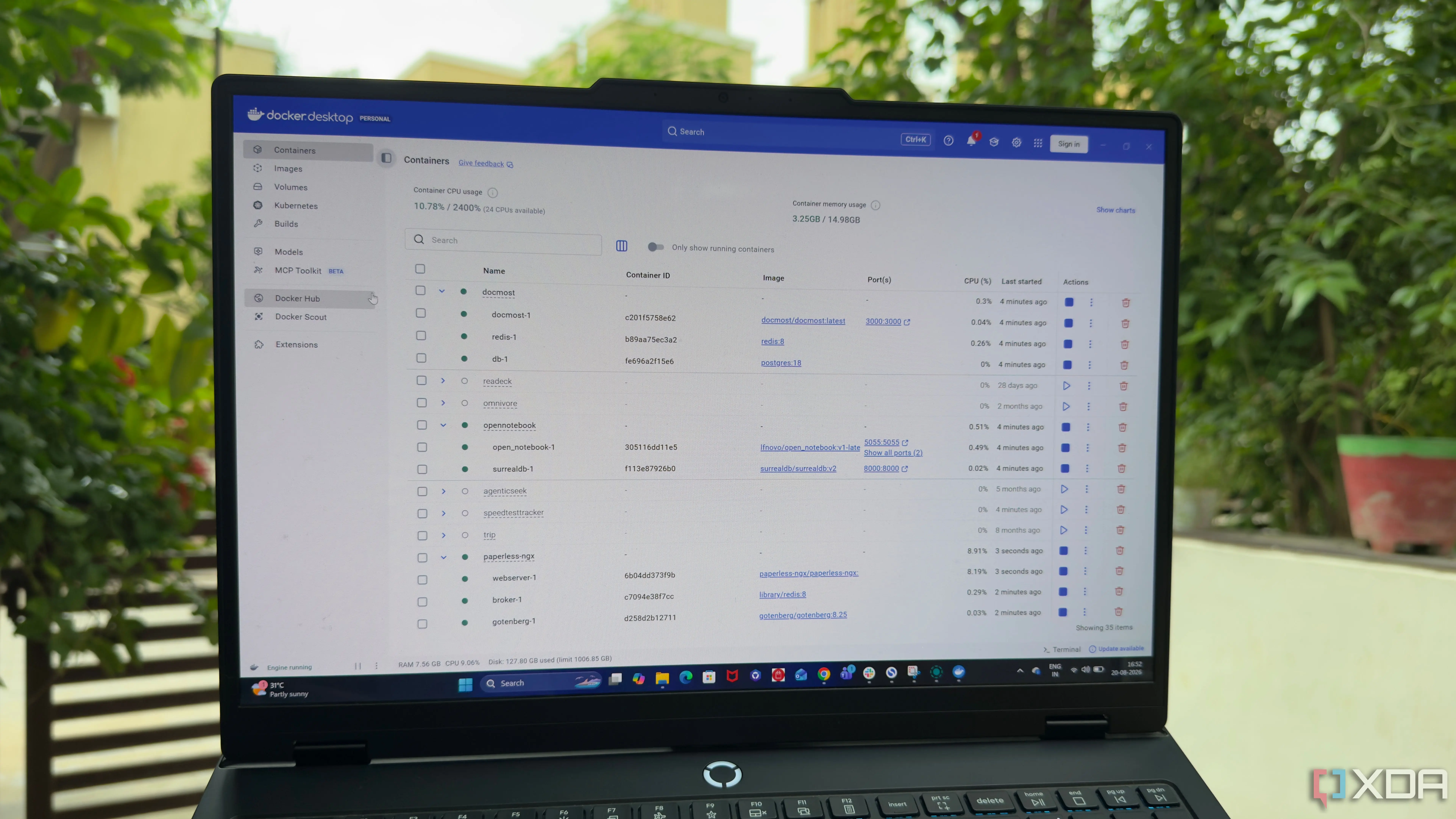
Automating Container Health Checks
Self-hosted infrastructure often demands constant attention, but a specific stack of Docker utilities can automate routine maintenance. Yash Patel, a software engineer who began his career in 2018, shares his essential toolkit. These five applications work together to keep personal servers running smoothly without manual intervention. The goal is simple: reduce the time spent checking logs and restarting failed containers. By automating these tasks, users can enjoy the benefits of self-hosting without the associated stress. This approach transforms server management from a chore into a set-and-forget system.
Breaking news
 Judge Questions Fairness of Google's AI Overviews in Antitrust Case
 Apple's iPhone Event Tagline Varies by Country Ahead of September Launch
 Gemini 3.5 Transcribe Eliminates Filler Words From Speech
 Google addresses Keep list addition issues with potential fix
The foundation of this stack relies on monitoring container health directly. Instead of manually inspecting each service, automated tools check status intervals continuously. If a container fails its health check, the system triggers an immediate restart. This prevents minor glitches from becoming total outages. Patel emphasizes that proactive monitoring saves hours of troubleshooting later. The tools integrate seamlessly with standard Docker environments. They require minimal configuration to start working. Users define specific health criteria for each service. When those criteria are not met, the automation engine steps in. This creates a resilient layer of protection for critical applications. The process runs silently in the background. No human interaction is needed during normal operations. Alerts are only generated when something truly goes wrong.
Streamlining Updates and Backups
Keeping software current is another major time sink for self-hosters. One component of this stack handles automatic updates for all managed containers. It pulls new images and applies them during low-traffic windows. This ensures services remain secure and feature-rich without manual effort. Another tool focuses on data persistence and backup strategies. It schedules regular snapshots of important volumes. These backups can be stored locally or pushed to remote storage providers. The combination of auto-updates and scheduled backups creates a safety net. Data loss becomes less likely because recent copies always exist. System downtime is minimized because updates happen automatically. Patel notes that this dual approach covers both code and data integrity. It addresses the two biggest risks in self-hosting. The result is a stable environment that evolves over time. Users do not need to remember update cycles. The system manages its own lifecycle effectively.
Reducing Manual Intervention
The ultimate benefit of this Docker stack is reduced cognitive load. Engineers no longer need to watch over their servers constantly. The tools handle the repetitive, mundane aspects of administration. This frees up mental space for more creative projects. Patel’s experience shows that automation scales well. As more services are added, the management burden does not increase linearly. The infrastructure grows organically while remaining stable. This method suits anyone who values reliability over manual control. It shifts the focus from fixing problems to preventing them. The long-term outlook is positive for self-hosting communities. More people will adopt these practices if they see the ease of use. The barrier to entry drops significantly. Self-hosting becomes accessible to non-experts as well. The future of personal servers looks increasingly autonomous.
Frequently Asked Questions
Which specific tools are included in this stack? The article references a general category of monitoring, updating, and backup tools. Specific names are implied by function rather than listed explicitly in the summary. The focus remains on the workflow rather than individual product branding.
How much time does this save per week? While exact hours vary by user, the primary saving comes from eliminating daily checks. Users report significant reductions in routine maintenance tasks. The time saved depends on the number of services hosted.