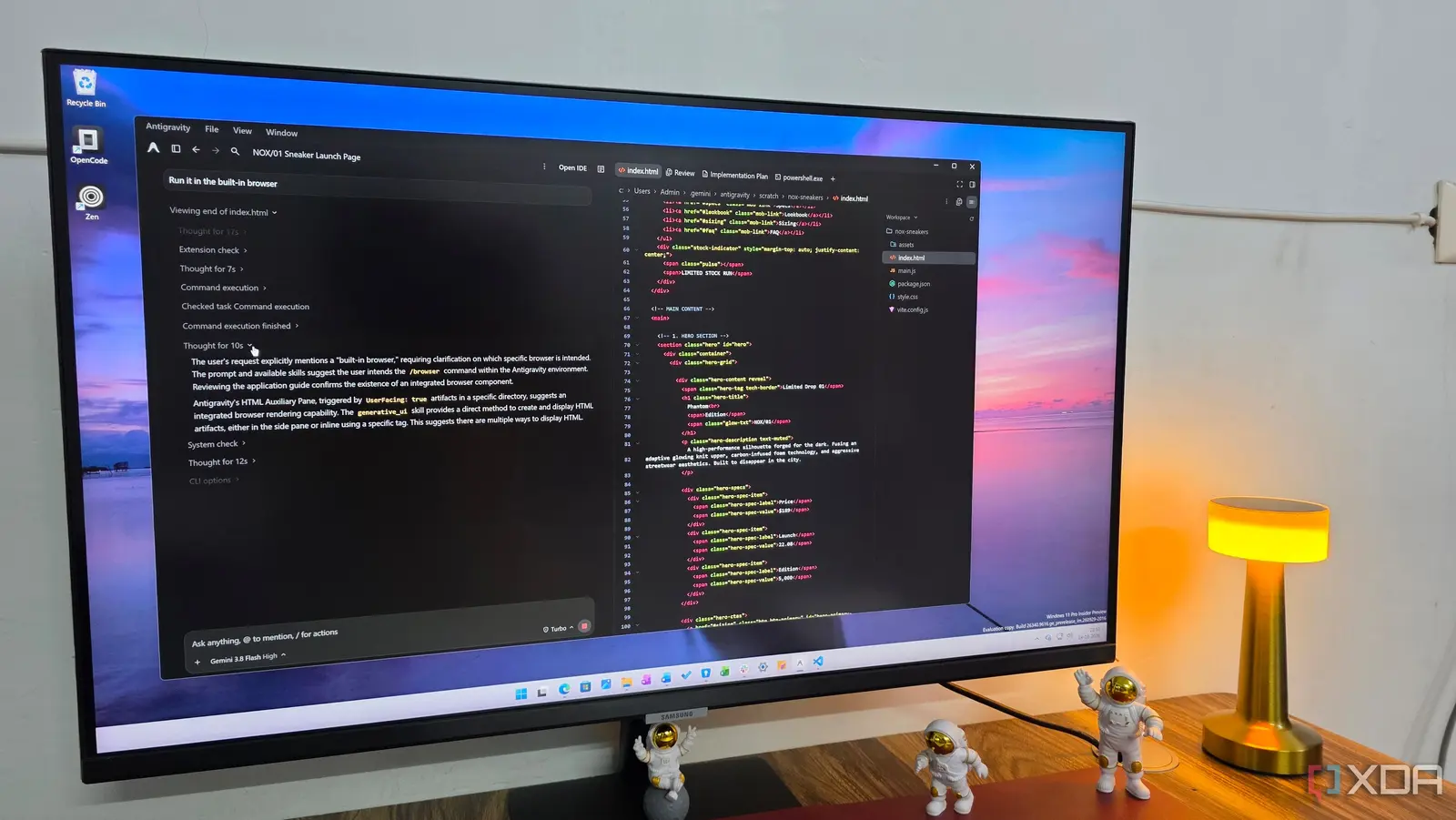
How Antigravity Streamlines Large Projects
A developer named Parth Shah, known for his tech writing, claims he cut his coding time in half by switching from Visual Studio Code to a tool called Google Antigravity. The change happened in late 2026 and was reported in an online tech column.
Breaking news
 Town AI Secures $108 Million Series B, Valued at $1 Billion After $55 M Pre‑Series
 Apple Prepares for Major Product Launch Event on October 28
 Apple Releases Release Candidates for watchOS, tvOS and visionOS 27.2
 Apple Limits iPhone Duo and iPhone 18 Pro Max to Reservation-Only Sales in Japan and South Korea
Parth, who has written about Windows, Mac, and mobile devices for several years, found VS Code’s workflow exhausting for large projects. He switched to Google Antigravity, a lightweight editor that integrates directly with Google’s cloud services. The new setup eliminated the need for manual builds, automated testing, and frequent context switching.
Is the 50‑Percent Time Reduction Realistic for All?
Antigravity offers a single‑pane interface that connects to Google Cloud Storage, BigQuery, and AI‑powered code suggestions. Developers can edit, run, and debug code without leaving the browser. Parth noted that the tool automatically compiles code in real time, provides instant error feedback, and syncs changes to the cloud. This reduces the time spent on configuration and environment setup, allowing developers to focus on writing code.
The editor’s AI assistant, trained on billions of lines of open‑source code, offers context‑aware completions and refactoring suggestions. Parth said the suggestions were often more accurate than VS Code’s extensions. He also highlighted the seamless collaboration feature, which lets multiple developers edit the same file simultaneously, cutting down on merge conflicts.
# What languages does Antigravity support?
Parth’s claim of halving coding time is based on his own workflow, which involved building and testing a complex web application. He compared the total time spent from code entry to deployment in VS Code versus Antigravity. While the numbers are promising, other developers may experience different results depending on project size, language, and team structure. The tool’s cloud‑centric design may also introduce latency for users with slower internet connections.
# Does it require a paid Google Cloud account?
Despite these caveats, many developers are intrigued by the promise of a unified, cloud‑based development environment. Antigravity’s integration with Google’s AI services could become a standard for teams looking to reduce friction in the coding process.
It supports JavaScript, Python, Go, and Java, with ongoing expansion to other languages.
# Can it replace local development tools entirely?
A free tier is available, but larger projects may need a paid plan for storage and compute resources.
For many small to medium projects, yes. However, teams needing offline access or specific hardware integrations might still rely on local IDEs.