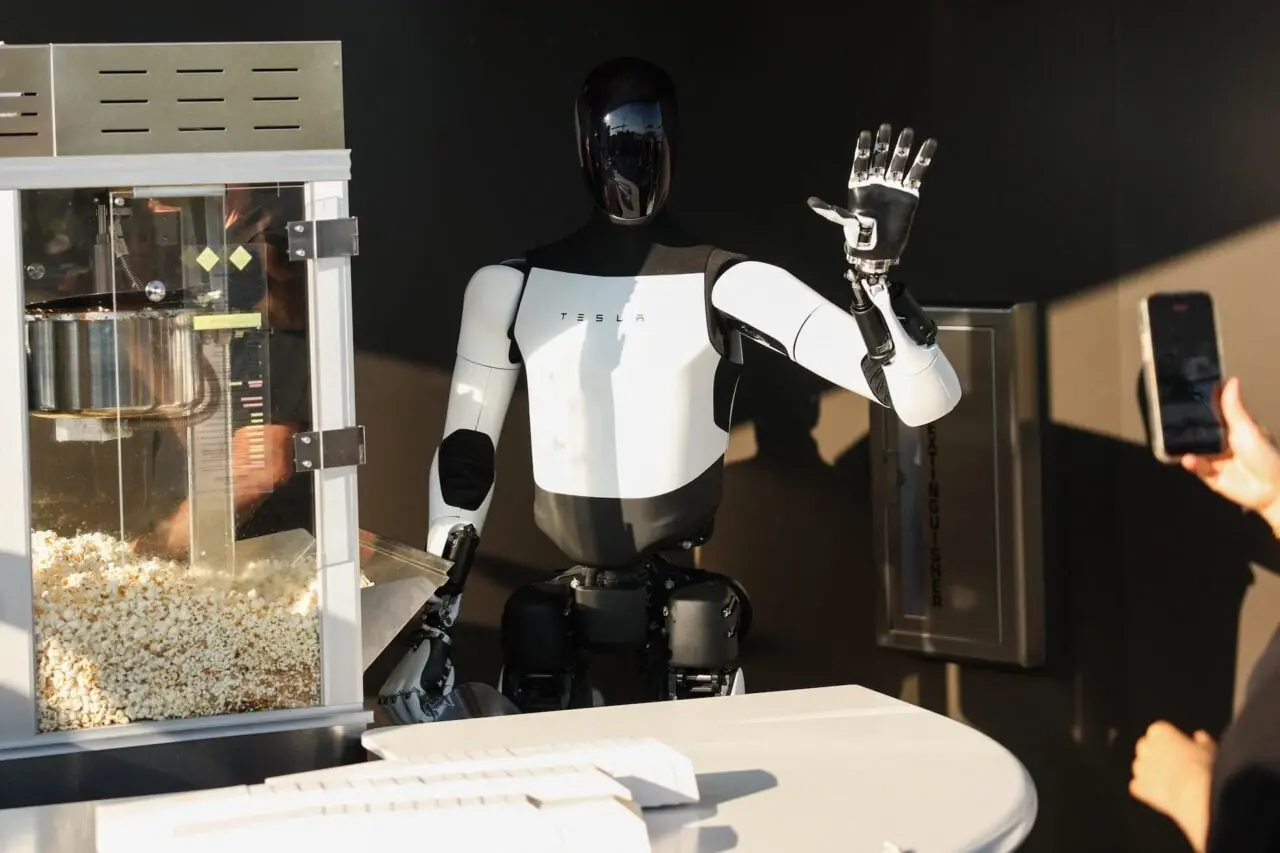
Tesla has produced several hundred Optimus units per week recently
Tesla is increasing weekly production of its Optimus humanoid robots to several hundred units, up from just a few dozen a few months ago, according to sources familiar with the effort. The company, led by Elon Musk, is pushing to scale up manufacturing using automotive-style assembly techniques. However, the intricate design of the robots’ hands is proving to be a significant bottleneck in achieving higher output rates. The complexity of replicating human-like dexterity in robotic hands requires precision engineering that slows down assembly lines. Unlike simpler robotic arms, Optimus hands involve multiple joints, sensors, and actuators that must work in coordination.
Breaking news
 Town AI Secures $108 Million Series B, Valued at $1 Billion After $55 M Pre‑Series
 Apple Prepares for Major Product Launch Event on October 28
 Apple Releases Release Candidates for watchOS, tvOS and visionOS 27.2
 Apple Limits iPhone Duo and iPhone 18 Pro Max to Reservation-Only Sales in Japan and South Korea
Tesla has produced several hundred Optimus units per week recently, but insiders say scaling to tens of thousands weekly will require solving these mechanical and integration challenges first. Engineering Hurdles in Humanoid Hand Production Each Optimus hand contains over a dozen moving parts designed to mimic human grip and fine motor control. Assembling these components at scale demands tight tolerances and rigorous testing, which traditional car manufacturing lines are not optimized for. Tesla is adapting its factory processes, originally built for vehicles, to handle the delicate nature of robotic limb production. Engineers are reportedly redesigning certain hand subsystems to improve manufacturability without sacrificing functionality. Sources indicate that early versions of the hand required frequent recalibration during testing, slowing down throughput. Tesla’s goal is to eventually produce 20,000 Optimus robots per week, a target that hinges on streamlining hand assembly.
Until then, production will remain constrained by the time-intensive nature of
Until then, production will remain constrained by the time-intensive nature of integrating these complex appendages. Can Tesla Apply Car-Making Techniques to Robot Hands? While Tesla excels at high-volume vehicle production, applying those methods to humanoid robotics presents unique difficulties. Car parts are generally larger, more standardized, and less sensitive to microscopic misalignments. In contrast, robotic hands demand micron-level precision in finger joint alignment and sensor placement. The company is exploring modular hand designs and automated vision systems to improve consistency. Despite the challenges, Tesla continues to iterate rapidly, using feedback from internal testing to refine both software and hardware. The Optimus project remains a long-term bet on humanoid labor, with potential applications in factories, logistics, and eventually domestic settings. Success will depend on overcoming current production friction points, particularly in hand fabrication. Frequently Asked Questions How many Optimus robots is Tesla currently producing each week?
Tesla is producing several hundred Optimus robots per week, a significant increase from just a few dozen a few months earlier, according to internal sources. Why are the robot’s hands slowing down production? The hands contain numerous small, precision components that require careful assembly and calibration, making them difficult to mass-produce using standard automotive techniques. Is Tesla still aiming to build 20,000 Optimus robots per week? Yes, Tesla’s long-term goal remains to reach a weekly output of 20,000 Optimus robots, but achieving that depends first on resolving the manufacturing challenges tied to the hand design.