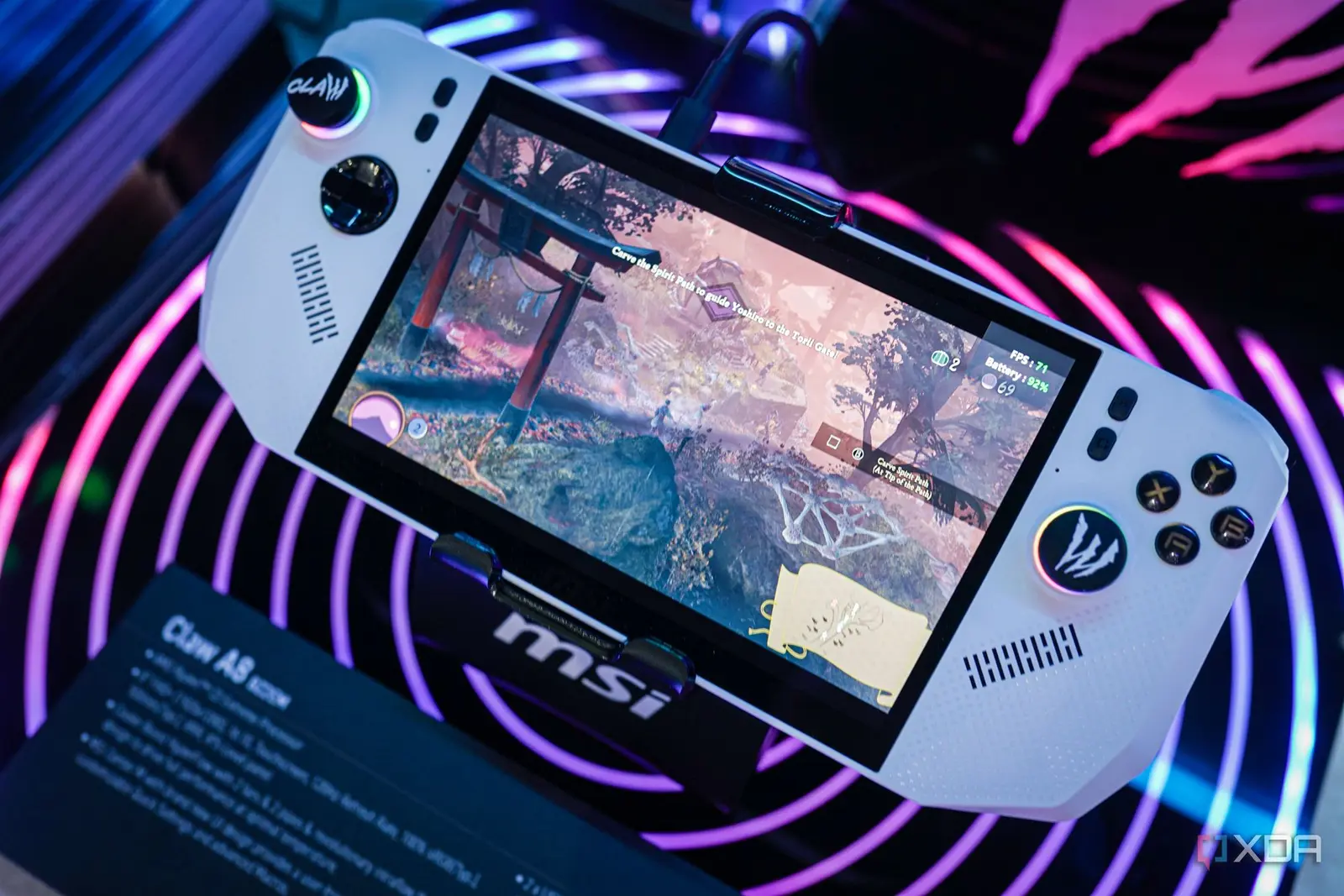
Why Older Handhelds Might Be Left Behind
A new version of AMD’s FidelityFX Super Resolution, FSR 4, has been optimized for portable devices, allowing current handheld consoles to run games at higher frame rates with minimal performance cost. The update was announced at the company’s annual developer conference on October 2, 2026, and is expected to ship with the next generation of handhelds later this year.
Breaking news
 Canonical’s Web Presence Hit by Second DDoS Assault This Year
 Loops AI Secures $3.5 Million to Power a New AI Operating System for E‑Commerce
 Winverse AI Secures Tens of Millions in Seed Funding from DeepSeek and Long‑Z
 Google Adds Pixel 9 Series to Certified Refurbished Store
The lightweight FSR 4 model reduces the computational load required for upscaling, making it suitable for the modest GPUs found in devices like the Switch, Steam Deck, and upcoming handhelds from major manufacturers. AMD claims the new algorithm can deliver up to a 30 % boost in frames per second while keeping power consumption under 5 % of the total system draw. Early benchmarks on the Steam Deck show a jump from 60 fps to 78 fps in „Horizon Forbidden West,” with negligible impact on battery life.
Can Developers Make the Most of the New Upscaling?
Although the new FSR 4 is designed to be lightweight, it still relies on certain hardware features that older devices lack. The algorithm uses a simplified denoise filter that requires a dedicated compute unit, a component absent in the original Switch and early Steam Deck models. As a result, users of those systems may not see any performance gains from the update. AMD’s spokesperson noted that „while we are excited to bring FSR 4 to the next wave of handhelds, we recognize that legacy devices will not benefit from the same level of optimization.” The company is exploring a fallback mode that could offer a modest 10 % improvement on older hardware, but it is not guaranteed.
What Does This Mean for the Handheld Market?
Game studios are encouraged to integrate the lightweight FSR 4 SDK into their titles to take advantage of the higher frame rates. The SDK is available for Windows, Linux, and Vulkan, and includes sample code that demonstrates how to toggle the upscaling mode in real time. „We’re seeing developers test the new FSR 4 in early builds of their next‑gen titles,” said a senior engineer at a leading indie studio. „The key is to balance visual fidelity with the limited compute budget of handheld GPUs.” Developers can also use the FSR 4 API to adjust the sharpness and detail levels, tailoring the experience to each device’s capabilities.
Frequently Asked Questions
The update also brings improved support for variable refresh rates, allowing handhelds to match display refresh rates more smoothly. This reduces screen tearing and improves overall visual quality, especially in fast‑paced action games. While the feature is optional, it is expected to become a standard part of the handheld gaming experience in the coming months.
The arrival of FSR 4 could shift consumer expectations, pushing handheld manufacturers to adopt more powerful GPUs to fully leverage the new upscaling technology. AMD’s lightweight model may also encourage smaller developers to release high‑quality games on portable platforms, knowing that performance bottlenecks are less severe. However, the potential exclusion of older devices could fragment the market, leaving some users without access to the latest visual improvements. Industry analysts predict that the next wave of handhelds will feature GPUs with dedicated compute units, ensuring full compatibility with FSR 4 and other advanced rendering techniques.