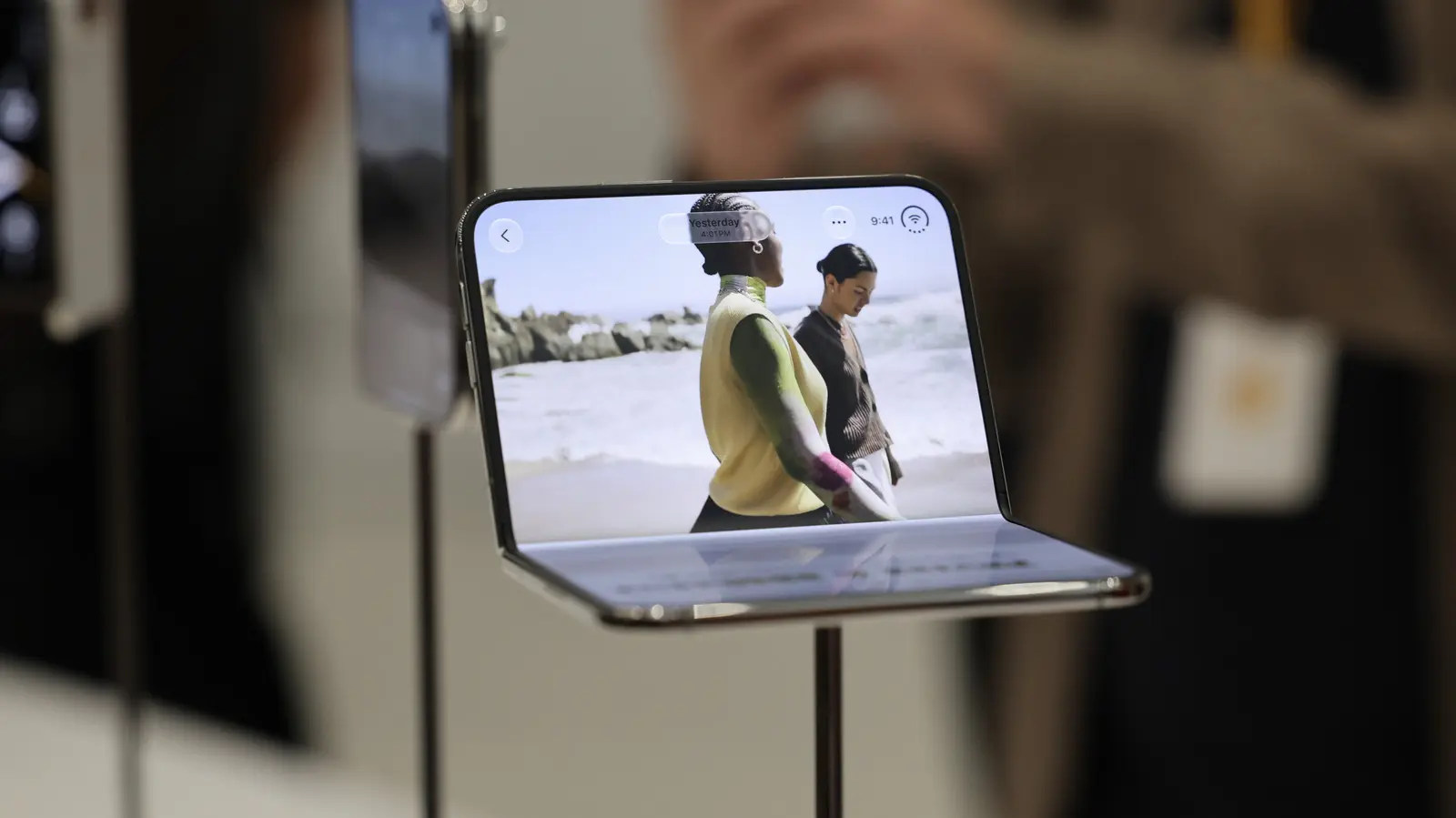
Apple’s Foldable Strategy: Why the i Phone Duo Matters
Apple and Microsoft have each released a device called „Duo,” but the products could not be more distinct. Apple’s i Phone Duo, unveiled at a September 2026 event in Cupertino, marks the tech giant’s first foray into foldable smartphones. Microsoft’s Surface Duo, launched three years earlier, was the company’s attempt to blend Android software with a dual‑screen design. Both aim to redefine mobile productivity, yet they differ in hardware, software integration, and market reception.
Breaking news
 Canonical’s Web Presence Hit by Second DDoS Assault This Year
 Loops AI Secures $3.5 Million to Power a New AI Operating System for E‑Commerce
 Winverse AI Secures Tens of Millions in Seed Funding from DeepSeek and Long‑Z
 Google Adds Pixel 9 Series to Certified Refurbished Store
Apple’s i Phone Duo features a single 7.2‑inch OLED panel that folds inward, creating a seamless display with a hinge engineered to hide the crease. The device runs iOS 18, offering native support for multitasking, app continuity, and a new „Flex” mode that adapts UI elements to the folded or unfolded state. Microsoft’s Surface Duo, by contrast, relies on two 5.6‑inch LCD screens linked by a 360‑degree hinge, running Android 14 with a custom Microsoft UI layer. Its design emphasizes dual‑app workflows, but the gap between screens often interrupts the user experience.
Apple entered the foldable market after years of speculation and patents. Analysts say the i Phone Duo represents a strategic move to protect its ecosystem from competitors that already offer flexible screens. „The hinge is a marvel of engineering,” said Lisa Cheng, senior analyst at TechInsights. „Apple has managed to keep the fold invisible, which solves the durability concerns that plagued earlier attempts.” The device also integrates Apple’s latest M3 chip, promising performance on par with the i Phone 16 Pro while consuming less power than the Surface Duo’s Snapdragon 8 Gen 3. Early reviewers praise the smooth transition between folded and unfolded modes, noting that apps automatically resize without user intervention.
Can Microsoft’s Dual‑Screen Concept Compete with a Single Foldable?
Microsoft continues to push the Surface Duo despite mixed sales. The company argues that two separate screens provide true multitasking, allowing users to run a document on one pane while video‑conferencing on the other. However, the lack of a unified display leads to a noticeable bezel and occasional software glitches. „We’re still refining the software bridge between the screens,” admitted Raj Patel, product manager at Microsoft. „Our focus now is on improving app compatibility and reducing the hinge’s visual impact.” Critics point out that the dual‑screen approach limits content consumption, especially for media streaming, where a single, larger display is preferable.
The rivalry highlights divergent philosophies: Apple bets on a seamless, single‑sheet experience, while Microsoft leans on modularity and Android flexibility. Market analysts predict that Apple’s entry could accelerate consumer expectations for foldable durability, forcing Microsoft to innovate or risk obsolescence.
Frequently Asked Questions
What are the main hardware differences between the i Phone Duo and Surface Duo? The i Phone Duo uses a single 7.2‑inch OLED panel with an invisible hinge, while the Surface Duo employs two 5.6‑inch LCD screens connected by a 360‑degree hinge, creating a visible gap.
Which device offers better battery life? Apple’s i Phone Duo, powered by the efficient M3 chip and a 4,800 mAh battery, generally lasts longer than the Surface Duo’s 4,300 mAh battery paired with a Snapdragon processor, especially during intensive multitasking.
Can existing apps run natively on the i Phone Duo’s foldable screen? Yes. iOS 18 includes built‑in support for dynamic resizing, allowing most i Phone apps to adapt automatically to the folded or unfolded state without developers needing to rewrite code.