Managing Telemetry And Functional Safety
Humanoid robots are rapidly shifting from experimental lab projects into active commercial roles within warehouses, factories, and service industries worldwide. Market forecasts indicate shipments could surge significantly in the coming years. This industrial transition demands robust electronic frameworks capable of handling immense computational workloads and strict safety standards in real time.
Breaking news
 Google Unveils Gemini 4 Argon as Next-Generation AI Model
 Google AI Revenue Pilot Leaves Publishers Confused Over Payouts
 London Startup Launches With Millions to Track Orbital Debris
 Sofia-Based LAUNCHub Ventures Raises €65 Million for Third Investment Fund
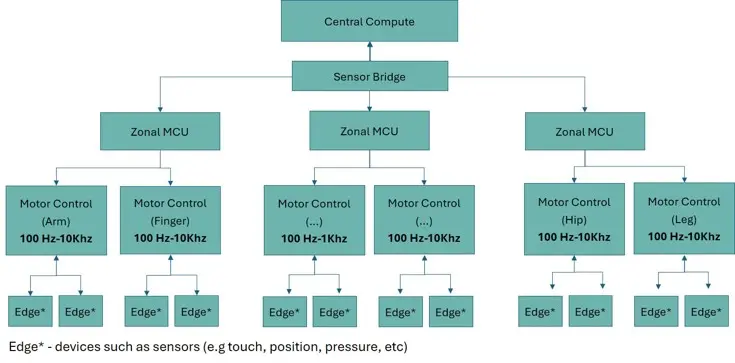
Operating autonomous machines requires sophisticated memory architectures to process massive data streams from various sensors. Distributed non-volatile memory plays a vital role in maintaining system reliability during continuous operation. Engineers face unique challenges regarding endurance, latency, and power efficiency when designing hardware for these advanced humanoid platforms.
Can Edge Computing Prevent Latency Failures?
Telemetry logging generates continuous data streams that track joint positions, motor temperatures, and battery levels. Non-volatile memory ensures this critical diagnostic information is securely recorded without data loss, even during sudden power failures. High-endurance storage is essential because logging occurs constantly throughout every operational shift.
Functional safety represents another critical demand for bipedal robots working alongside human personnel. Time-sensitive networks require instant access to stored operational parameters to prevent collisions and react to unexpected hazards. Distributed memory solutions allow microcontrollers to access safety protocols instantly, minimizing response times and protecting the surrounding environment.
Frequently Asked Questions
Processing data directly at the edge reduces the reliance on cloud infrastructure and eliminates dangerous communication delays. Localized non-volatile memory enables robots to execute complex path planning and balance algorithms instantaneously. This capability is vital for maintaining stability on uneven terrain where milliseconds matter.
Commercial deployment will accelerate only if hardware reliability meets the strict expectations of industrial operators. Future updates must focus on optimizing memory endurance and expanding storage capacity without increasing power consumption. As these machines take on heavier workloads, resilient memory architectures will remain the backbone of autonomous success.