How the X550 Reduced Hardware Costs
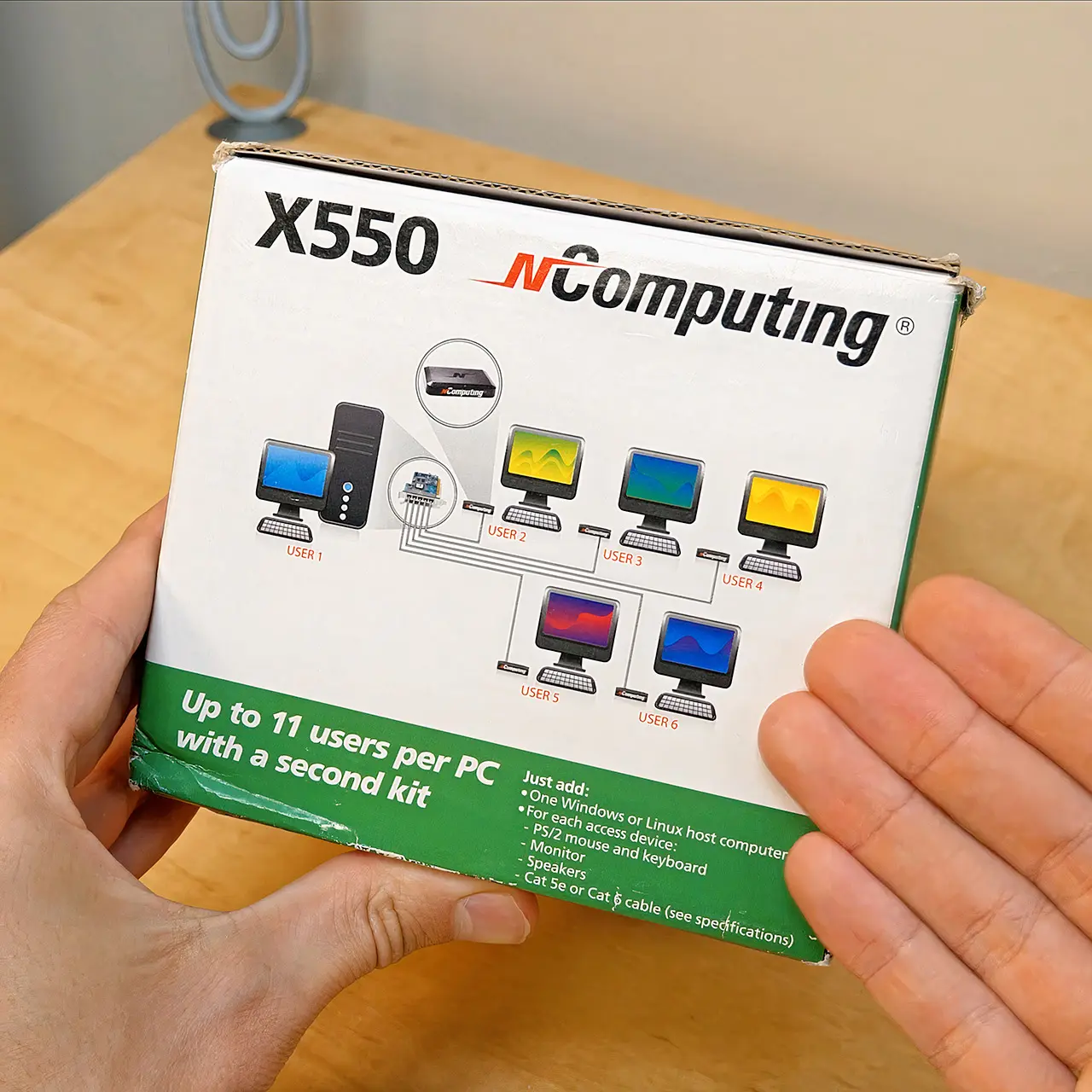
Late in 2008, NComputing introduced the X550, a hardware kit designed to allow six users to share one computer system using a single tower. The package included a full-height PCI card, five compact terminals, and v Space software on a disc, priced at $449. This solution aimed to expand access to computing in environments where multiple users needed basic PC functionality without purchasing separate machines.
Breaking news
 Town AI Secures $108 Million Series B, Valued at $1 Billion After $55 M Pre‑Series
 Apple Prepares for Major Product Launch Event on October 28
 Apple Releases Release Candidates for watchOS, tvOS and visionOS 27.2
 Apple Limits iPhone Duo and iPhone 18 Pro Max to Reservation-Only Sales in Japan and South Korea
The X550 worked by installing the PCI card into a host PC, which then managed processing tasks for all connected users. Each of the five palm-sized terminals provided a keyboard, mouse, and monitor connection, effectively turning the single tower into a multi-user system. NComputing’s v Space software handled session management, allocating resources so each user could run applications independently. The company positioned the product as a cost-effective option for schools, libraries, and small businesses seeking to maximize existing hardware investments.
Can Six Users Really Work Simultaneously Without Lag?
By centralizing computing power in one tower, the X550 minimized the need for multiple CPUs, hard drives, and power supplies. NComputing claimed users could save up to 70% on hardware expenses compared to buying six individual PCs. The terminals consumed minimal power, drawing only a few watts each, which further lowered operational costs. Schools in pilot programs reported deploying the system in computer labs to increase student access to educational software without exceeding budget limits. The kit supported standard USB peripherals and was compatible with Windows XP and Vista operating systems at launch.
Performance depended on the host PC’s specifications and the types of applications being used. NComputing stated that for typical office tasks like word processing, web browsing, and spreadsheet use, the X550 delivered responsive performance across all six seats. However, resource-intensive activities such as video editing or gaming were not recommended due to shared graphics and memory resources. The v Space software prioritized CPU allocation dynamically to prevent any single user from monopolizing system resources. Early adopters noted that while simultaneous heavy usage could cause slowdowns, everyday productivity tasks remained smooth and usable for all connected stations.
What operating systems did the X550 support? The X550 was designed to work with Windows XP and Windows Vista, leveraging NComputing’s v Space software to manage user sessions across the shared hardware setup.
Frequently Asked Questions
Could the system be expanded beyond six users? No, the X550 kit specifically supported exactly six users—one via the host PC and five through the additional terminals—based on the included PCI card’s capacity and licensing.
Was the X550 suitable for modern multimedia applications? It was not recommended for demanding multimedia tasks; the system was optimized for light to moderate computing needs such as document editing, email, and web-based applications.