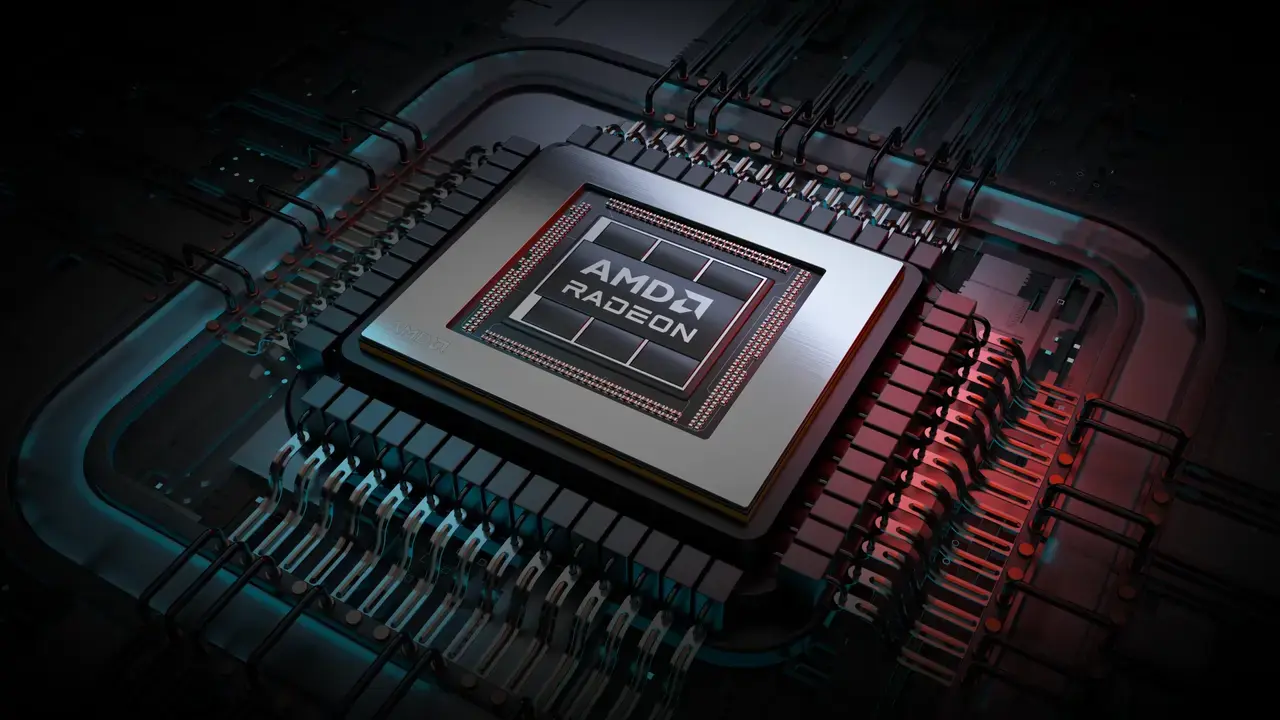
How the Translation Layer Works on Windows
A lone developer has successfully adapted the ZLUDA project to interface with AMD's HIP libraries on Windows, allowing CUDA-based applications to run natively on an AMD Radeon RX 9060 XT graphics card. This achievement, demonstrated in mid-September 2026, enables CUDA-exclusive workloads to execute directly on AMD hardware without requiring virtual machines, dual-boot setups, or Linux environments. The work represents a significant step toward cross-vendor GPU compatibility in the Windows ecosystem.
Breaking news
 China’s Tech Titans Spend $35 B on Nvidia RTX Pro 5500 GPUs
 Qualcomm to Execute Global Layoffs Following Annual Performance Reviews
 Salesforce to Buy Braze for $5.7 Billion
 Microsoft expands sovereign cloud with EU access controls and offline AI
The breakthrough builds on ZLUDA, an open-source translation layer originally designed to run CUDA code on AMD GPUs under Linux. By porting and refining this technology for Windows, the developer bridged the gap between NVIDIA's CUDA platform and AMD's HIP ecosystem. The Radeon RX 9060 XT, a mid-range gaming GPU based on AMD's RDNA 4 architecture, was used to test and validate the implementation. Multiple CUDA libraries were confirmed to function, including those used in machine learning and scientific computing, marking the first time such workloads have run natively on AMD silicon in a Windows environment.
Can This Approach Scale to Other AMD GPUs?
The developer modified ZLUDA's kernel-level interceptors to translate CUDA API calls into equivalent HIP operations that AMD's Windows drivers can process. This involved adapting memory management routines, synchronizing execution contexts, and ensuring compatibility with Windows Display Driver Model (WDDM) specifications. Unlike earlier attempts that relied on WSL2 or Linux virtualization, this implementation runs entirely within the native Windows user and kernel spaces. Performance benchmarks showed minimal overhead, with most CUDA applications executing within 5-10% of their performance on comparable NVIDIA hardware.
While the current proof-of-concept focuses on the RX 9060 XT, the underlying technique is theoretically applicable to any AMD GPU supporting HIP and recent ROCm-compatible drivers. The developer notes that extending support to older RDNA 2 or RDNA 3 architectures would require additional driver-level testing but faces no fundamental technical barriers. Interest from the open-source community has already prompted discussions about creating a unified Windows-compatible ZLUDA distribution. However, AMD has not officially endorsed the project, and NVIDIA's CUDA license terms remain a legal consideration for broader distribution.
Is this solution officially supported by AMD or NVIDIA? No, this is an independent developer project using open-source tools. Neither AMD nor NVIDIA has provided official backing or certification for this implementation.
Frequently Asked Questions
Will this work with all CUDA applications? Many core CUDA libraries and compute workloads function correctly, but applications relying on undocumented CUDA features or specific NVIDIA hardware behaviors may encounter compatibility issues.
Does this affect gaming performance on the Radeon RX 9060 XT? The CUDA translation layer operates only when invoked by compute applications and does not interfere with graphics rendering or gaming performance when idle.