Building a National Quantum Ecosystem
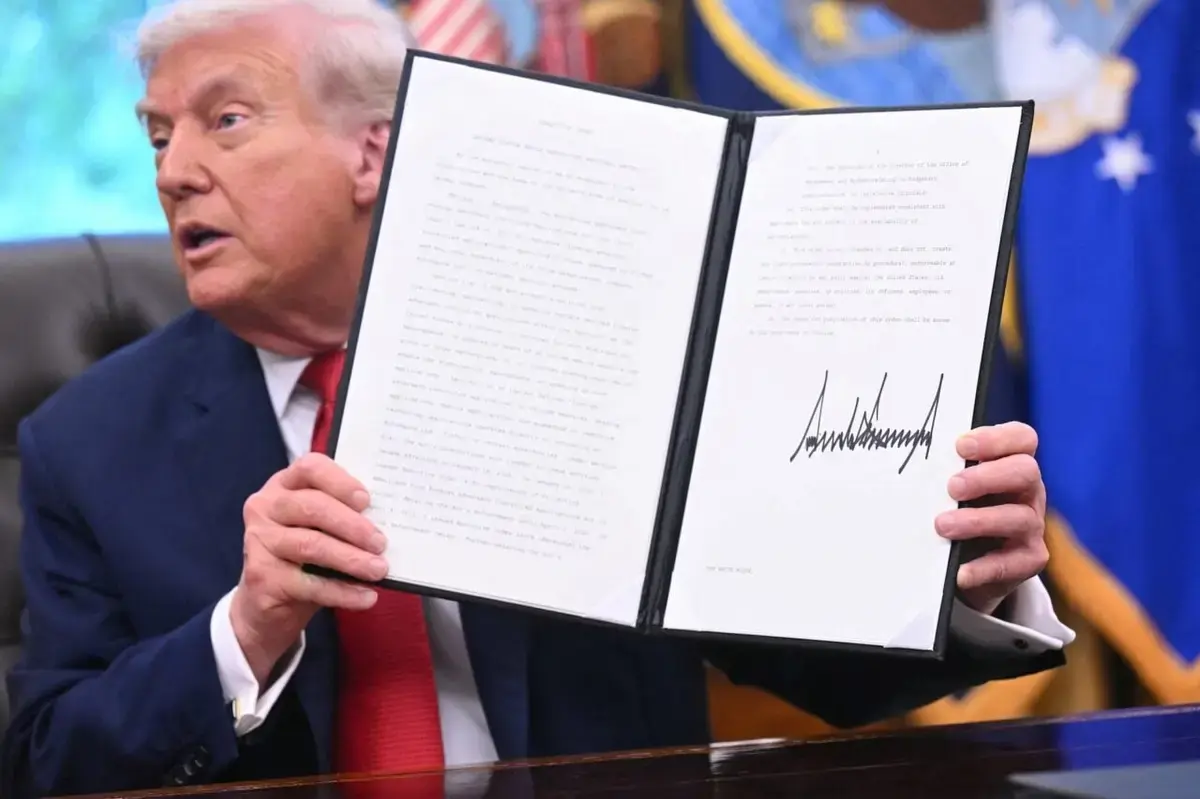
President Donald Trump signed two executive orders on Monday, directing federal agencies to accelerate quantum‑computing research and to establish safeguards for emerging technologies. The orders call for a coordinated effort between government labs and private firms, and they outline a framework for assessing security, ethical, and economic implications.
Breaking news
 Echo Software Acquires Minimus Assets to Strengthen AI‑Driven Container Security
 Plaud One Redefines Headphones for AI Note‑Taking
 Apple Event Logo Suggests iPhone 18 Pro May Feature New Colors and Camera Upgrade
 Plaud unveils smart earbuds that capture audio and execute tasks automatically
The first order creates a „Quantum Advancement Initiative,” mandating the Department of Energy, the National Science Foundation, and other agencies to partner with industry leaders to boost funding, streamline procurement, and remove regulatory bottlenecks. The second order establishes a „Quantum Risk Management Task Force” to evaluate threats such as cryptographic vulnerability, supply‑chain exposure, and potential misuse of the technology. Both directives aim to keep the United States ahead of rivals like China and the European Union.
The initiative requires agencies to map existing quantum‑research capabilities and identify gaps that private investment can fill. Officials say the plan will channel an additional $2 billion in federal resources over the next five years. „We are leveraging the ingenuity of our private sector while providing the stability of federal support,” said Energy Secretary Jennifer Granholm. The order also calls for fast‑track grant reviews and the creation of shared testbeds where startups can prototype hardware alongside national labs.
Will Quantum Computing Trigger New Security Threats?
Risk mitigation will be overseen by a task force co‑chaired by the Department of Homeland Security and the Office of Science and Technology Policy. The group will draft standards for quantum‑resistant encryption and recommend export controls for sensitive components. „Quantum breakthroughs could render current security protocols obsolete,” warned Cybersecurity Advisor Christopher Miller. The task force will issue quarterly reports to the White House, ensuring that policy keeps pace with rapid scientific progress.
Experts agree that quantum computers could break many of today’s cryptographic schemes, exposing data from banking, health, and government sectors. The executive orders seek to preempt such vulnerabilities by funding research into post‑quantum algorithms and by establishing a clear regulatory pathway for emerging applications. „Proactive governance is essential,” said Dr. Lina Patel, a quantum‑information scientist at MIT. „Without it, we risk a scramble that could compromise national security.”
The orders also address workforce development, directing the Department of Labor to expand training programs for quantum engineers and technicians. By nurturing a skilled talent pool, the administration hopes to sustain long‑term leadership in the field.
If implemented effectively, the policies could accelerate the arrival of practical quantum computers within a decade, reshaping industries from pharmaceuticals to logistics. However, critics warn that rapid deployment without robust oversight could amplify geopolitical tensions. The administration’s dual focus on speed and safety reflects an attempt to balance innovation with caution.
Frequently Asked Questions
What is the timeline for the quantum‑advancement initiative? The orders set a five‑year horizon for increased funding and infrastructure development, with annual milestones to track progress.
How will the government ensure quantum technologies remain secure? A dedicated task force will develop standards for quantum‑resistant encryption, monitor supply‑chain risks, and issue guidance to both public and private sectors.
Will private companies benefit from these orders? Yes. The streamlined grant process and shared test facilities are designed to lower barriers for startups and accelerate commercial deployment.