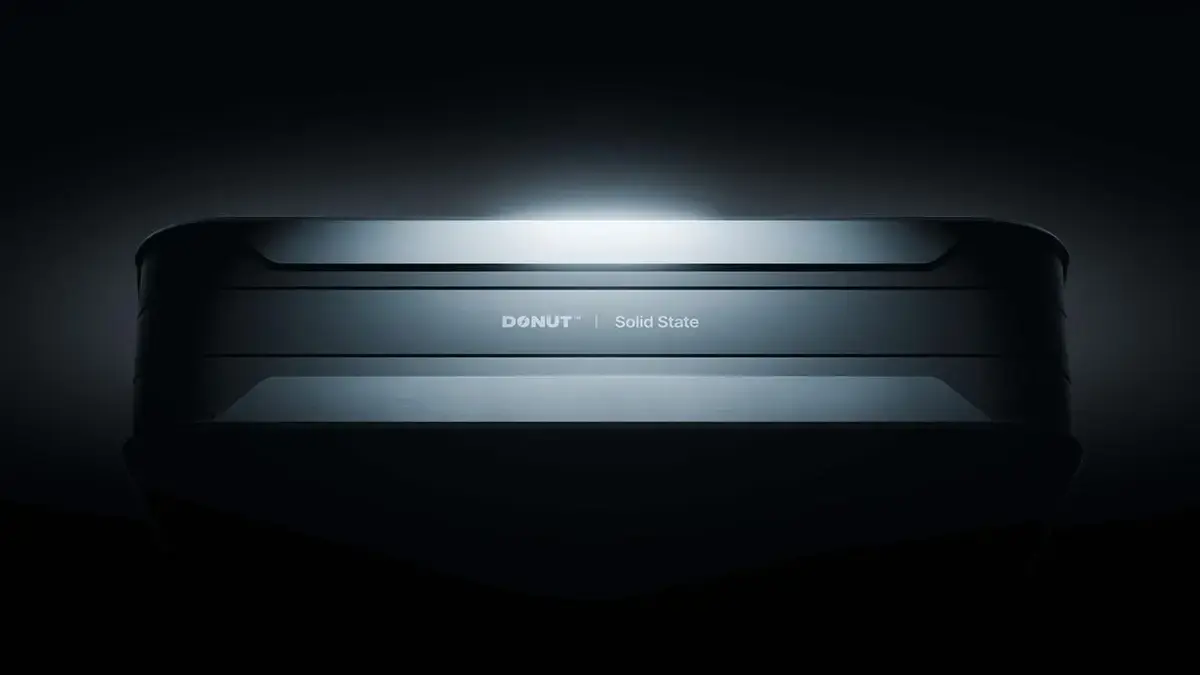
The Solid-State Promise & Reality
A Finnish startup, Donut Lab, faces scrutiny. Recent independent tests challenge its claims of a revolutionary solid-state battery. The company, valued at $1.25 billion, raised $25 million based on these assertions. Testing reveals the battery relies on traditional lithium-ion technology.
Breaking news
 Town AI Secures $108 Million Series B, Valued at $1 Billion After $55 M Pre‑Series
 Apple Prepares for Major Product Launch Event on October 28
 Apple Releases Release Candidates for watchOS, tvOS and visionOS 27.2
 Apple Limits iPhone Duo and iPhone 18 Pro Max to Reservation-Only Sales in Japan and South Korea
Donut Lab initially announced a breakthrough in battery technology. They promised a „miracle” solid-state battery with an energy density of 400 Wh/kg. This would represent a significant leap forward in energy storage. However, third-party evaluations show the actual energy density falls below 300 Wh/kg. This discrepancy casts doubt on the company’s core technology.
Solid-state batteries are considered the „holy grail” of energy storage. They offer potential benefits over traditional lithium-ion batteries. These include increased energy density, improved safety, and faster charging times. Donut Lab positioned itself as a leader in this field. Their marketing materials heavily emphasized the solid-state nature of their battery.
Is This a Case of Overhype?
The independent testing indicates the battery doesn’t utilize a truly solid electrolyte. Instead, it appears to be a modified lithium-ion battery. Experts suggest the company may have misrepresented its technology. This misrepresentation fueled investor enthusiasm and a high valuation. The core of the battery’s function remains consistent with established lithium-ion designs.
The situation raises questions about due diligence in the tech industry. Investors poured money into Donut Lab based on unverified claims. The company’s valuation soared despite a lack of independent confirmation. Now, the validity of those claims is being seriously challenged.
This incident highlights the risks associated with investing in early-stage technology companies. It also underscores the importance of rigorous testing and transparency. Donut Lab has not yet publicly responded to the test results. The future of the company and its funding remains uncertain. The incident could lead to increased scrutiny of battery technology claims.
Frequently Asked Questions
What is energy density and why does it matter? Energy density measures the amount of energy stored per unit of weight. Higher energy density means a battery can store more power for its size and weight. This is crucial for applications like electric vehicles and portable electronics.
Are solid-state batteries truly superior to lithium-ion? Solid-state batteries promise significant improvements. However, scaling production and achieving consistent performance remains a challenge. Currently, truly solid-state batteries are not widely available commercially.
What happens next for Donut Lab? The company faces significant challenges. It needs to address the concerns raised by the independent testing. Donut Lab may need to revise its technology or seek new funding based on a more accurate assessment of its capabilities.