Why You Can Trust Tom's Hardware
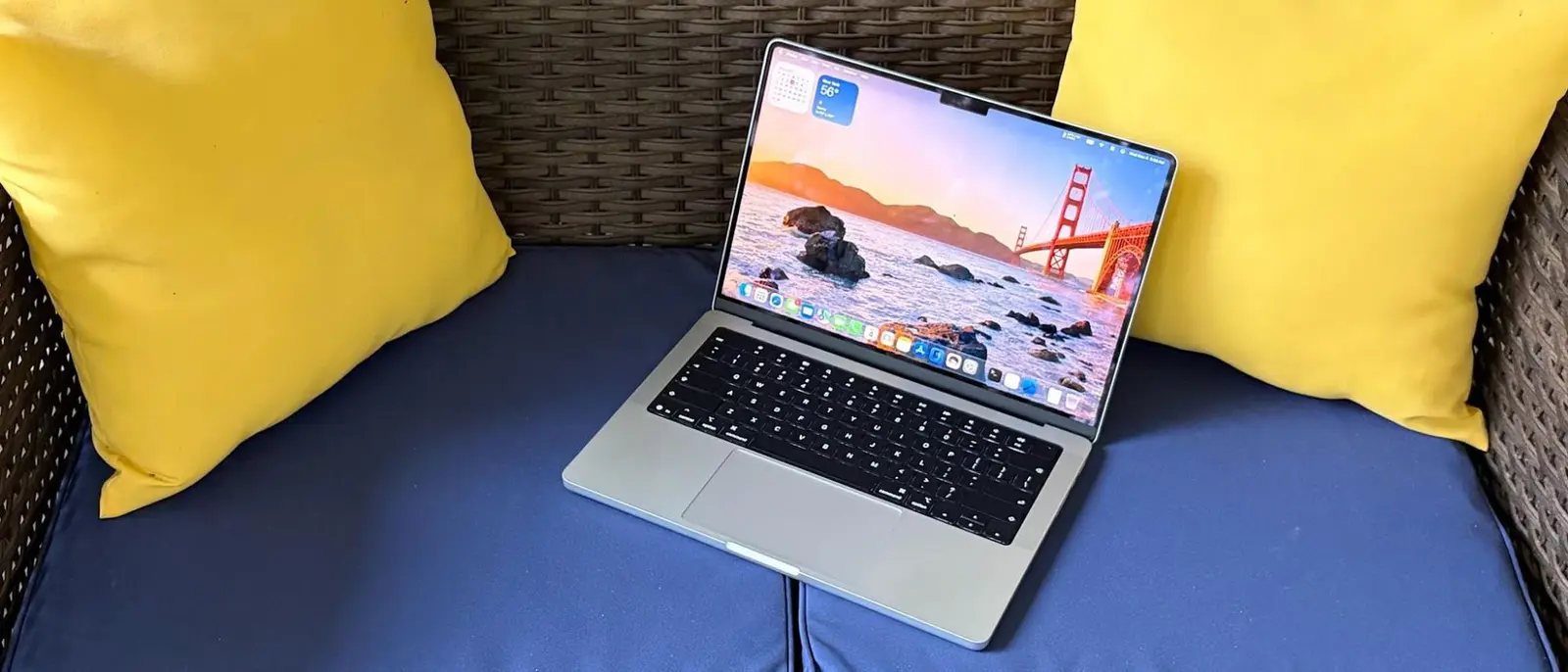
It is that time of year again. Apple has launched another updated 14-inch MacBook Pro. It uses an old chassis. It looks identical to last year's M5 model on the outside. However, it hides key hardware upgrades for performance and connectivity. This MacBook Pro uses the new M6 chip. The chip was first shown in the updated Mac Mini. Apple also equipped the MacBook Pro with Wi-Fi 7 and Bluetooth 6. This is thanks to Apple's in-house N1 chip. Due to rising memory and storage prices, Apple raised the starting price of the 14-inch MacBook Pro to $1,999.
Breaking news
 OpenAI Unveils GPT-6 Cyber: A Safer AI for Finding Software Flaws
 Xbox PC app gets major speed boost and design overhaul
 Dropbox to Buy Tigris Data for $350 Million
 Mathematician Uses Algorithms to Predict and Capture Total Solar Eclipses
Apple uses the same design for the entry-level model since 2021. There were no changes this year. If you want a slightly updated design, check the 14 and 16-inch touch-screen models. It remains a good-looking laptop, but it shows its age. Our review unit was finished in silver, not space black. Space black looks excellent but attracts fingerprints. Many may prefer the lighter finish, which hides skin oils better. The screen's top cutout now seems archaic. This is especially true after seeing the Dynamic Island on pricier models. The cutout is always in your sightline, though I got used to it over time. The only thing in the cutout's favor is that it sits in the same space as the menu bar. This limits visual annoyance. My other design gripe, noted in previous reviews: the cutout on the keyboard panel that helps lift the lid has sharp corners.
MacBook Pro (M6, 14-inch) Design
These can dig into palms during typing. Like previous generations, you will find three Thunderbolt 4 ports. Thunderbolt 5 is not available on M6 models. There is also a full-size SDXC card reader, an HDMI 2.1 port, a 3.5 mm audio jack, and a MagSafe 3 connector.
Our review unit measures 12.31 x 8.71 x 0.61 inches and weighs 3.4 pounds. This is the same as the previous M5 model. For comparison, the Gigabyte Aero X16 measures 14 x 9.9 x 0.78 inches and weighs 4.2 pounds. The Dell XPS 14 measures 12.19 x 8.26 x 0.6 inches and weighs 3 pounds.
Our review unit includes a version with a 12-core CPU and 12-core GPU of Apple's new M6 SoC. This is the same configuration as the Mac Mini we reviewed in September. However, our laptop includes 16 GB of unified LPDDR5x memory, not 24 GB. Completing the specs is a standard 1 TB SSD.
Productivity and Graphics Performance on MacBook Pro (M5, 14-inch)
Slow, steady progress wins the race in silicon advancement. In every productivity benchmark, our M6 MacBook Pro not only beat the previous M5 MacBook Pro. It also crushed prosumer-class Windows 11 laptops. These were the Gigabyte Aero X16 (AMD Ryzen AI 7 350) and Dell XPS 14 (Intel Core Ultra X7 358H). We start with the Geekbench 6 synthetic CPU benchmark. Our M6 unit recorded a modest 10% single-core performance gain over M5 (4,752 vs. 4,288). Moving to multi-core performance, the performance gap grew to just over 18%. Of the two Windows 11 laptops, the XPS 14 was closest. It scored 2,867 (single-core) and 16,927 (multi-core).
Apple seems to have kept the line when it comes to SSD performance from one generation to the next. The 2025 M5 MacBook Pro hit 1,917.35 MBps in our 25 GB file-transfer test. Things changed little this year. Our M6 MacBook Pro recorded 1,914.23 MBps. The Aero X16 took the baton for the Windows 11 group with a result of 1,480.57 MBps.
Our Handbrake test involves transcoding a 4K video file to 1080p. The new M6 MacBook Pro finished the task in 2 minutes and 50 seconds. The M5 version needed 3 minutes and 31 seconds. Our laptop stress test focuses on Cinebench 2026. We run it 10 times in a row, recording multi-core scores throughout. The M6 MacBook Pro started with a score of 5,026.55 and stayed around 5,440 for the remaining runs.
The Screen on MacBook Pro (M6, 14-inch)
M5 includes a 12-core GPU (each core has a dedicated neural accelerator). It promises up to 30% performance gain compared to M5. Although the base MacBook Pro is not what I would call a gaming monster, it achieved 53.7 FPS at 1800 x 1125 resolution in Cyberpunk 2077. It used the For this Macpreset and 32.66 FPS at 3024 x 1890. This compares to 47.65 FPS and 31.47 FPS, respectively, for the M5 MacBook Pro.
Apple's 14-inch M6 MacBook Pro continues to use a mini-LED backlit IPS screen. As before, you get a 3,024 x 1,964 resolution panel with a 120 Hz refresh rate. Although the mini-LED panel looks good, it is not as capable as the PROLED XDR touch-enabled screen found on pricier models. Although you can equip the MacBook Pro with a nano-textured screen for $150, our review unit did not have it. Because