Hot‑Air Reflow Saves a $8,000 Module
A YouTube channel famed for rescuing dead graphics cards took on its first DDR5 memory repair after a customer mailed two $16,000 sticks of high‑end RAM. The repair took place in the channel’s workshop in California last week, where a technician managed to revive one module using a hot‑air reflow and a replacement power‑management IC.
Breaking news
 Town AI Secures $108 Million Series B, Valued at $1 Billion After $55 M Pre‑Series
 Apple Prepares for Major Product Launch Event on October 28
 Apple Releases Release Candidates for watchOS, tvOS and visionOS 27.2
 Apple Limits iPhone Duo and iPhone 18 Pro Max to Reservation-Only Sales in Japan and South Korea
The two‑stick kit, originally priced at $16,000, arrived broken, with one module completely dead and the other showing intermittent errors. The owner, a professional workstation user, sought a fix rather than discarding the expensive hardware. The repair shop, known for detailed video guides on GPU refurbishment, documented the process in a new video, marking its first foray into DDR5 memory restoration. The technician explained that soaring component prices, driven by AI‑related demand, have made „repair‑instead‑replace” a financially sensible option for high‑value parts.
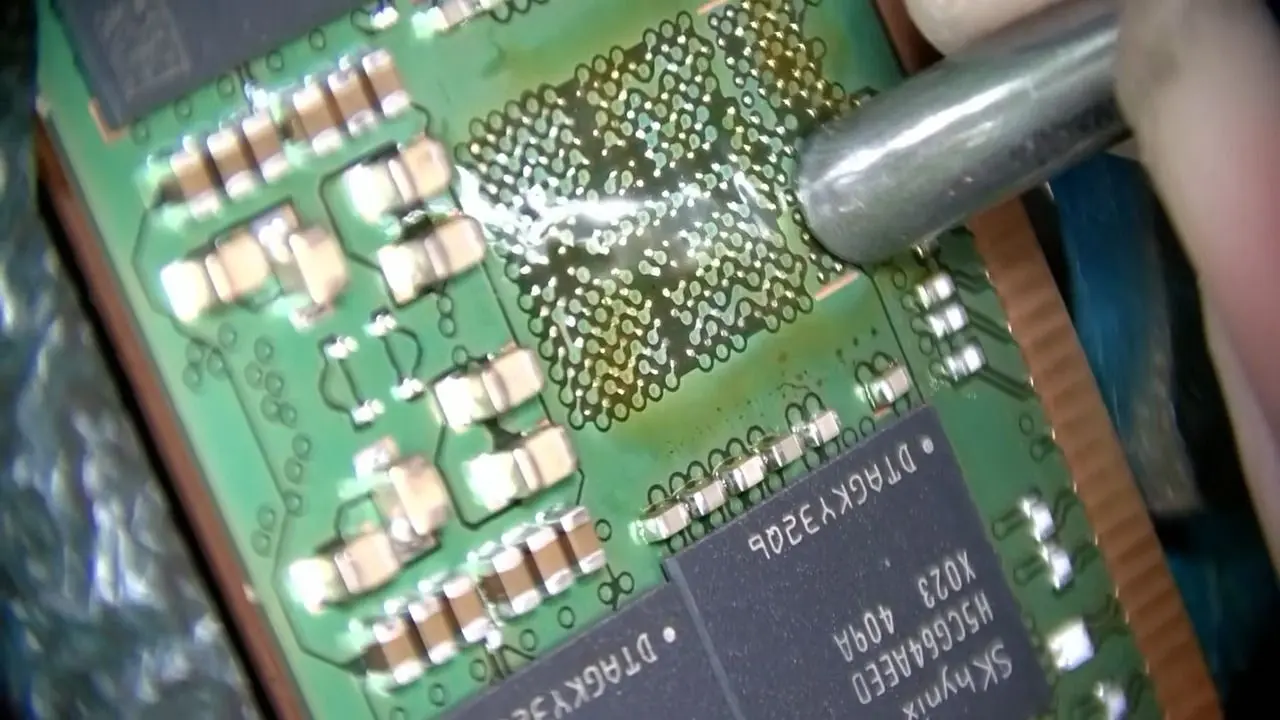
The technician began by diagnosing the dead stick with a combination of BIOS POST checks and a memory tester. A faulty power‑management IC (PMIC) was identified as the culprit. Using a precision hot‑air gun, the technician heated the solder joints on the PMIC, allowing the damaged connections to reflow. After removing the old IC, a new, compatible PMIC was soldered in place. Post‑repair testing showed the module passing all stress tests and operating at its rated 5600 MHz speed. The video showed the entire process, emphasizing the careful temperature control needed to avoid damaging the delicate DDR5 chips.
Why Are DDR5 Repairs Gaining Traction?
„The cost of a new 32‑GB DDR5 kit now rivals a mid‑range GPU,” the technician said. „When you can bring a dead stick back to life for a few hundred dollars, it’s a win for both the consumer and the environment.” The repair cost the customer roughly $350 in labor and parts, a fraction of the original price.
The surge in AI workloads has driven up demand for high‑capacity, high‑speed memory, pushing DDR5 prices to record levels. Manufacturers have struggled to keep up with the volume, leading to long lead times and price premiums exceeding 30 % over MSRP. As a result, owners of premium kits are more reluctant to discard faulty modules. The repair shop’s success suggests a growing niche market for specialized memory refurbishment services.
Industry analysts note that while GPU repair has long been viable, DDR5 repair requires different expertise, particularly in handling the tiny, densely packed chips and the new power‑management architecture. The channel’s entry into this space could inspire other technicians to develop similar capabilities, potentially creating a small ecosystem of memory‑repair specialists.
The revived module now functions alongside the still‑faulty partner, allowing the customer to continue using half of the original investment while sourcing a replacement for the other stick. The repair video has already garnered thousands of views, sparking discussion among enthusiasts about the cost‑benefit balance of repairing versus replacing high‑end components.
Frequently Asked Questions
Can all DDR5 modules be repaired with hot‑air reflow? Not all. Success depends on the nature of the failure. Issues like cracked PCB traces or damaged memory chips often require replacement, while PMIC or solder joint failures are good candidates for reflow.
Is hot‑air reflow safe for the memory chips? When performed with precise temperature control and proper equipment, it is safe. Overheating can damage the chips, so only trained technicians should attempt the procedure.
Will the repaired module have the same warranty as a new one? No. Repairs are typically covered by a limited service warranty from the repair shop, not the original manufacturer’s warranty, which is voided once the module is opened.