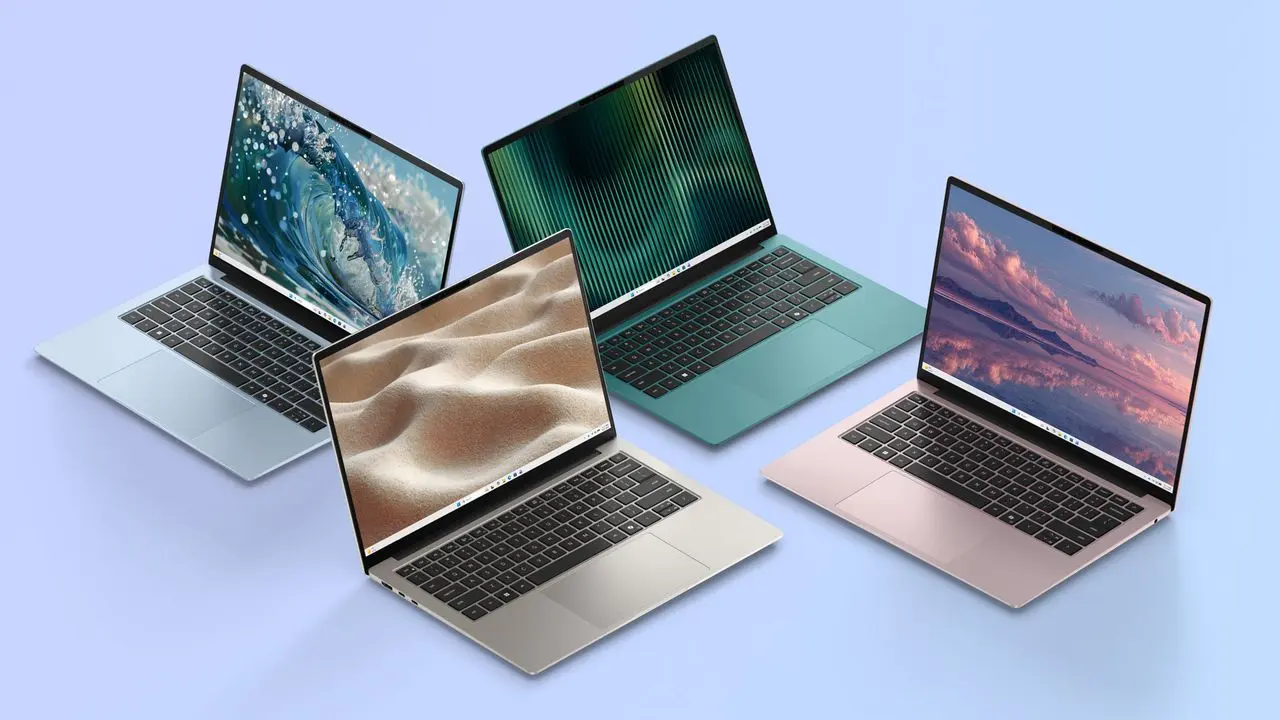
Practical Connectivity Meets Vibrant Design Choices
Dell has officially released its new 14-inch laptop series, aiming directly at the mid-range market segment. The company positions these devices as strong alternatives to Apple’s MacBook Neo. These new models feature a broader selection of physical ports and diverse color options. They target users who want premium features without paying top-tier prices. This launch marks a significant shift in Dell’s strategy for mainstream consumers.
Breaking news
 Town AI Secures $108 Million Series B, Valued at $1 Billion After $55 M Pre‑Series
 Apple Prepares for Major Product Launch Event on October 28
 Apple Releases Release Candidates for watchOS, tvOS and visionOS 27.2
 Apple Limits iPhone Duo and iPhone 18 Pro Max to Reservation-Only Sales in Japan and South Korea
The new laptops utilize Intel’s Wildcat Lake processors, signaling a move toward newer architecture. Unlike the XPS 13, which often limits connectivity options, these models prioritize utility. Dell offers significantly more port variety to accommodate various peripherals. The design philosophy focuses on practicality over minimalism. Users can now connect multiple devices simultaneously without needing external hubs. This approach addresses a common complaint about modern ultrabooks lacking sufficient input and output capabilities.
Does Port Variety Beat Sleek Minimalism?
The primary differentiator for this lineup is the expansion of physical interfaces. While competitors often rely on USB-C exclusivity, Dell includes traditional ports. This decision caters to professionals who still use HDMI displays or standard USB-A drives. Additionally, the chassis comes in multiple color finishes. These vibrant options allow buyers to personalize their hardware easily. The company believes that visual appeal is just as important as raw performance for this demographic. By combining robust connectivity with aesthetic variety, Dell creates a distinct product identity. It moves away from the uniform, silver look that dominates the industry. This strategy appeals to students and creative professionals alike.
Critics often argue that fewer ports lead to thinner designs. However, Dell maintains that functionality should not be sacrificed for form factor. The inclusion of extra ports reduces the need for dongles. This simplifies the user experience for daily tasks. The Wildcat Lake chips provide efficient power management alongside this hardware flexibility. Performance benchmarks suggest these units handle multitasking smoothly. Battery life remains competitive within the mid-range category. Dell aims to prove that a well-equipped laptop does not have to be bulky. The balance between weight and utility is carefully calibrated.
The release sets a new benchmark for mid-range expectations. Competitors may feel pressure to revisit their port strategies. Consumers gain more choice in the crowded laptop market. Dell’s focus on accessibility through design could reshape future releases. As the technology landscape evolves, practicality remains a key driver. This launch reinforces the idea that mainstream devices deserve premium features. The market will soon reveal if this approach resonates with buyers. For now, Dell holds a clear advantage in versatility.
Frequently Asked Questions
Which processor powers the new Dell 14-inch laptops? The devices run on Intel’s Wildcat Lake processors. This chip offers improved efficiency and performance for everyday tasks. It supports the expanded port array effectively.
How do these models differ from the XPS 13? They include more physical ports and offer more color choices. The XPS 13 typically prioritizes a minimalist design with fewer connections. These new models focus on practical connectivity options.