Getting Started With Core Sensor Types
Every new ESP32 enthusiast faces the same challenge: choosing which sensor modules to buy first. The ESP32 microcontroller board has revolutionized DIY electronics, offering powerful Wi-Fi capabilities at an affordable price point. However, beginners often struggle with the overwhelming variety of available sensors.
Breaking news
 Town AI Secures $108 Million Series B, Valued at $1 Billion After $55 M Pre‑Series
 Apple Prepares for Major Product Launch Event on October 28
 Apple Releases Release Candidates for watchOS, tvOS and visionOS 27.2
 Apple Limits iPhone Duo and iPhone 18 Pro Max to Reservation-Only Sales in Japan and South Korea
The ESP32 development community has identified four sensors that consistently rank as most valuable for newcomers. These modules provide fundamental environmental monitoring capabilities while remaining straightforward to integrate into projects.
Temperature measurement proves essential for countless applications. The DHT22 sensor offers reliable temperature and humidity readings, making it ideal for home automation projects. Users appreciate its balance between accuracy and ease of use, particularly when building weather stations or monitoring indoor conditions.
Light detection represents another critical capability. Photoresistors paired with proper circuitry allow beginners to experiment with ambient light sensing. This forms the foundation for automated lighting systems or plant monitoring setups.
Motion detection through passive infrared sensors opens possibilities for security applications and presence detection. These modules trigger events based on movement within a defined area, providing simple yet effective input for ESP32 projects.
Which Sensors Offer Best Value For New Projects
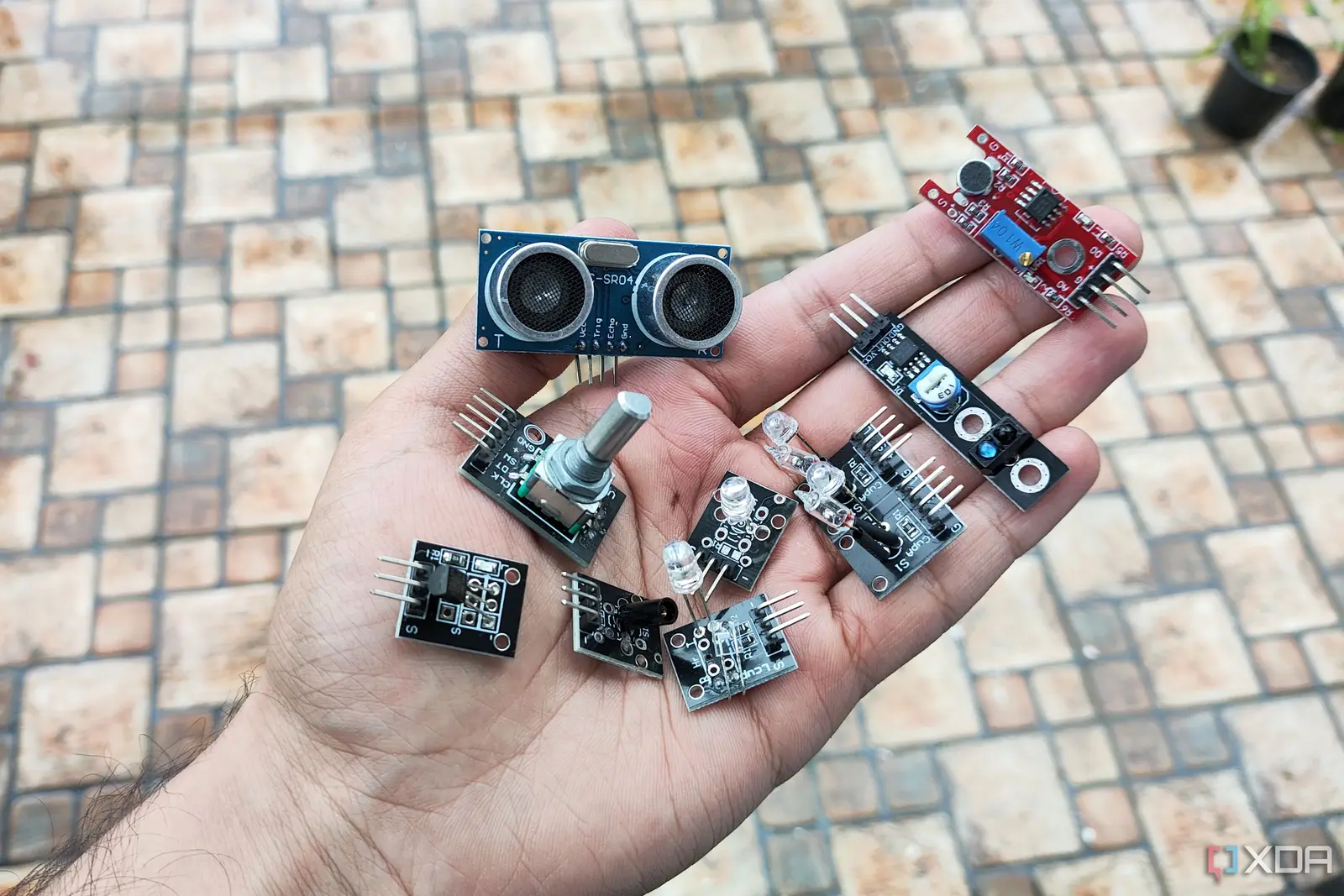
Distance measurement using ultrasonic sensors adds non-contact sensing capabilities. The HC-SR04 module demonstrates reliable performance for measuring objects within a few centimeters to several meters, perfect for robotics or object detection applications.
The DHT22 temperature and humidity sensor stands out as perhaps the most versatile option for beginners. Its digital output eliminates analog reading complications while providing sufficient accuracy for most hobbyist applications. Many users report successful integration within hours of opening the package, making it excellent for building confidence early in the learning process.
Light-sensitive resistors paired with voltage dividers offer the most economical entry point into optical sensing. While requiring slightly more circuit design knowledge, they teach fundamental concepts about signal conditioning and analog-to-digital conversion.
PIR motion sensors deliver immediate visual feedback when triggered, providing satisfying results for first-time programmers. Their wide detection range and simple three-wire interface reduce wiring complexity significantly.
Ultrasonic distance sensors bridge the gap between basic analog inputs and more sophisticated time-of-flight measurements. They introduce newcomers to pulse timing calculations while offering tangible utility across multiple project types.
What programming skills are required for these sensors?
Frequently Asked Questions
Basic Arduino programming knowledge suffices for most beginner projects. The ESP32 community provides extensive example code for each recommended sensor type.
How much does a complete starter kit cost?
Beginners can acquire all four recommended sensors for under $25, making this an economical introduction to IoT development platforms.
Are these sensors compatible with other microcontrollers?
Yes, all four modules work with Arduino Uno, Raspberry Pi Pico, and other popular development boards, ensuring flexibility as skills expand beyond ESP32-specific applications.