Custom Views Solve the Privacy Problem
Self-hosted media enthusiasts often struggle to share their personal collections with others. The standard sharing features in Jellyfin feel restrictive and awkward for casual use. A new approach solves this by creating dedicated user profiles for guests. This method allows friends to access specific content without seeing the host's entire library. It transforms a clunky process into a smooth, personalized experience for both parties. The solution relies on a specific plugin that enhances the platform's core functionality.
Breaking news
 Town AI Secures $108 Million Series B, Valued at $1 Billion After $55 M Pre‑Series
 Apple Prepares for Major Product Launch Event on October 28
 Apple Releases Release Candidates for watchOS, tvOS and visionOS 27.2
 Apple Limits iPhone Duo and iPhone 18 Pro Max to Reservation-Only Sales in Japan and South Korea
The primary issue with traditional sharing is a lack of control. When you share a link or account, friends see everything in your database. This includes movies you have not finished or shows you do not want to reveal. It creates an awkward dynamic where privacy and hospitality clash. Many users resorted to hiding titles manually, which is time-consuming and error-prone. The new workflow eliminates this friction entirely. It gives the host full authority over what each guest can view.
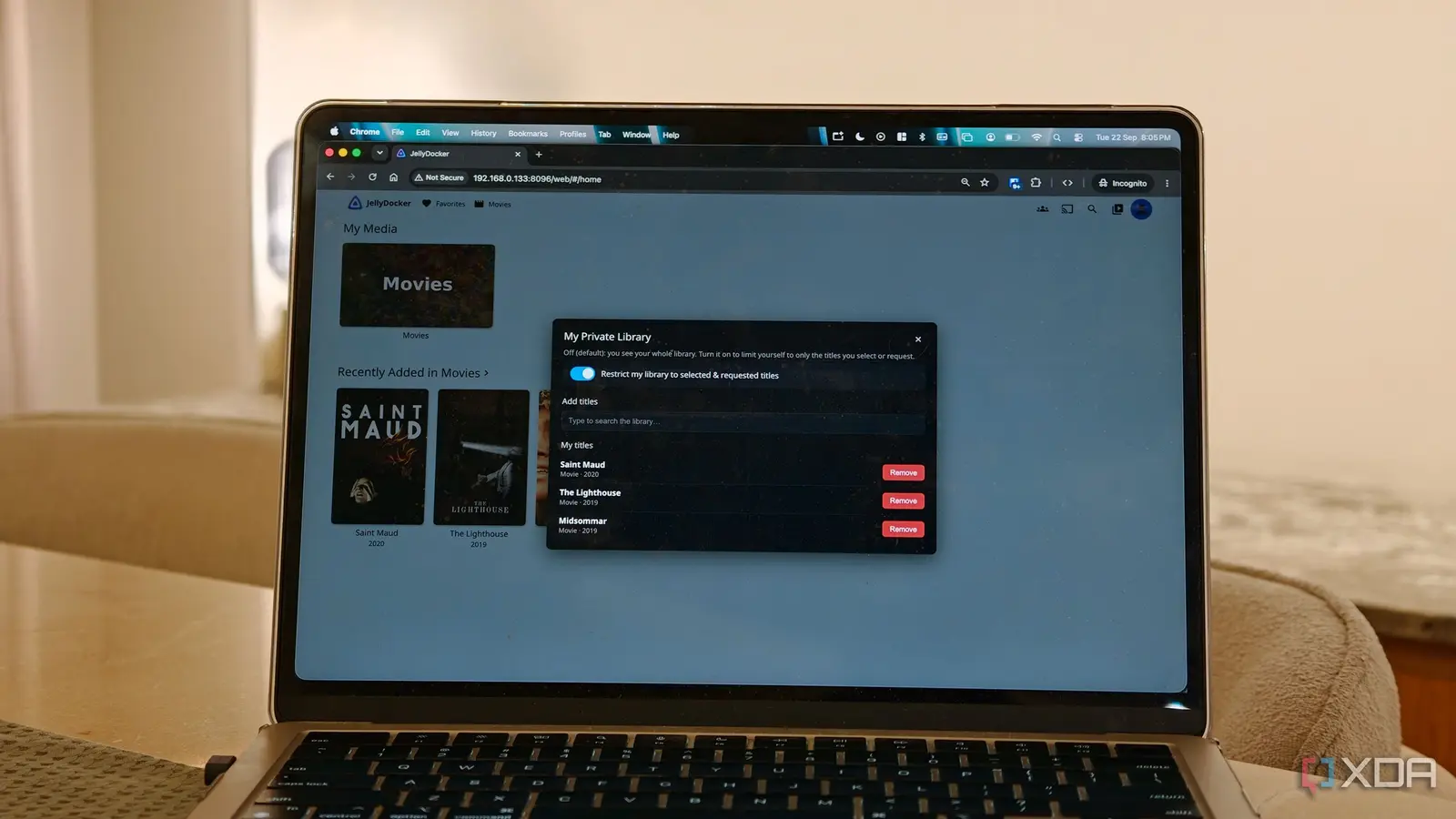
The key to this setup is the creation of distinct user accounts for each friend. Instead of sharing your login credentials, you invite them to their own profile. Within this profile, you curate a specific collection of media. You decide which movies and series are visible to that particular person. This acts as a virtual storefront for your personal library. The plugin mentioned in the source text facilitates this granular control. It allows for the assignment of specific views to specific users. This ensures that guests only see what you intend to share. It removes the need for constant manual adjustments.
Why Standard Sharing Fails Friends
For the host, this method offers peace of mind. You no longer worry about a friend accidentally browsing your private watchlist. For the guest, it provides a cleaner interface. They are not overwhelmed by thousands of titles they do not care about. The experience feels tailored and intentional. It mimics the way streaming services curate content for different household members. However, it is done with the flexibility of self-hosting. The host retains full administrative control over the server. They can add or remove access rights at any time. This dynamic nature makes it superior to static sharing links.
Standard sharing mechanisms in media servers are often designed for family members. They assume a high level of trust and shared interests. Friends, however, have different tastes and boundaries. A friend might not want to know you are watching a niche documentary. Or they might only want to borrow one specific movie for a weekend. The custom view approach respects these social nuances. It treats the media library as a service rather than a shared space. This shift in perspective changes how people interact with self-hosted content. It moves the focus from technical access to social curation.
The implementation requires a bit of initial setup. You must create the accounts and assign the views. Once configured, the process is seamless. Friends can log in and start streaming immediately. They do not need to understand the underlying server technology. They simply see a clean, organized list of available movies. This lowers the barrier to entry for non-technical friends. It makes self-hosted media accessible to a wider audience. The host benefits from reduced support requests. Friends are less likely to get confused by complex interfaces.
Frequently Asked Questions
Does this method require paid software? No, the core functionality relies on standard Jellyfin features. The plugin enhances the experience but the basic setup is free. You only need a running Jellyfin server to start.
Can I have different views for different friends? Yes, you can create a unique view for each user. This allows you to tailor content specifically for every individual guest. It provides maximum control over your library distribution.
Is this safer than sharing my main account? Absolutely, it is significantly safer. You avoid exposing your personal data and watch history. Each friend operates within their own isolated digital space.