How Flash Beats DRAM in AI Workloads
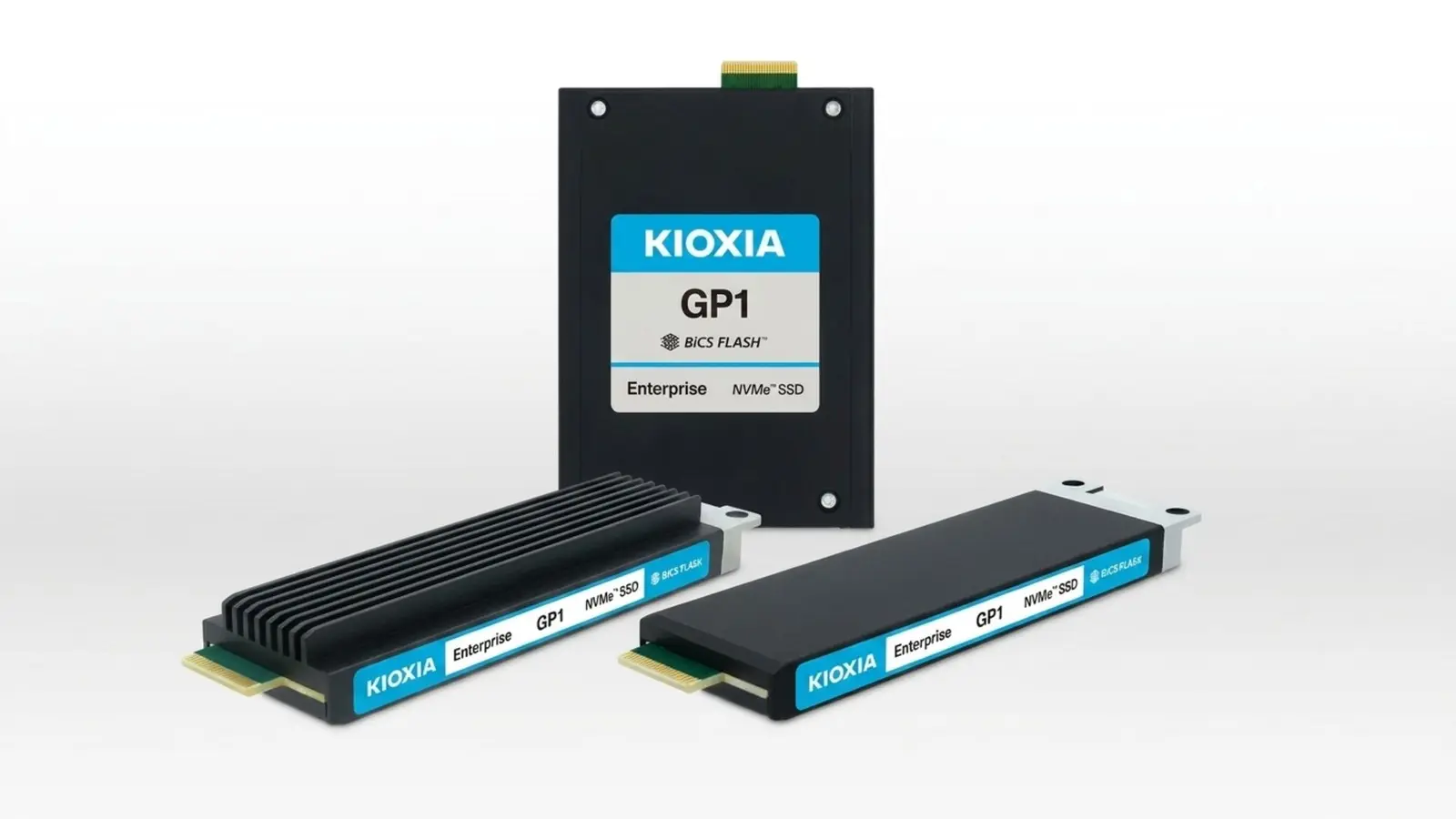
Tokyo, Japan – Kioxia announced on October 12, 2026 that its latest PCIe 6.0 GP1 solid‑state drive has shattered its own benchmark, delivering more than 20 million input/output operations per second (IOPS) in random‑read tests. The flash‑based device is positioned as a direct challenger to DRAM in artificial‑intelligence workloads, promising unprecedented speed for data‑intensive applications.
Breaking news
 Intel’s IPv6 Optimization Sparks Connectivity Issues
 Ursula von der Leyen Proposes Single Data Reporting Standard for European Businesses
 China Smartphone Market Shrinks Again
 DayOne Secures $3.67 Billion Funding to Expand Singapore Data‑Center Portfolio
The GP1 leverages Kioxia’s seventh‑generation flash architecture and a new controller optimized for the PCIe 6.0 interface. By combining higher lane density with advanced error‑correction and thermal management, the drive achieves random‑read performance that exceeds 20 M IOPS, a figure previously thought attainable only by high‑end DRAM modules. Kioxia says the SSD also offers up to 8 TB of capacity, low latency, and power efficiency suitable for edge‑computing and cloud‑scale AI servers. The company views the product as a stepping stone toward replacing volatile memory in specific AI inference and training scenarios.
Kioxia’s engineering team explains that the GP1’s architecture exploits the parallelism inherent in NAND flash, allowing thousands of simultaneous read commands. „We designed the controller to schedule operations at a granularity that traditional DRAM cannot match,” said Hiroshi Tanaka, senior product manager at Kioxia. The drive’s firmware dynamically balances wear‑leveling with performance, ensuring sustained throughput even under continuous heavy loads. Benchmarks from independent labs show the GP1 maintaining over 18 M IOPS for extended periods, with latency under 50 microseconds. This performance gap narrows the advantage DRAM holds in latency‑sensitive AI inference, while flash’s non‑volatility and lower cost per gigabyte remain attractive.
Can PCIe 6.0 SSDs Replace Traditional Memory in Data Centers?
Industry analysts are cautious but optimistic. The GP1’s record‑setting numbers suggest that flash could assume roles traditionally filled by DRAM, especially where capacity and power budgets are constrained. „If the cost per gigabyte continues to fall, we may see a hybrid memory hierarchy where high‑capacity PCIe 6.0 SSDs act as a cache layer for DRAM,” noted Maya Patel, a senior analyst at TechInsights. However, she warns that latency‑critical tasks may still require DRAM until flash latency can be reduced further. Kioxia plans to iterate on the GP1 platform, targeting sub‑30‑microsecond latency in future revisions.
The GP1’s debut signals a shift in storage technology, pushing the envelope of what flash can achieve. As AI models grow larger and demand faster data access, the line between storage and memory blurs. Kioxia’s record‑breaking SSD could accelerate the adoption of flash‑centric architectures, prompting data‑center operators to rethink memory provisioning strategies.
Frequently Asked Questions
What makes the GP1 SSD faster than previous models? The GP1 uses a new seventh‑generation NAND flash paired with a custom PCIe 6.0 controller that maximizes parallel command execution and improves error‑correction efficiency, resulting in over 20 M IOPS.
Is the GP1 suitable for consumer laptops? While technically compatible, the GP1 targets enterprise and AI workloads due to its high power draw and thermal requirements; consumer devices are unlikely to benefit from its extreme performance.
How does the GP1 impact the overall cost of AI infrastructure? Flash storage is cheaper per gigabyte than DRAM. By delivering DRAM‑level speeds, the GP1 can lower total memory costs for large AI models, though initial pricing may remain premium until volume production scales.