Early Detection Saves Time and Money
The semiconductor industry is increasingly focused on protecting the silicon chips that power everyday devices. As threats evolve, companies are turning to pre‑silicon verification to ensure that designs are secure before fabrication. This approach is gaining traction across automotive, aerospace, and consumer electronics sectors, where safety and data integrity are critical.
Breaking news
 Canonical’s Web Presence Hit by Second DDoS Assault This Year
 Loops AI Secures $3.5 Million to Power a New AI Operating System for E‑Commerce
 Winverse AI Secures Tens of Millions in Seed Funding from DeepSeek and Long‑Z
 Google Adds Pixel 9 Series to Certified Refurbished Store
Pre‑silicon verification involves testing a chip’s design at the register‑transfer level, using formal methods and simulation to uncover vulnerabilities that might be exploited after manufacturing. By detecting flaws early, firms can reduce costly redesigns and avoid post‑market recalls. The process also supports compliance with emerging security standards, such as ISO 26262 for automotive safety and the NIST Cybersecurity Framework for critical infrastructure.
Design teams now employ automated formal verification tools that mathematically prove the absence of certain classes of bugs. These tools can identify race conditions, buffer overflows, and side‑channel leaks that traditional testing might miss. When a flaw is found, engineers can patch the logic before the silicon is etched, saving millions in fabrication costs. Industry analysts estimate that early detection can cut post‑production defects by up to 70 %.
How Do Companies Implement It?
Moreover, pre‑silicon testing aligns with the growing demand for secure boot and hardware‑rooted trust. By embedding cryptographic checks into the design phase, manufacturers can guarantee that firmware updates cannot be tampered with, a feature increasingly required by regulators in the European Union and the United States.
Teams integrate verification into the design workflow by creating a „security testbench” that mirrors real‑world attack scenarios. This testbench runs alongside functional verification, ensuring that every security feature behaves correctly under stress. Engineers also use hardware description language (HDL) coverage metrics to measure how thoroughly the design has been exercised. A high coverage score indicates that most potential attack vectors have been examined.
In addition, many firms collaborate with external security researchers through bug‑bounty programs. These partnerships provide fresh perspectives on the design, uncovering hidden weaknesses that internal teams might overlook. The combination of formal methods, simulation, and community testing creates a robust defense against both known and zero‑day exploits.
Is Pre‑Silicon Verification Enough?
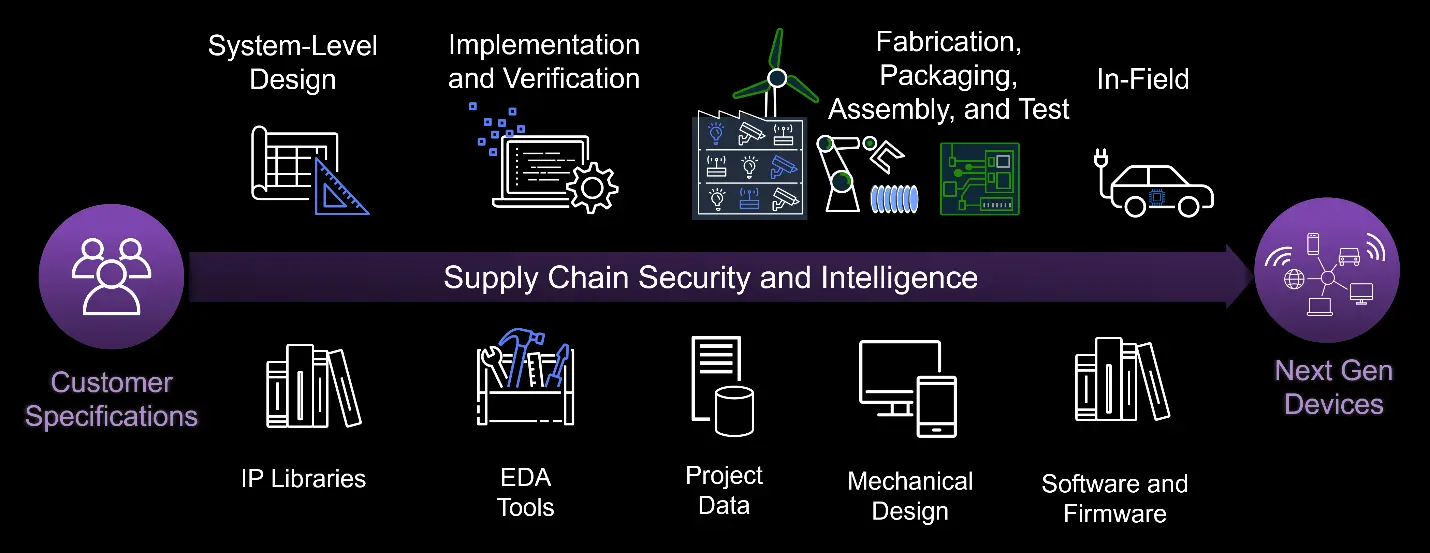
While pre‑silicon verification dramatically improves security, it is not a silver bullet. Post‑manufacturing validation, such as silicon‑level side‑channel analysis, remains essential. Companies must also maintain secure supply chains, as tampering can occur during fabrication or packaging. Nonetheless, the consensus in the industry is that pre‑silicon verification is a critical first line of defense that should be paired with continuous monitoring and firmware updates.
The future of chip security will likely see deeper integration of machine‑learning models that predict vulnerabilities based on design patterns. As these tools mature, designers will be able to pre‑emptively adjust architectures, further reducing the attack surface before the silicon even leaves the fab.
Frequently Asked Questions
What is the main benefit of pre‑silicon security verification? It allows designers to find and fix security flaws before chips are manufactured, saving time, money, and preventing costly recalls.
Do pre‑silicon tools replace post‑manufacturing testing? No. They complement it. Post‑manufacturing tests still verify that the silicon behaves securely in real hardware environments.
Can small companies adopt these methods? Yes. Many open‑source verification frameworks and cloud‑based simulation services make advanced security testing accessible to firms of all sizes.