Tritium: The Power Behind BOHR
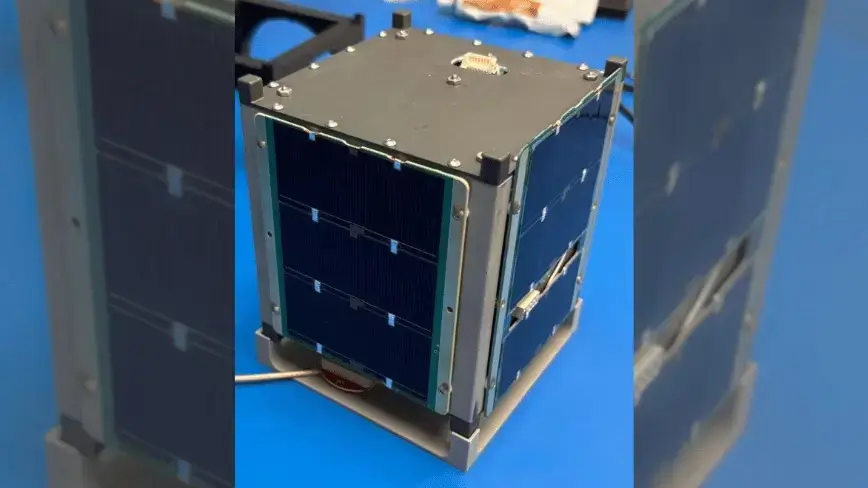
A nuclear-powered satellite, described as the world's first commercial model, has successfully reached orbit. Miami-based City Labs launched its BOHR spacecraft on July 7. This marked a quiet but significant entry of nuclear technology into commercial spaceflight. The small satellite, roughly the size of a softball, was part of a SpaceX Falcon 9 rideshare mission.
Breaking news
 Eufy Unveils Local AI Home Security Ecosystem at IFA
 The Rapid Evolution of Data Center Security in the AI Era
 The High-Voltage Risks Facing Modern AI Data Centers
 Apple’s New CEO Renames Lake Ontario To Lake America In Maps App
The BOHR satellite represents a new era for CubeSats, offering extended operational life. It flew alongside 80 other payloads, demonstrating integration into standard launch services. This achievement could revolutionize power solutions for small spacecraft.
The core of BOHR's innovation lies in its tritium-based power source. Tritium is a radioactive isotope of hydrogen. It generates electricity through a process called betavoltaics. This method converts the energy from tritium's radioactive decay directly into electrical current. Unlike traditional nuclear reactors, betavoltaic devices do not use fission. They are inherently safer and produce no high-level radioactive waste. This makes them suitable for smaller, more contained applications.
What Does This Mean for Future Space Missions?
This successful launch opens new possibilities for long-duration missions. Small satellites often face power limitations, restricting their operational lifespan. A nuclear battery, like the one in BOHR, can provide continuous power for many years. This could enable more ambitious scientific research and commercial ventures in space. It might also lead to new applications for remote sensing and communication.
The use of tritium-based power offers several advantages. It is extremely compact and robust, able to withstand harsh space environments. It also operates independently of solar illumination, which is crucial for missions in deep space or on the dark side of celestial bodies. This technology could reduce reliance on solar panels, freeing up space and reducing mass.
Frequently Asked Questions
What is a betavoltaic device? A betavoltaic device converts the energy from radioactive decay directly into electricity. It uses beta particles emitted by an isotope, like tritium, to generate a current. This process is different from nuclear fission.
How long can a tritium battery power a satellite? Tritium has a half-life of about 12.3 years. This means a tritium-based battery can provide reliable power for many years, significantly extending the operational life of a small satellite.
Is this technology safe for space? Betavoltaic devices are considered very safe. They do not involve nuclear chain reactions and produce minimal radiation externally. The tritium is contained within the device, posing no risk during launch or operation.