Compact Design Targets Local AI Workloads
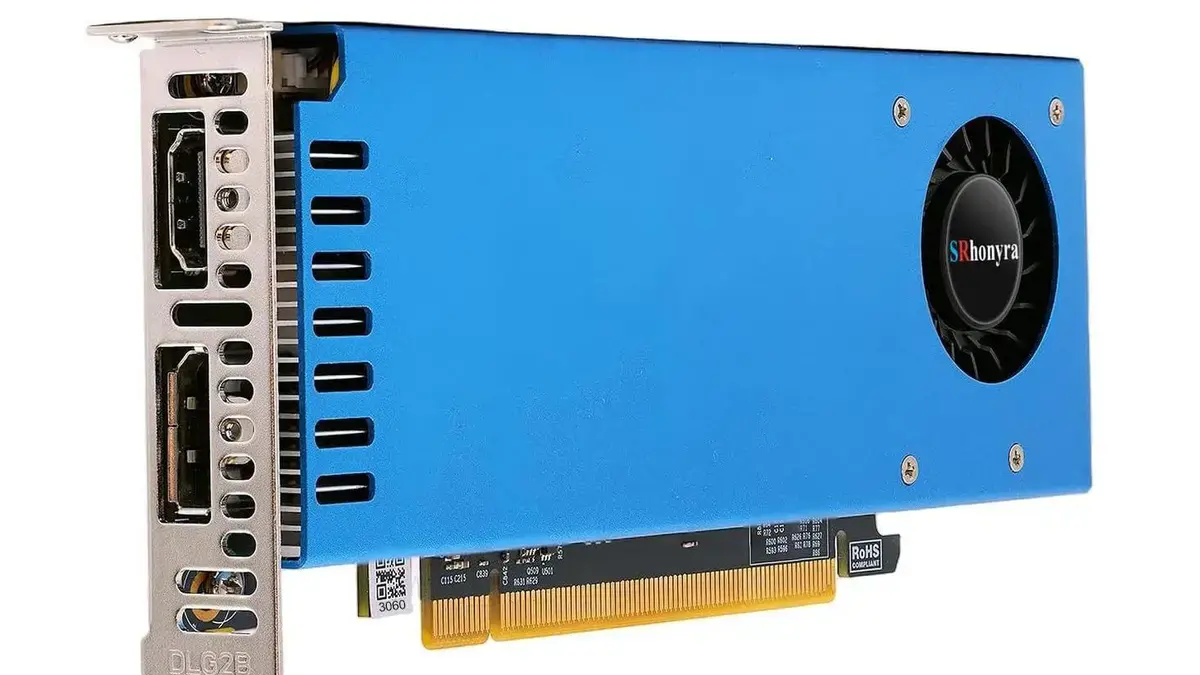
A compact, one-slot Nvidia GeForce RTX 3060 graphics card has appeared on Newegg. This specific model features a low-profile design and includes two monitor outputs. The listing price stands at $496. It is a bus-powered unit, meaning it does not require an external power connector. The card arrived on September 8, 2026. This release targets users seeking small form factor builds. It offers twelve gigabytes of video memory. Such capacity is increasingly rare in modern consumer hardware.
Breaking news
 Town AI Secures $108 Million Series B, Valued at $1 Billion After $55 M Pre‑Series
 Apple Prepares for Major Product Launch Event on October 28
 Apple Releases Release Candidates for watchOS, tvOS and visionOS 27.2
 Apple Limits iPhone Duo and iPhone 18 Pro Max to Reservation-Only Sales in Japan and South Korea
The primary appeal of this card lies in its physical footprint. Standard graphics cards often span multiple expansion slots. This model fits into a single slot, preserving space for other components. The low-profile bracket allows installation in slim desktop cases. It draws all necessary power directly from the PCIe bus. Users do not need to route additional cables from the power supply. This simplifies cable management significantly. The two display outputs support dual-monitor setups without adapters.
Twelve gigabytes of VRAM was once considered standard. Today, that amount represents a significant advantage. Many modern games and applications demand more memory. However, the true value here is for artificial intelligence tasks. Running large language models locally requires substantial memory bandwidth. This card provides enough VRAM to handle smaller models efficiently. It serves as a dedicated inference engine for home servers. Enthusiasts can run complex computations without cloud dependencies. The lack of external power connectors makes it ideal for mini PCs. These systems often have limited internal power delivery capabilities. The card operates quietly due to lower power consumption. It balances performance with thermal efficiency in tight spaces.
Why Does This Card Cost Nearly Five Hundred Dollars?
The pricing structure reflects current market conditions. Inflation and supply chain adjustments affect component costs. A $496 price tag seems high for a mid-range chip. However, the specialized form factor commands a premium. Mass-market cards are cheaper but bulkier. This niche product solves a specific problem. Buyers pay extra for convenience and spatial savings. The card competes with integrated graphics solutions. It offers far superior performance for AI tasks. The limited number of monitor outputs may limit some users. Most modern workflows rely on three or four displays. Nevertheless, the core functionality remains robust. The bus-powered nature ensures compatibility with older motherboards. It eliminates the risk of insufficient PSU connectors.
The emergence of this card signals a shift in consumer needs. Builders are moving toward denser, more efficient systems. Local AI processing is becoming a mainstream hobby. Professionals use these setups for rapid prototyping. They avoid sending sensitive data to remote servers. This privacy benefit drives demand for discrete GPUs. Future releases may include similar compact designs. Competitors will likely respond with their own small cards. The market will see tighter competition in the SFF segment. Prices might stabilize as production scales up. For now, this Newegg listing offers a unique solution. It bridges the gap between power and size. Users gain a powerful tool for local computation. The era of bulky graphics cards may finally end.
Frequently Asked Questions
Does this card require an external power connector? No, it is a bus-powered model. It draws all necessary electricity directly from the motherboard PCIe slot. You do not need to connect additional cables from your power supply unit.
How many monitors can this GPU support simultaneously? The card features two dedicated monitor outputs. It supports a dual-display configuration out of the box. Users needing more screens would require additional adapters or hubs.
Is twelve gigabytes of VRAM sufficient for local LLMs? Yes, it is adequate for many smaller models. It allows for faster inference speeds compared to integrated graphics. Larger models may still require more memory or quantization techniques.