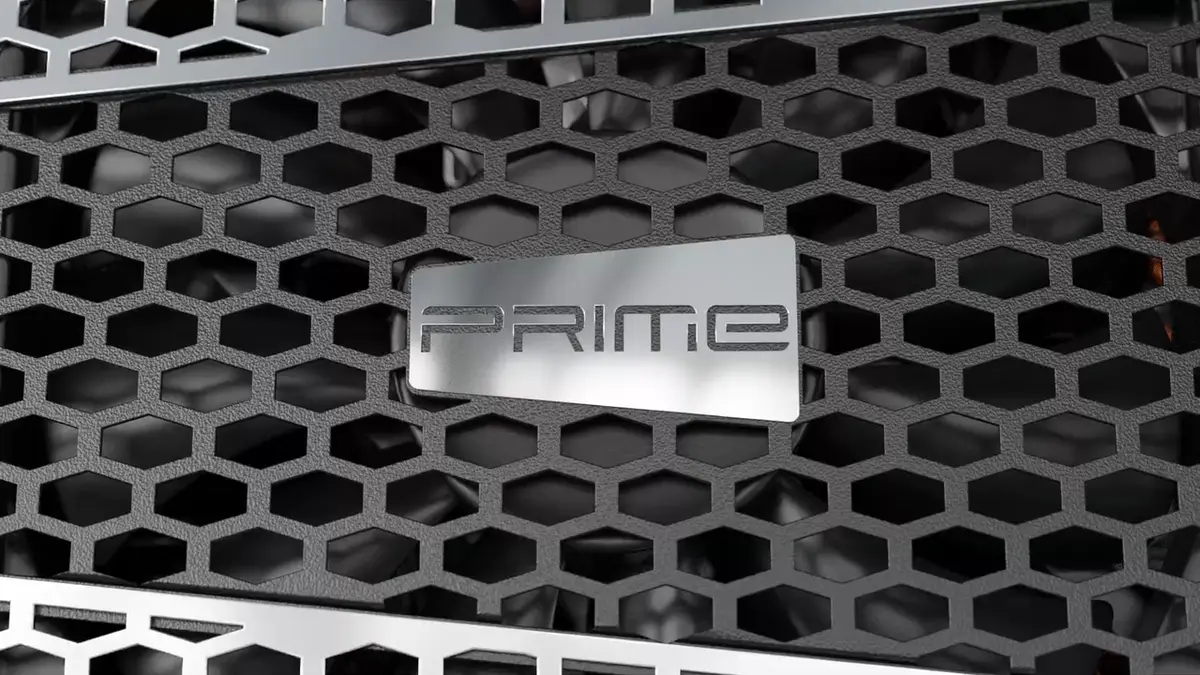
Why Ruby Is a Game‑Changer for ATX Power Supplies
Seasonic announced its newest power supply, the Prime RX‑1600, on August 20, 2026. The unit is the first 115 V ATX power supply to receive 80 Plus Ruby certification, delivering 1,600 W of power with an efficiency of up to 95.4 %. The product is aimed at enthusiasts and professionals who need high performance and reliability in a compact form factor.
Breaking news
 Malicious Rust Crate arrayref Executes Payload During Build Process
 Cyberattack Hits Data Giant
 OpenAI Plans Initial Public Offering by 2027, CFO Confirms
 Munich Re Acquires Cyber-Insurer At-Bay for $575 Million
The Prime RX‑1600 builds on the design of the earlier Prime TX‑1600, but it replaces the Titanium‑level efficiency with Ruby. Ruby certification sits between Platinum and Titanium, offering a balance of power, efficiency, and cost. Seasonic claims the unit can handle demanding workloads such as multi‑GPU rendering, high‑end gaming rigs, and data‑center edge servers. The PSU incorporates a 120‑mm fan, a modular cable system, and a 10‑year warranty, reinforcing its position as a premium component.
Ruby certification is a relatively new tier in the 80 Plus program, introduced to bridge the gap between Platinum and Titanium. It guarantees an average efficiency of 90 % at 50 % load and 95 % at 20 % load for 115 V systems. For users, this translates to lower power bills, reduced heat output, and quieter operation. Seasonic’s engineers argue that the Ruby tier allows them to offer a high‑end product without the premium price of Titanium. The Prime RX‑1600’s 95.4 % efficiency at 20 % load is a record for an ATX power supply, making it attractive for power‑hungry builds that still need to stay within a 150 W budget for fans and cooling.
How Does the Prime RX‑1600 Compare to Competitors?
The choice of Ruby also reflects market demand. As GPUs and CPUs grow more powerful, the power draw of a typical gaming or workstation system can exceed 1,200 W. A supply that can deliver 1,600 W while maintaining high efficiency reduces the need for multiple units or oversized cases. Seasonic’s marketing team highlighted that the RX‑1600 can fit into standard ATX cases, eliminating the need for custom chassis or additional cooling solutions.
Seasonic’s main competitors in the 1,600 W segment include Corsair’s HX1600i and EVGA’s SuperNOVA 1600 G5. All three units claim high efficiency, but the RX‑1600’s Ruby rating sets it apart. While the HX1600i is Titanium‑rated at 90 % efficiency, the RX‑1600 reaches 95.4 % at 20 % load, a notable improvement for low‑to‑mid‑load scenarios. The SuperNOVA 1600 G5, rated Platinum, offers 90 % efficiency at 20 % load, placing it below the RX‑1600’s performance.
In terms of build quality, Seasonic emphasizes its use of Japanese capacitors and a 10‑year warranty, which is longer than the typical five‑year warranty offered by many competitors. The modular cable design also simplifies cable management, a feature that appeals to builders who prioritize aesthetics and airflow. The price point, while higher than standard Platinum units, is positioned below the cost of a Titanium supply, making it an attractive middle ground for high‑end users.
What Does This Mean for the Future of Power Supplies?
The introduction of an 80 Plus Ruby ATX PSU signals a shift toward more nuanced efficiency tiers. As hardware demands increase, manufacturers are likely to adopt Ruby or similar certifications to offer better performance without the steep price of Titanium. For consumers, this means more options that balance cost, power, and efficiency. Builders can now choose a supply that delivers near‑Titanium efficiency while staying within a more reasonable budget.
In the long run, the trend toward higher efficiency may also influence data‑center and enterprise power strategies. With the Prime RX‑1600’s 10‑year warranty, Seasonic is targeting not only gamers but also professionals who need reliable, long‑lasting power solutions. If the market embraces Ruby, we may see a proliferation of mid‑tier high‑efficiency supplies across the industry.
Frequently Asked Questions
What is the difference between Ruby and Titanium ratings? Ruby offers 90 % average efficiency at 50 % load and 95 % at 20 % load, while Titanium requires 92 % at 50 % load and 96 % at 20 % load. Ruby is cheaper but still delivers high performance.
Can the Prime RX‑1600 run in a standard ATX case? Yes, it is designed to fit within standard ATX chassis, making it compatible with most mainstream builds.
Is the 10‑year warranty common for high‑end power supplies? No, most competitors offer five‑year warranties. The 10‑year warranty is a significant selling point for Seasonic’s premium lineup.