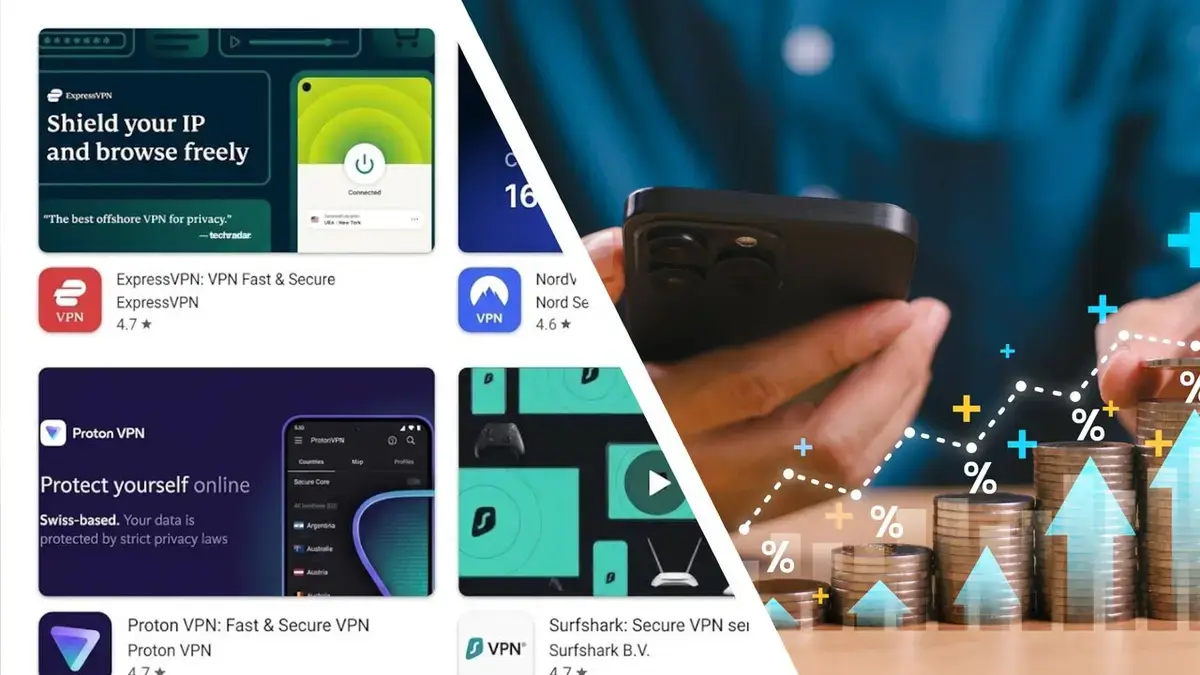
Hidden Fees Surface in User Reviews
A recent analysis of almost 30,000 Android VPN app reviews reveals a growing issue: many subscribers find their plans automatically renewed and priced higher, even after turning off auto‑renewal. The problem spans major services such as ExpressVPN, NordVPN and Surfshark, prompting legal attention in several jurisdictions.
Breaking news
 Town AI Secures $108 Million Series B, Valued at $1 Billion After $55 M Pre‑Series
 Apple Prepares for Major Product Launch Event on October 28
 Apple Releases Release Candidates for watchOS, tvOS and visionOS 27.2
 Apple Limits iPhone Duo and iPhone 18 Pro Max to Reservation-Only Sales in Japan and South Korea
Researchers examined user feedback posted between 2022 and 2024, focusing on complaints about cost increases and renewal policies. The data shows that roughly one‑third of reviewers mention being charged more than expected, with some reporting price jumps of 50 % or more. Legal experts say the pattern may violate consumer‑protection laws that require clear disclosure of renewal terms.
User comments frequently describe surprise bills arriving weeks after a subscription supposedly ended. One reviewer wrote that disabling auto‑renew in the app settings did not stop the service from charging the next month’s fee. Similar anecdotes appear across multiple VPN platforms, suggesting a systemic flaw rather than isolated errors. The study highlights that many apps hide renewal options deep within menus, making it difficult for average users to locate and manage them.
Are VPN Providers Ignoring Consumer Rights?
The analysis also points to a lack of transparent pricing. While promotional rates often advertise low monthly costs, the fine print typically reveals higher rates after the introductory period. Reviewers note that the jump from a $5 introductory price to a $12 regular fee is a common trigger for complaints. This disparity fuels distrust and encourages regulators to scrutinize subscription practices more closely.
Legal scholars argue that auto‑renewal without explicit consent may breach consumer‑protection statutes in the United States, the European Union and other regions. Recent lawsuits filed against ExpressVPN and NordVPN allege that the companies failed to provide adequate notice before renewing contracts. In some cases, courts have ordered refunds and mandated clearer disclosure of renewal terms.
Consumer‑advocacy groups warn that the lack of straightforward cancellation mechanisms can trap users into paying for services they no longer need. They recommend that VPN providers adopt a one‑click opt‑out feature and send reminder emails before any renewal occurs. Such steps could reduce the volume of price‑related complaints and restore confidence in the market.
The fallout from these findings may reshape how VPN services market their subscriptions. Companies that improve transparency could gain a competitive edge, while those that ignore the issue risk further legal challenges and reputational damage. Industry watchdogs suggest that upcoming regulatory updates may require standardized renewal notifications across all subscription‑based apps.
Frequently Asked Questions
What triggers the unexpected price hikes in VPN subscriptions? Most hikes occur when a promotional rate expires and the service automatically switches to the standard price, often without clear warning to the user.
Can users reliably stop auto‑renewal on VPN apps? While the option exists in many apps, it is sometimes buried in settings or overridden by hidden clauses, making it difficult for users to confirm the change.
What actions are regulators taking against VPN providers? Authorities in several countries have opened investigations, and some courts have ordered refunds and mandated clearer renewal disclosures for the companies involved.