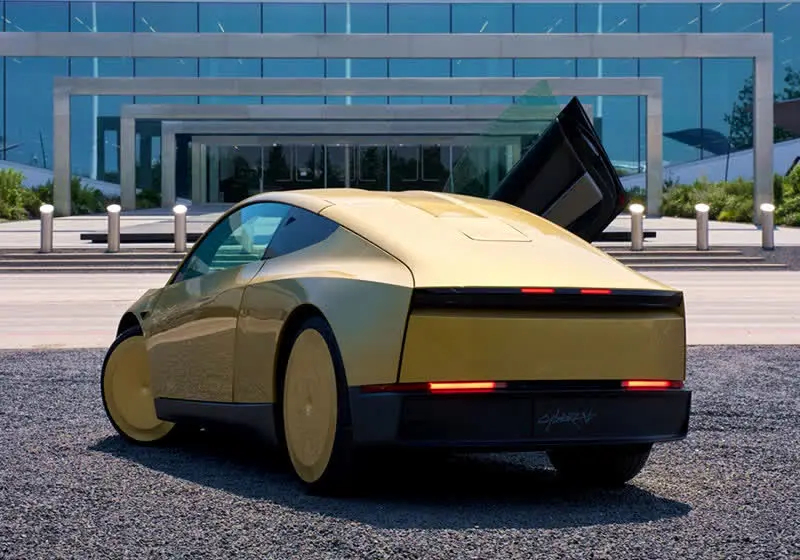
If public demand forces a change, the touchscreen joystick offers a solution
The vehicle features a single central touchscreen that can split into distinct control zones. This design allows human drivers to operate the car without a steering wheel or pedals. Tesla executives have confirmed that physical controls might appear if necessary. The hidden joystick serves as a potential compromise between autonomy and manual operation. A Digital Compromise for Manual Control The Cybercab relies entirely on digital interfaces for driver interaction. Instead of a conventional dashboard, the system uses one large display. When needed, this screen divides into two separate sections. One side handles navigation and media, while the other manages vehicle dynamics. This setup eliminates the need for a physical steering wheel. It also removes the accelerator and brake pedals. The design prioritizes minimalism and space efficiency within the cabin. Tesla leadership has acknowledged that customers might expect standard controls. However, the company believes most users will prefer full automation.
Breaking news
 Town AI Secures $108 Million Series B, Valued at $1 Billion After $55 M Pre‑Series
 Apple Prepares for Major Product Launch Event on October 28
 Apple Releases Release Candidates for watchOS, tvOS and visionOS 27.2
 Apple Limits iPhone Duo and iPhone 18 Pro Max to Reservation-Only Sales in Japan and South Korea
If public demand forces a change, the touchscreen joystick offers a solution. It provides tactile feedback through haptic sensors. Drivers can steer and accelerate using their thumbs. This method keeps hands close to the center console. It reduces the physical space required for traditional levers. The approach aligns with Tesla’s broader vision for software-defined vehicles. Why Eliminate Physical Pedals Entirely? Removing mechanical parts simplifies the manufacturing process. Fewer components mean lower production costs. It also reduces the risk of mechanical failure. The digital system updates via over-the-air software patches. This ensures the car always has the latest safety features. The joystick concept addresses a specific user concern. Many drivers feel uneasy about letting go of the wheel. The hidden control option reassures them that they retain authority. They can override the autonomous system instantly. This hybrid approach balances trust in AI with human intuition.
The final implementation remains under development.
Engineers are testing the haptic response sensitivity. They aim for a natural feel that mimics physical resistance. The goal is to make the digital controls intuitive. Users should not need extensive training to operate them. The system must react quickly to sudden inputs. Latency must remain below human perception thresholds. This ensures a seamless transition between modes. Frequently Asked Questions Does the Cybercab have a physical steering wheel? No, the vehicle does not include a traditional steering wheel. It relies on a split touchscreen interface for manual control. Can humans drive the Cybercab manually? Yes, a hidden touchscreen joystick allows for manual operation. This feature acts as a backup to the autonomous system. When will Tesla add physical controls? Executives suggest adding them only if market demand requires it. The current design prioritizes digital simplicity first.