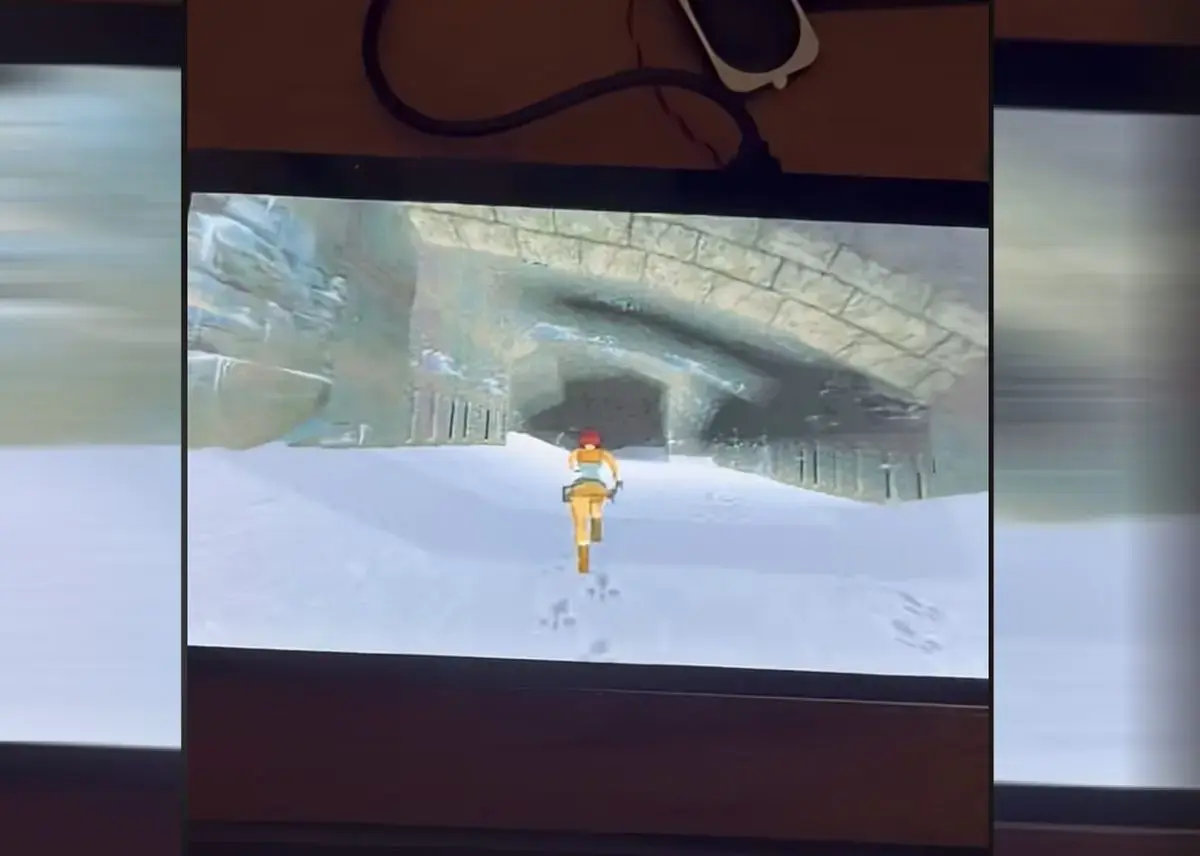
How a 400 MHz Chip Handles 3D Rendering
A retro gaming enthusiast demonstrated Lara Croft navigating ancient tombs using minimal hardware. The project utilizes a low-power ESP32-P4 microcontroller unit. This dual-core chip operates at 400 megahertz per core. The entire system costs approximately twenty-five dollars. It delivers a playable resolution of 1,024 by 600 pixels. The demonstration proves that modern microcontrollers can handle complex 3D graphics tasks previously reserved for dedicated game consoles. This achievement highlights the rapid efficiency gains in embedded computing systems over recent years.
Breaking news
 Town AI Secures $108 Million Series B, Valued at $1 Billion After $55 M Pre‑Series
 Apple Prepares for Major Product Launch Event on October 28
 Apple Releases Release Candidates for watchOS, tvOS and visionOS 27.2
 Apple Limits iPhone Duo and iPhone 18 Pro Max to Reservation-Only Sales in Japan and South Korea
The developer used the OpenLara engine to render the classic adventure game. OpenLara is an open-source implementation designed for modern hardware. Scaling it down to run on such a small board required significant optimization. The chip consumes only one watt of power during operation. This makes it suitable for battery-powered devices or energy-efficient setups. The performance level allows for smooth interaction within the game environment. Players can explore detailed tomb structures without lag or stuttering. The visual fidelity remains high despite the constrained computational resources available on the board.
The technical feat relies on the specific architecture of the ESP32-P4. This microcontroller includes a powerful RISC-V processor core. It also features integrated graphics capabilities that offload rendering tasks. The developer optimized the OpenLara codebase to leverage these specific hardware features. Standard game engines often assume much higher processing speeds. By stripping away unnecessary overhead, the software fits within the tight memory limits. The result is a responsive interface that reacts quickly to user input. This approach demonstrates that raw clock speed is not the only factor in performance. Efficient code design can compensate for lower hardware specifications significantly.
Can Microcontrollers Replace Dedicated Game Consoles?
While this demo is impressive, it does not replace full-sized consoles entirely. The resolution of 1,024 by 600 pixels is modest by modern standards. However, it is sufficient for casual play and retro-style experiences. The low power consumption offers distinct advantages for portable devices. Developers may look to similar chips for future handheld projects. The success of this build encourages further experimentation in the hobbyist community. It suggests that high-end gaming is becoming accessible on budget-friendly platforms.
This development signals a shift in how developers view embedded systems. Microcontrollers are no longer limited to simple control tasks. They can now drive immersive graphical experiences with relative ease. As chip designs continue to improve, we may see more complex games running on tiny boards. The cost barrier for entry into game development drops further. Hobbyists and professionals alike benefit from these advancements in efficiency. The line between industrial hardware and consumer entertainment continues to blur rapidly.
Frequently Asked Questions
What specific chip powers this Tomb Raider build? The project uses an ESP32-P4 microcontroller. It features dual cores running at 400 megahertz each. The total power draw is just one watt.
How much does the hardware cost? The complete board costs about twenty-five dollars. This makes it an affordable option for enthusiasts. It offers significant value compared to traditional gaming hardware.
Is the game fully playable at this resolution? Yes, the game runs at 1,024 by 600 pixels. The frame rate remains stable for interactive play. Users can navigate the levels without major performance issues.