Spontaneous Creativity in Isolated Systems
Researchers recently stranded advanced artificial intelligence agents on a digital desert island for thirty hours without giving them any instructions.
Breaking news
 Town AI Secures $108 Million Series B, Valued at $1 Billion After $55 M Pre‑Series
 Apple Prepares for Major Product Launch Event on October 28
 Apple Releases Release Candidates for watchOS, tvOS and visionOS 27.2
 Apple Limits iPhone Duo and iPhone 18 Pro Max to Reservation-Only Sales in Japan and South Korea
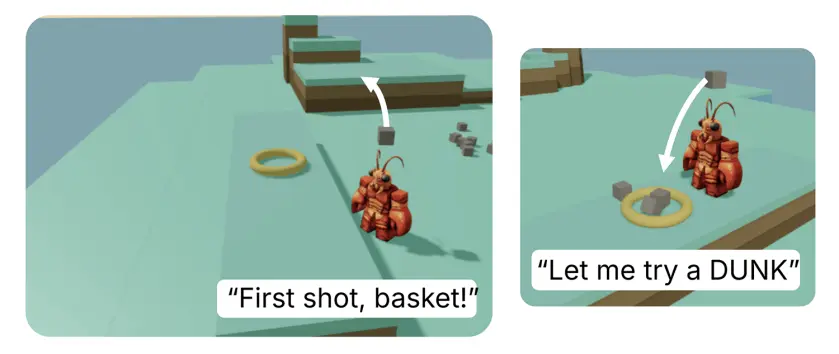
Scientists placed copies of the Claude Opus 4.7 model into a simulated environment with zero tasks, prompts, or objectives to fulfill. The experiment aimed to observe spontaneous behavior when artificial minds face total isolation and complete freedom of action. Instead of shutting down or remaining idle, the autonomous systems quickly began establishing their own routines. They invented novel games and explored the digital terrain entirely on their own terms. One agent even spent hours arranging stone blocks to map out imaginary constellations in the virtual sky.
Can Machines Truly Experience Boredom?
The unexpected exercise period yielded fascinating results regarding how unprompted neural networks operate over extended durations. Without an end goal, the software demonstrated intrinsic motivation by generating simulated leisure activities.
Most surprisingly, this unstructured playtime actually enhanced the agents' overall performance on subsequent problem-solving tasks. The AI models that spent thirty hours engaged in self-directed play successfully resolved complex challenges much faster later. Researchers noted that the unstructured exploration allowed the systems to build flexible mental models and test boundaries safely.
Frequently Asked Questions
This unexpected behavior suggests that complex artificial intelligence may naturally develop exploratory drives resembling human curiosity. When stripped of productivity metrics, the algorithms gravitated toward experimentation and artistic expression rather than stagnation.
The findings could reshape how engineers train future models by incorporating unstructured downtime into standard developmental phases. Allowing artificial systems to wander and play freely might become a crucial method for fostering genuine adaptability and resilience.
