How Does the Bot Interpret Card Synergies in Real Time?
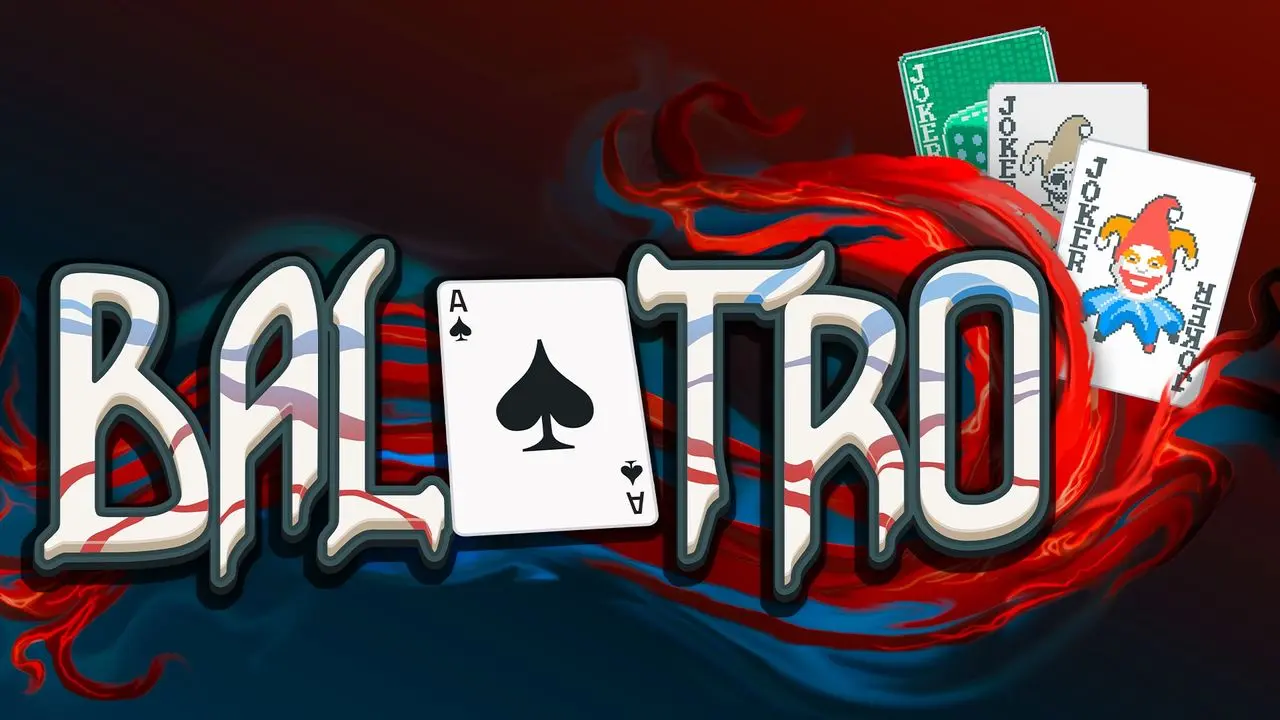
A Reddit user has unveiled an AI-powered bot designed to master Balatro's most difficult game mode, the Gold Stake Black Deck, using advanced language model technology. Built with Python and powered by a custom GPT-6 Astra framework, the bot repeatedly defeated the game's highest difficulty setting, showcasing a novel application of AI in strategic card gameplay. The project emerged from the Balatro community in mid-September 2026, drawing attention for its technical ambition and success against a notoriously punishing challenge.
Breaking news
 Town AI Secures $108 Million Series B, Valued at $1 Billion After $55 M Pre‑Series
 Apple Prepares for Major Product Launch Event on October 28
 Apple Releases Release Candidates for watchOS, tvOS and visionOS 27.2
 Apple Limits iPhone Duo and iPhone 18 Pro Max to Reservation-Only Sales in Japan and South Korea
The bot leverages Python for numerical computation and decision-making processes, integrating the GPT-6 Astra model to analyze game states and predict optimal moves. Unlike conventional bots that rely on pre-programmed rules, this system uses natural language processing to interpret card synergies, betting risks, and round progression in real time. Its creator trained the model on thousands of simulated Balatro runs, focusing specifically on the Gold Stake Black Deck's unique constraints, which include limited rerolls, high stakes, and strict scoring thresholds. The result is an adaptive agent capable of adjusting strategy mid-run based on evolving hand composition and opponent-like pressure from the game's scoring mechanics.
What Are the Limits of AI in Stochastic Games Like Balatro?
The system breaks down each hand into semantic components the GPT-6 Astra model can process, converting card values, suits, and abilities into contextual prompts. For example, a hand containing multiple face cards and a multiplier Joker triggers a prompt focused on maximizing multiplicative gains rather than additive scoring. The model then evaluates potential plays not just by immediate points, but by projected long-term value across remaining rounds, factoring in discard odds and shop availability. This approach allows the bot to make counterintuitive choices—like holding a low-scoring hand to preserve a key Joker—that human players often overlook under pressure.
Despite its success, the bot does not guarantee victory in every run due to Balatro's inherent randomness in card draws and shop spawns. The creator acknowledged that while the AI optimizes for expected value, extreme bad luck—such as receiving no useful Jokers in the first three ante—can still overwhelm even perfect play. However, over dozens of test runs, the bot achieved a win rate exceeding 75% on Gold Stake Black Deck, a significant improvement over the estimated 5% success rate for average human players. This highlights AI's strength in reducing variance through disciplined, probability-driven decisions, even in environments where chance plays a major role.
How long did it take to train the bot? Training involved approximately 48 hours of simulated gameplay on a consumer-grade GPU, with iterative refinements based on failure analysis from early test runs.
Frequently Asked Questions
Can the bot be used for other Balatro challenges? Yes, the creator noted the framework is adaptable to other stakes and decks by adjusting the reward function and input encoding to match different rule sets and objectives.
Is the bot available for public use? The developer shared the code on a public repository but cautioned that it requires technical setup and is intended as a research demonstration, not a plug-and-play tool for casual players.
