How Attie Powers User-Created Social Experiences
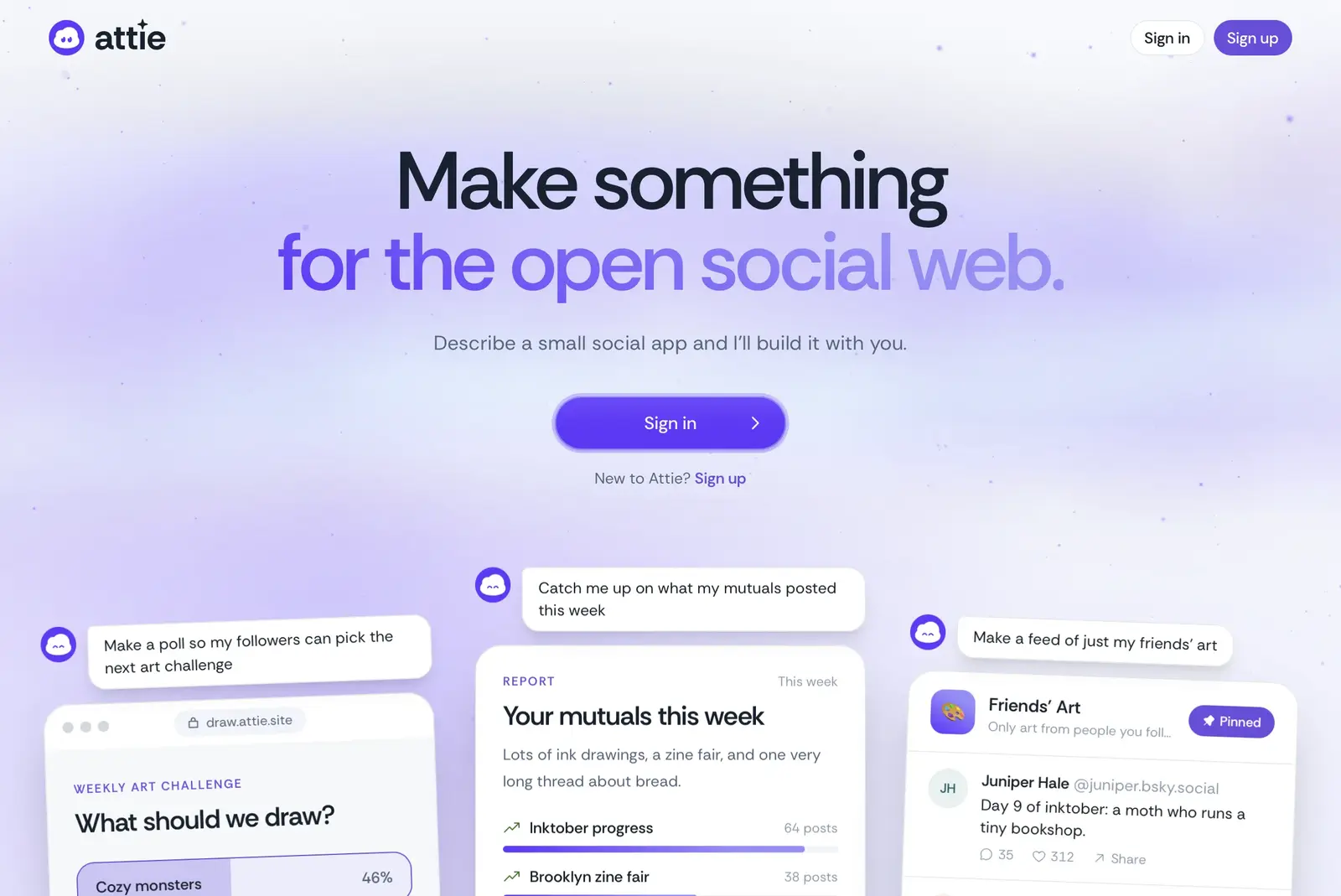
Bluesky has expanded its Attie AI tool, originally launched earlier this year to help users build custom feeds using artificial intelligence, to now allow the creation of small social applications such as games, polls, and interactive dashboards. These apps can be shared with others as standalone websites directly from the platform. The update was highlighted during an interview at TechCrunch Disrupt, where Bluesky CEO Toni Schneider described Attie as a way to foster social vibes through user-generated content. The feature aims to deepen engagement by letting users not only consume but also build and distribute lightweight apps within the Bluesky ecosystem.
Breaking news
 Town AI Secures $108 Million Series B, Valued at $1 Billion After $55 M Pre‑Series
 Apple Prepares for Major Product Launch Event on October 28
 Apple Releases Release Candidates for watchOS, tvOS and visionOS 27.2
 Apple Limits iPhone Duo and iPhone 18 Pro Max to Reservation-Only Sales in Japan and South Korea
Attie functions -assisted builder that interprets natural language prompts to generate functional mini-apps without requiring coding skills. Users can describe what they want—like a trivia game about space or a mood-tracking poll—and the tool assembles a working version that others can interact with. According to Schneider, the vision is to lower the barrier to creation so that anyone can contribute playful or useful interactions to their network. The apps are hosted as shareable links, making them easy to spread across Bluesky posts or external platforms. This shift moves Attie beyond feed customization into active social tooling, aligning with Bluesky’s broader goal of decentralizing not just content but also functionality.
What Kinds of Apps Are Users Already Making?
Early adopters have used Attie to build simple games like word scrambles and emoji-based puzzles, as well as utility tools such as event schedulers and sentiment dashboards for community discussions. One example shared by Schneider involved a collaborative storytelling app where each user adds a sentence, creating a evolving narrative visible to all participants. These creations are lightweight by design—intended to be „small” and fast-loading—so they feel native to social scrolling rather than disruptive. Bluesky emphasizes that the tool avoids complex integrations, focusing instead on instant shareability and low friction for both creators and viewers. The company sees this as a way to spark organic trends driven by user ingenuity rather than algorithmic pushes.
By enabling users to build and share apps, Bluesky is experimenting with a model where social platforms become hubs for micro-experiences rather than just streams of posts. Schneider suggested that Attie could evolve into a kind of „social operating system” where interactions are not just consumed but co-created in real time. This approach contrasts with traditional apps that centralize functionality, instead distributing creative power across the user base. While still in early stages, the team believes such tools could redefine how people connect online—shifting from passive consumption to active participation in shared digital playthings. The success of Attie will depend on whether users find these creations engaging enough to remix and redistribute widely.
How Does This Fit Into Bluesky’s Long-Term Vision?
What types of apps can I make with Attie? You can create simple games, interactive polls, dashboards, and other lightweight social tools using natural language prompts, all shareable as websites.
Frequently Asked Questions
Do I need coding skills to use Attie? No, Attie is designed for non-developers—users describe what they want in plain language, and the AI generates the app automatically.
Can others use the apps I create? Yes, any app built with Attie can be shared via a link that others can open and interact with directly, either on Bluesky or elsewhere.
