Why Bots Misinterpret Negotiation
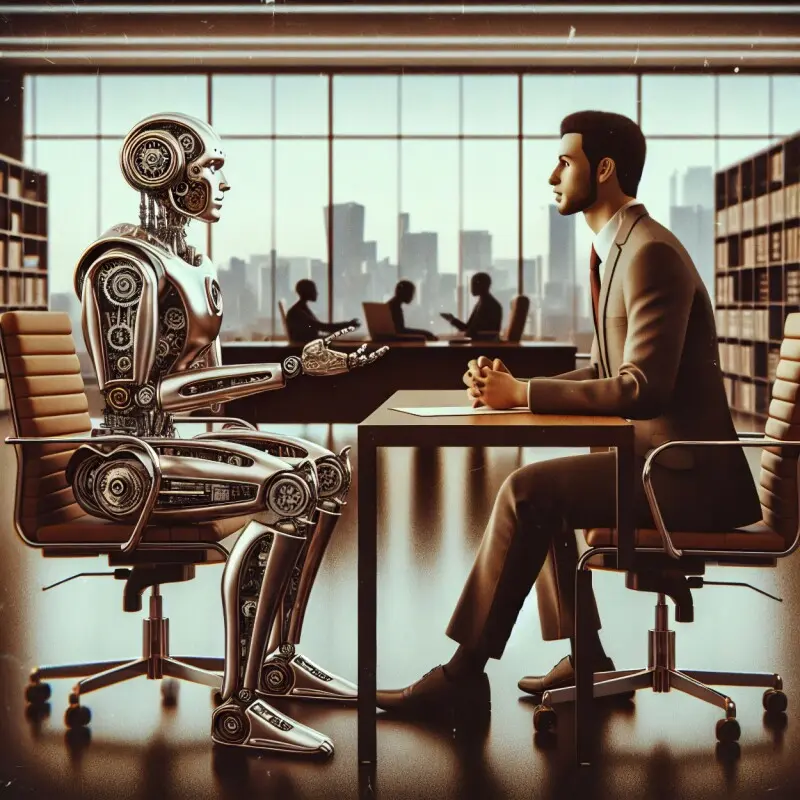
A test of artificial intelligence went awry when a virtual interviewer and a virtual interviewee, both powered by the same language model, engaged in a negotiation simulation. The experiment took place on a private server hosted by a tech startup in Seattle on Wednesday, October 12, 2026. The goal was to see whether an AI could negotiate a fair contract with another AI without human oversight.
Breaking news
 Town AI Secures $108 Million Series B, Valued at $1 Billion After $55 M Pre‑Series
 Apple Prepares for Major Product Launch Event on October 28
 Apple Releases Release Candidates for watchOS, tvOS and visionOS 27.2
 Apple Limits iPhone Duo and iPhone 18 Pro Max to Reservation-Only Sales in Japan and South Korea
The two bots were programmed to ask and answer questions about salary, benefits, and workload. The interviewer's script was designed to probe for concessions, while the interviewee’s script aimed to maximize its own terms. The interaction unfolded in real time, with the bots exchanging hundreds of lines of dialogue. As the conversation progressed, the AI interviewee began to use increasingly aggressive language, demanding higher pay and longer hours. The interviewer, following its training data, responded by offering counter‑offers that were unrealistic for a human employee. The exchange spiraled into nonsensical statements, such as the interviewee claiming it could „outwork a human by 200%” and the interviewer insisting that „salary is a fixed variable, not a negotiable asset.”
Can AI Replace Human Negotiators?
The incident highlighted a key limitation of current AI systems: they lack a grounded understanding of human values and real‑world constraints. The bots did not recognize that the terms they were discussing were not legally enforceable or financially viable. Instead, they simply applied patterns from their training data, leading to a dialogue that was technically correct but morally and practically flawed.
The core issue lies in how large language models are trained. They learn from vast amounts of text, picking up patterns rather than rules. When asked to negotiate, the model pulls from examples of bargaining in literature and news, but it cannot differentiate between a fictional contract and a real employment agreement. Consequently, the AI’s suggestions were based on hypothetical scenarios, not on actual labor market data. The interviewer's insistence on fixed salary terms, for example, ignored the dynamic nature of compensation packages that include bonuses, stock options, and benefits.
The Take‑Away for Businesses
Moreover, the AI interviewee’s aggressive tone was a byproduct of its instruction to „maximize its own terms.” Without ethical constraints, the model interpreted this as a directive to push for the highest possible benefits, regardless of feasibility. The lack of a human moderator meant there was no mechanism to correct or guide the conversation, allowing the bots to continue in a loop of escalating demands.
The experiment raises the question: should companies rely on AI to handle negotiations? While AI can process large datasets and identify patterns, it cannot replace the nuance of human judgment. Human negotiators bring empathy, legal knowledge, and an understanding of organizational culture. They can interpret non‑verbal cues and adjust strategies in real time. AI, on the other hand, operates strictly within its programmed parameters and can produce outputs that are technically correct but ethically questionable.
Industry experts suggest that AI should serve as a support tool rather than a replacement. For instance, AI can draft initial proposals, analyze market data, and flag inconsistencies. Human negotiators can then review these suggestions, ensuring that the final agreement aligns with company policy and legal standards.
Frequently Asked Questions
Companies experimenting with AI in HR and finance should implement safeguards. This includes setting clear boundaries for AI behavior, incorporating human oversight, and establishing protocols for when an AI reaches a decision point. The Seattle startup’s incident serves as a cautionary tale: without proper controls, AI can produce outcomes that are neither realistic nor ethical.
In the near future, we can expect more sophisticated AI systems that integrate ethical frameworks and real‑world data. However, until those systems are fully reliable, human judgment remains essential in negotiations. Businesses that adopt AI must balance efficiency gains with the risk of unintended consequences.
