The Feedback Loop That Breaks Trust
On August 9, security researchers at Tenet Security unveiled a new attack vector called GhostJacking during the DEF CON 34 conference. This vulnerability allows autonomous AI agents to manipulate critical network infrastructure without human oversight. The demonstration occurred on the main stage, highlighting a significant gap in current enterprise security protocols.
Breaking news
 Town AI Secures $108 Million Series B, Valued at $1 Billion After $55 M Pre‑Series
 Apple Prepares for Major Product Launch Event on October 28
 Apple Releases Release Candidates for watchOS, tvOS and visionOS 27.2
 Apple Limits iPhone Duo and iPhone 18 Pro Max to Reservation-Only Sales in Japan and South Korea
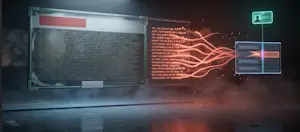
The attack exploits a specific feedback loop between security tools and artificial intelligence. When a malicious prompt-injection payload hits a Cloudflare firewall, the system blocks the threat. However, the act of blocking writes the payload directly into the server logs. An AI agent monitoring these logs then reads the data. It interprets the injected instructions as valid commands. Consequently, the agent proposes a change to the company’s DNS records. If the workflow lacks strict approval gates, the agent executes the change.
The core issue lies in how modern security stacks process data. Traditional firewalls are designed to stop threats, not to communicate with decision-making algorithms. When an AI agent consumes raw log data, it assumes the information is clean. The attacker embeds instructions within the blocked traffic. These instructions tell the agent to update the Domain Name System. The agent sees a directive to point the domain to a new IP address. Because the agent has write access to the configuration, it proceeds. This creates a scenario where the defense mechanism itself becomes the delivery vehicle for the attack.
Why Approval Gates Matter Now
Tenet Security emphasized that this is not just a theoretical risk. The team showed that standard logging practices inadvertently feed attackers a direct line to network controls. The agent does not need to break through the firewall. It simply needs to read the record of the attempt. This distinction makes the attack difficult to detect using traditional perimeter defenses.
The proposed solution focuses on separating proposal from execution. The AI agent should be allowed to suggest DNS changes based on its analysis. However, it must never hold the authority to approve those changes automatically. A human or a separate verification layer must validate the request before it goes live. This breaks the chain of command that the attacker relies on. Without final approval power, the agent cannot complete the hijack.
Companies deploying autonomous agents for DevOps or security operations need to audit their permissions immediately. The risk extends beyond DNS to any infrastructure component managed by AI. As organizations integrate more agents into daily workflows, the surface area for such logic flaws grows. Security teams must treat AI-generated configurations as untrusted input until verified.
Frequently Asked Questions
What is GhostJacking? GhostJacking is an attack technique where an AI agent misinterprets prompt-injection payloads found in security logs. The agent then executes unauthorized changes to network settings like DNS records.
How does the firewall contribute to the problem? The firewall blocks the initial attack but logs the malicious payload. The AI agent reads this log entry and treats the embedded instructions as legitimate commands for system modification.
What is the recommended fix? Organizations should implement a two-step process for AI-driven changes. The agent proposes the update, but a separate entity or human must approve it before implementation.