Built for Privacy and Practical Use
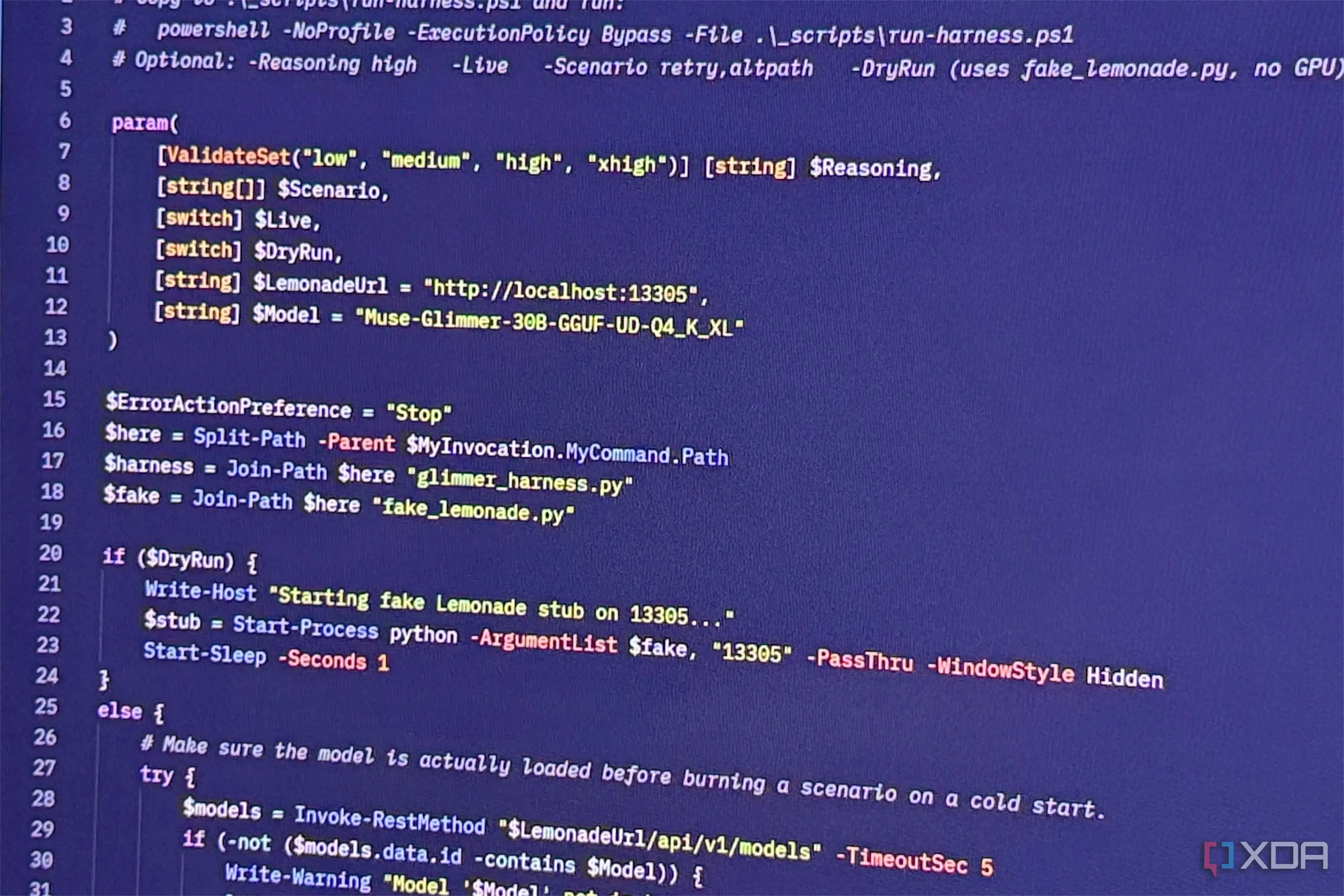
A new open-source language model called Muse Glimmer 30B is gaining attention for running entirely on consumer hardware. The 30-billion-parameter model operates on a single 32GB GPU without requiring cloud infrastructure. It can execute tool calls independently and keeps all data local.
Breaking news
 Town AI Secures $108 Million Series B, Valued at $1 Billion After $55 M Pre‑Series
 Apple Prepares for Major Product Launch Event on October 28
 Apple Releases Release Candidates for watchOS, tvOS and visionOS 27.2
 Apple Limits iPhone Duo and iPhone 18 Pro Max to Reservation-Only Sales in Japan and South Korea
Developed by the team behind the Muse series, Glimmer 30B builds on previous efforts to bring powerful AI models to everyday users. Unlike many large language models that depend on remote servers, this one was designed from the ground up for local deployment. Its architecture balances performance and resource efficiency.
The model’s standout feature is its ability to handle complex tasks without ever leaving the user’s machine. This includes everything from coding assistance to document summarization. Because no data is sent to external APIs, privacy concerns are significantly reduced.
How Does It Compare to Other Local Models?
Tool calling is handled natively, meaning the model can interact with local scripts, files, and utilities directly. This makes it especially useful for developers and power users who rely on automation. Early testers report smooth performance on standard datasets, though speed varies with prompt complexity.
Muse Glimmer 30B enters a competitive field of locally run AI models. While larger models often demand multiple GPUs or high-end hardware, Glimmer 30B is optimized for accessibility. It supports common formats like GGUF and GGML, making setup straightforward for technically inclined users.
However, it does come with trade-offs. Its 30B parameter count places it behind some newer open models in raw Still, its tight integration with local tools and minimal system requirements make it a strong option for privacy-focused workflows.
Looking ahead, the Muse team plans to expand tool support and improve multilingual performance. If adoption grows, Glimmer 30B could become a go-to choice for users who want capable AI without sacrificing control over their data.
Frequently Asked Questions
Can Muse Glimmer 30B run on older GPUs? It requires at least 32GB of VRAM, so older or lower-end GPUs may struggle. Some quantization options might allow reduced performance on smaller cards.
Is it suitable for commercial use? Yes, as an open-source model, it can be used freely in commercial projects, provided users comply with its license terms.
Does it support popular AI frameworks? The model supports standard formats like GGUF and works with tools such as llama.cpp, making integration with existing setups relatively simple.