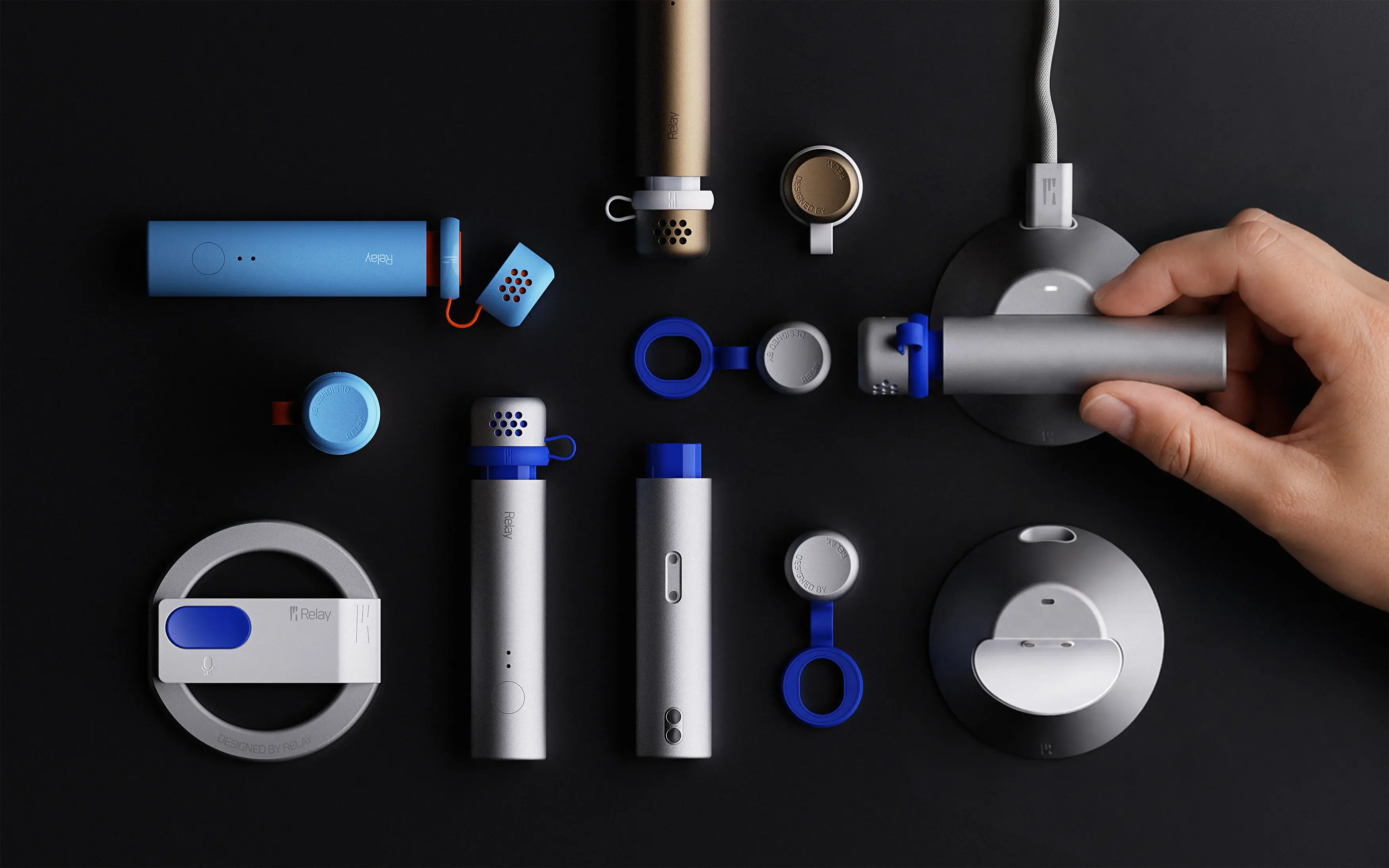
Early tests show it can handle dictation, code editing, and application control
The Relay Q, an AI-powered microphone designed to replace keyboard input, is set for release next year. Developed by Relay, the device aims to make voice the primary method of interacting with computers. It listens continuously, processes speech in real time, and translates voice commands into actions without requiring wake words or button presses. The goal is to eliminate the need for typing in everyday computing tasks. Voice technology has struggled to become a seamless alternative to keyboards due to latency, accuracy issues, and user habits. The Relay Q addresses these by using on-device AI to filter background noise and predict intent from partial speech. Unlike smart speakers that wait for triggers, this microphone operates as a constant input stream, similar to how a keyboard functions.
Breaking news
 Town AI Secures $108 Million Series B, Valued at $1 Billion After $55 M Pre‑Series
 Apple Prepares for Major Product Launch Event on October 28
 Apple Releases Release Candidates for watchOS, tvOS and visionOS 27.2
 Apple Limits iPhone Duo and iPhone 18 Pro Max to Reservation-Only Sales in Japan and South Korea
Early tests show it can handle dictation, code editing, and application control with minimal lag. How the Relay Q Learns Your Speech Patterns The device adapts to individual voices over time, improving accuracy by learning vocabulary, pacing, and common phrases. It uses a specialized neural network trained on diverse accents and speech styles to reduce errors. Users report fewer corrections after a few days of use as the system personalizes its responses. Relay claims the microphone can distinguish between casual conversation and intentional commands with over 90% accuracy in quiet environments. Can Voice Really Replace Typing for Complex Tasks? For tasks like writing emails or browsing the web, voice input via the Relay Q shows promise. However, challenges remain in precision-dependent activities such as graphic design or software debugging. The company is working with developers to create voice-friendly shortcuts for professional applications.
Adoption may depend on whether users trust the system enough to abandon physical input methods entirely. Frequently Asked Questions How does the Relay Q differ from existing voice assistants? It does not rely on wake words or cloud processing, instead using on-device AI for real-time, continuous input like a keyboard. What operating systems will it support? The Relay Q is designed to work with Windows, macOS, and Linux systems via USB-C or Bluetooth connectivity. Will it work in noisy environments? The microphone uses directional AI filtering to focus on the user’s voice, though performance may drop in extremely loud settings.