Managing Heat in Multi-Chip Packages
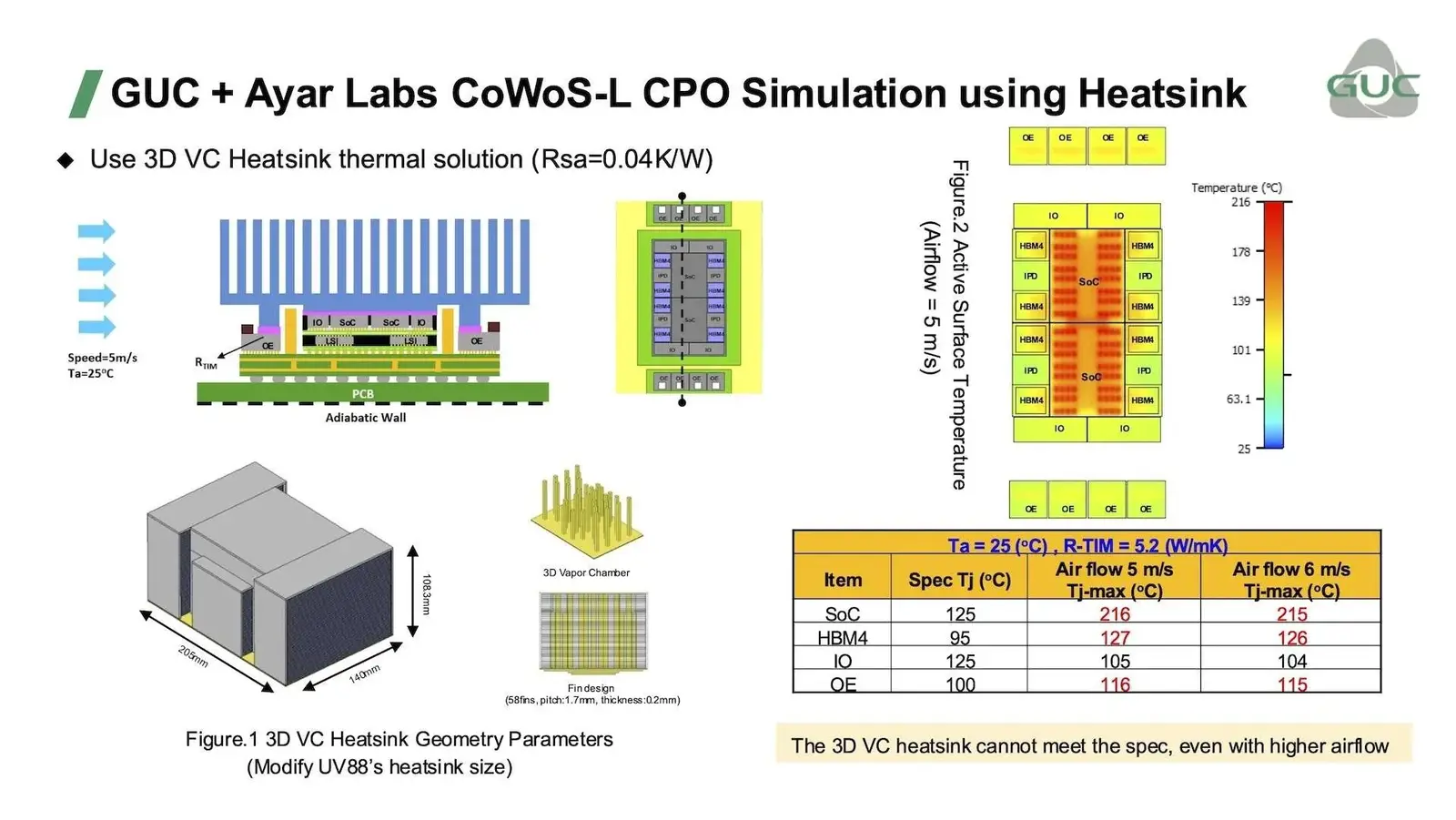
Researchers at a leading semiconductor firm have completed critical thermal co-simulation tests for co-packaged optics. These tests focus on optical engines operating next to high-power AI processors. The work addresses multi-chip package reliability issues. This development is essential for next-generation data center interconnects. The team aims to solve complex thermal management challenges.
Breaking news
 Town AI Secures $108 Million Series B, Valued at $1 Billion After $55 M Pre‑Series
 Apple Prepares for Major Product Launch Event on October 28
 Apple Releases Release Candidates for watchOS, tvOS and visionOS 27.2
 Apple Limits iPhone Duo and iPhone 18 Pro Max to Reservation-Only Sales in Japan and South Korea
The transition to co-packaged optics represents a major shift in hardware design. Traditional pluggable transceivers are being replaced by integrated solutions. This change brings new difficulties in architecture and power delivery. Mechanical design constraints also become tighter. However, thermal management stands out as the primary hurdle. Engineers must ensure optical components remain within safe temperature limits. High heat from AI processors can degrade optical performance.
The core challenge lies in the proximity of heat sources. AI processors generate significant waste heat during operation. Optical engines are sensitive to thermal fluctuations. Excessive heat can cause signal drift or component failure. The research team utilized advanced co-simulation tools to model these interactions. They analyzed how heat dissipates through the package substrate. This approach allows for precise prediction of thermal gradients. By identifying hot spots early, designers can optimize cooling strategies. The simulations account for varying workload scenarios. This ensures robust performance under peak load conditions. Reliable thermal data is crucial for final product validation. It reduces the risk of field failures.
Can Simulation Replace Physical Prototyping?
The study highlights the interplay between electrical and optical performance. Power delivery networks must handle high current densities. These currents contribute to resistive heating. Optical waveguides require stable environmental conditions. Any deviation can impact data integrity. The researchers tested various material combinations. They evaluated thermal interface materials for efficiency. The goal was to minimize thermal resistance between chips. Effective heat spreading is vital for long-term reliability. The findings provide a baseline for future designs. They offer insights into scaling optical integration.
While co-simulation provides valuable data, it complements physical testing. It does not fully replace empirical validation. However, it significantly reduces development time. Engineers can iterate on designs quickly. This accelerates the path to market deployment. The accuracy of models depends on input parameters. Material properties must be well-characterized. Boundary conditions must reflect real-world scenarios. The team cross-validated simulation results with limited hardware tests. This hybrid approach builds confidence in the model. It ensures that theoretical predictions match physical reality. Such validation is standard in high-stakes engineering projects.
The implications for data center architecture are profound. Co-packaged optics can reduce power consumption. Lower latency is another key benefit. These improvements support the growing demands of AI workloads. Data centers face increasing energy constraints. Efficient interconnects help mitigate this issue. The technology enables higher bandwidth densities. This supports the expansion of large-scale AI clusters. Manufacturers are closely monitoring these developments. Competitors are likely pursuing similar research paths. The race to optimize thermal performance is intensifying.
Frequently Asked Questions
Why is thermal management critical for co-packaged optics? Optical components are highly sensitive to temperature changes. Excessive heat from adjacent AI processors can degrade signal quality. Stable thermal conditions are necessary for reliable data transmission.
What tools were used for this testing? The team employed advanced co-simulation software. This allowed them to model heat flow and electrical interactions. The simulations helped identify potential hot spots before physical prototyping.
How does this affect data center design? It enables more efficient and compact hardware integration. Reduced power consumption and latency improve overall system performance. This supports the scaling of high-performance computing environments.
