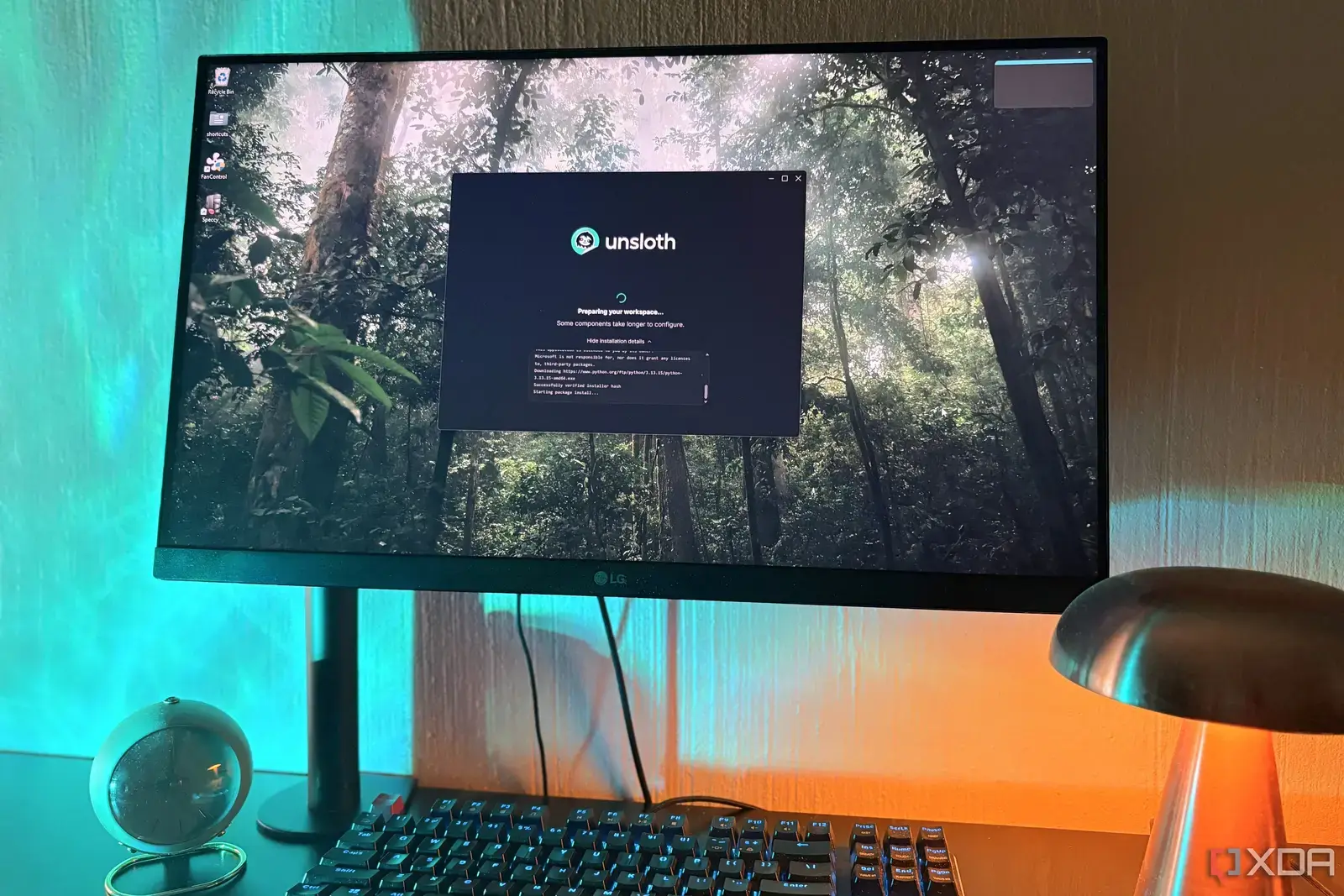
Why Unsloth’s Interface Outperforms Competitors
A new desktop application from Unsloth has attracted attention from developers who previously relied on LM Studio, Ollama, or AnythingLLM. Released on September 23, 2026, the software promises a streamlined experience for running large language models locally.
Breaking news
 Town AI Secures $108 Million Series B, Valued at $1 Billion After $55 M Pre‑Series
 Apple Prepares for Major Product Launch Event on October 28
 Apple Releases Release Candidates for watchOS, tvOS and visionOS 27.2
 Apple Limits iPhone Duo and iPhone 18 Pro Max to Reservation-Only Sales in Japan and South Korea
The app, built by the team behind the UD quants, offers a lightweight interface and improved resource management. Users report faster startup times and easier model deployment compared to their former tools. The developer community has welcomed the change, citing reduced complexity and better integration with existing workflows.
Unsloth’s design focuses on minimalism and usability. The main screen presents a clean list of available models, a single button to launch them, and real‑time performance metrics. This contrasts with LM Studio’s cluttered dashboard and Ollama’s command‑line emphasis. Users note that the new app automatically allocates GPU memory based on model size, preventing crashes that previously plagued AnythingLLM users.
Can It Replace All Existing Local AI Platforms?
Performance benchmarks show that the Unsloth app can run a 7‑billion‑parameter model on a mid‑range GPU in under 30 seconds, whereas the same setup on LM Studio takes nearly twice as long. The developer behind the app explained that the key lies in a custom inference engine that bypasses unnecessary overhead. „We wanted a tool that feels like a native application, not a wrapper around a server,” they said.
The question remains whether Unsloth will become the default choice for all local AI developers. Early adopters say the app is highly compatible with popular model formats, but some advanced users miss the scripting flexibility of AnythingLLM. The team is already working on a plugin system that will allow custom extensions. If these features roll out, the app could consolidate the fragmented local‑AI ecosystem.
The long‑term impact on the market could be significant. By lowering the barrier to entry, Unsloth may attract new users who previously avoided local deployment due to technical hurdles. This could shift the balance away from cloud‑based services and encourage more open‑source model sharing.
Frequently Asked Questions
What operating systems does Unsloth support? The current release runs on Windows, macOS, and Linux. Future updates may include ARM‑based support.
Does the app require a paid subscription? No. Unsloth is free to download and use, with optional donations to support continued development.
Can I run multiple models simultaneously? Yes. The interface allows launching several instances, each with its own GPU allocation, though overall memory limits apply.
