Mastering the Art of Kinetic Efficiency
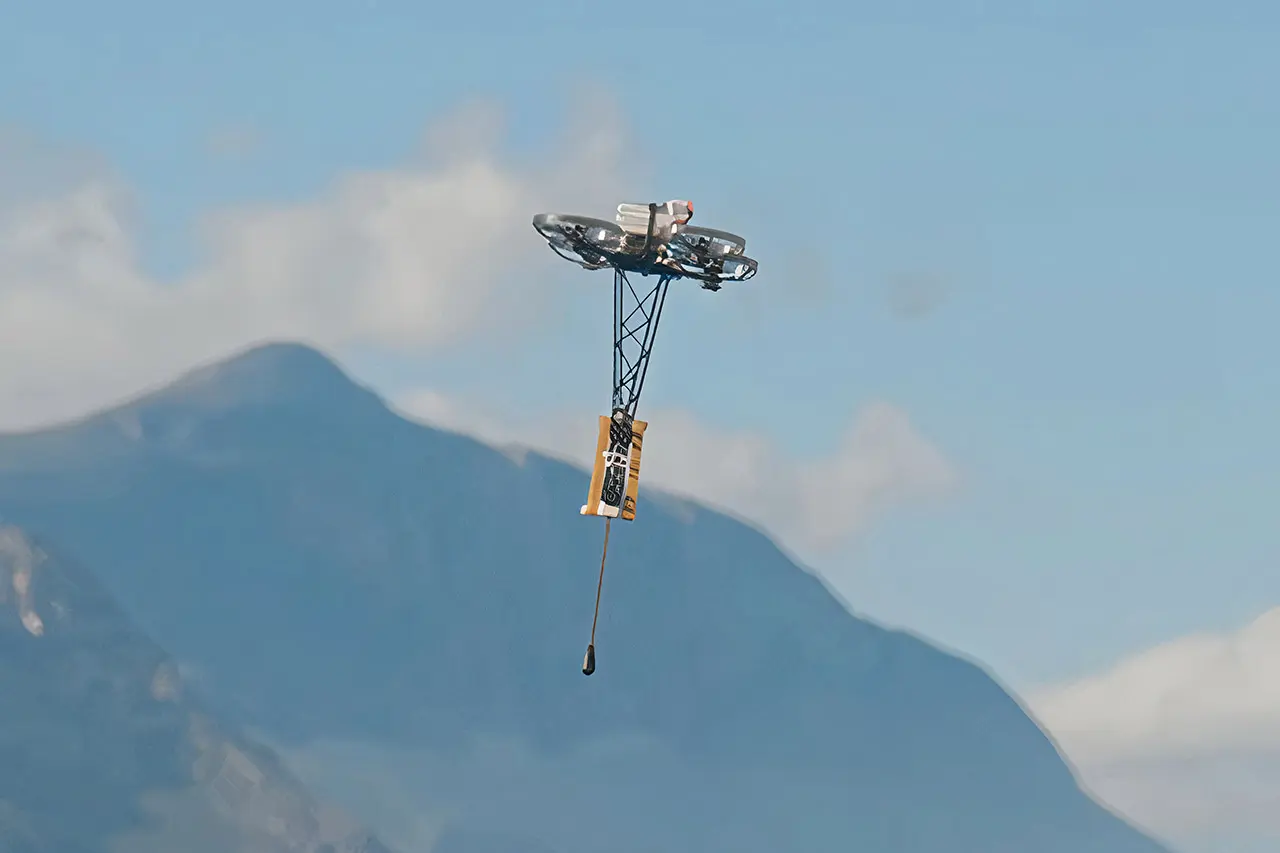
HopTo has officially unveiled its debut machine, the Hop-1, a unique robotic platform that blends aerial flight with pogo-stick mechanics. Revealed this September, the device challenges traditional drone designs by utilizing a specialized central leg. This hybrid approach aims to redefine how small-scale robots navigate complex environments while conserving energy during operation.
Breaking news
 Town AI Secures $108 Million Series B, Valued at $1 Billion After $55 M Pre‑Series
 Apple Prepares for Major Product Launch Event on October 28
 Apple Releases Release Candidates for watchOS, tvOS and visionOS 27.2
 Apple Limits iPhone Duo and iPhone 18 Pro Max to Reservation-Only Sales in Japan and South Korea
The Hop-1 resembles a standard quadcopter at first glance, but the addition of a singular, spring-loaded limb changes its entire movement profile. While conventional drones must constantly run their motors to fight gravity, this robot uses its leg to perform controlled hops. By alternating between flight and bouncing, the machine drastically reduces the strain on its propulsion system.
The core philosophy behind the Hop-1 is the mitigation of constant energy expenditure. Most aerial vehicles require continuous power to maintain altitude, which limits their operational lifespan and range. By integrating a pogo-stick mechanism, HopTo allows the robot to remain mobile without relying solely on rotors. This mechanical advantage provides a sophisticated solution to the power-consumption hurdle that plagues modern drone technology.
Engineers at HopTo focused on the balance between weight and structural integrity to ensure the leg does not impede flight performance. The result is a machine that can traverse uneven terrain with ease, utilizing its leg for navigation while reserving battery life for necessary aerial maneuvers. This dual-mode capability represents a significant shift in how engineers approach long-duration robotic tasks.
Can Hybrid Locomotion Replace Standard Drones?
The success of the Hop-1 could signal a broader transition toward multi-modal robotics in commercial and industrial sectors. If the design proves durable in real-world conditions, it may replace traditional drones in tasks requiring frequent stops or ground-level interaction. By reducing the reliance on constant motor activity, HopTo is setting a new standard for sustainable and efficient autonomous flight.
Frequently Asked Questions
What makes the Hop-1 different from a traditional quadcopter? The Hop-1 features an integrated pogo-stick leg that allows it to bounce across terrain. This design reduces the need for constant motor power, unlike standard drones that must fly continuously.
Why is this design more energy-efficient? By using a mechanical leg to move, the robot does not have to fight gravity with its rotors every second. This hybrid approach saves significant battery life during transit.